Bible verse wall art
2 Timothy 4: “I have fought a good fight”
Written from a Roman prison by a man who expected to be executed, this chapter reads like a farewell. Its best-known line looks back on a whole life and calls it finished.
2 Timothy 4 prints


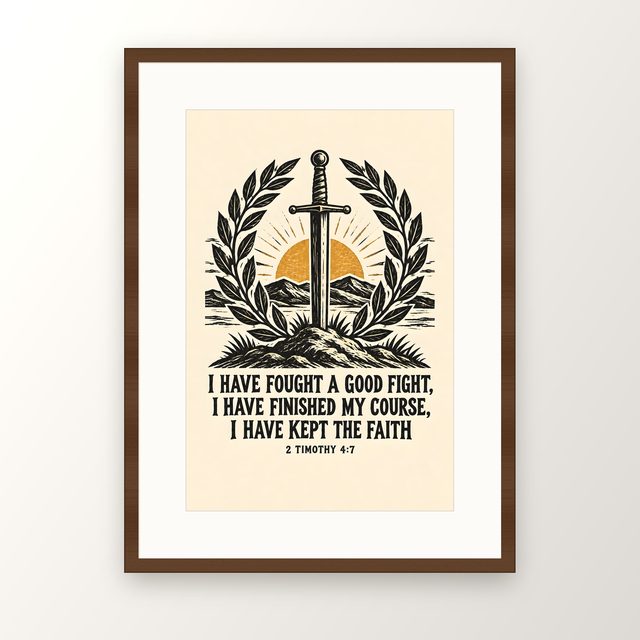

2 Timothy 4 · King James Version
7 I have fought a good fight, I have finished my course
Paul's final letter
Second Timothy presents itself as Paul's last letter, written to his younger coworker Timothy, whom he calls his dearly beloved son in the faith. Paul is in chains in Rome, several friends have deserted him, and only Luke is still with him. Christian tradition holds that he was beheaded in Rome under the emperor Nero, in the mid-60s. Some modern scholars think a disciple wrote the letter in Paul's name; either way, it is the voice of Paul at the end.
Chapter 4 opens with a solemn charge to Timothy to preach the word “in season, out of season”, and then turns personal: Paul says he is ready to be offered and that the time of his departure has come.
What does 2 Timothy 4:7 mean?
The verse holds three images, two of which are on our print. “I have fought a good fight” uses the Greek word agon, which could mean a battle but more often meant an athletic contest, the kind of struggle a wrestler or runner knows. “I have finished my course” is a runner's line: the race is run to the end, not abandoned halfway. The third clause, not printed, completes the thought: I have kept the faith, like a steward who hands back what was entrusted to him.
The verbs are in the perfect tense, which in Greek points to a completed action whose result still stands. Paul is not bragging. Verse 8 shifts the focus to the reward, a crown of righteousness laid up for him, and adds at once that the same crown awaits all who love Christ's appearing.
The tone is calm. A man facing death describes it as a departure, the word used for a ship loosing its moorings or soldiers breaking camp.
Funerals, ordinations and a saint in armor
The verse is frequently read or printed at funerals, especially for someone who lived a long, faithful life, and it also marks retirements, ordinations and military memorials. Our painting pairs it with Joan of Arc, the fifteenth-century French heroine honored as a saint in the Catholic Church, whose short life and courage make the words fit naturally.
Running the race elsewhere in Scripture
Paul uses the same sporting language in 1 Corinthians 9, about running to win an incorruptible crown, and in Philippians 3, pressing toward the mark. Hebrews 12 asks readers to run with patience the race set before them, looking to Jesus.