Bible verse wall art
Ruth 1: whither thou goest, I will go
Ruth 1:16 is recited at weddings, but it was first spoken on a dusty road by a young widow to her mother-in-law. The chapter behind it is one of the most moving openings in the Bible.
Ruth 1 print
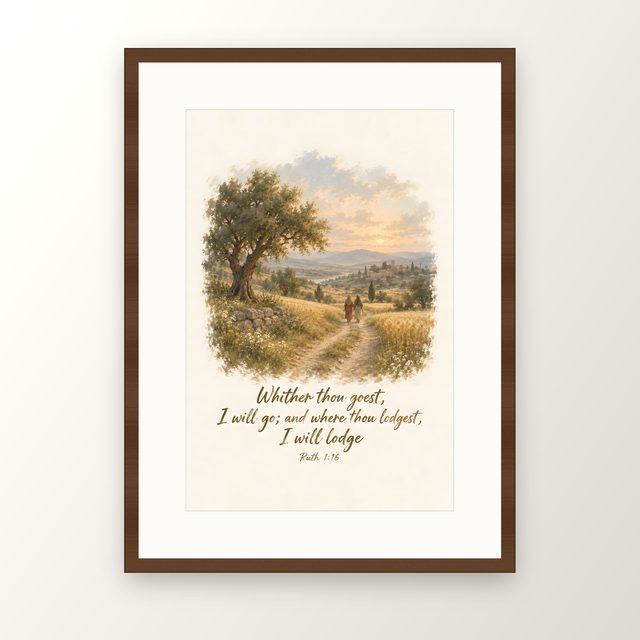
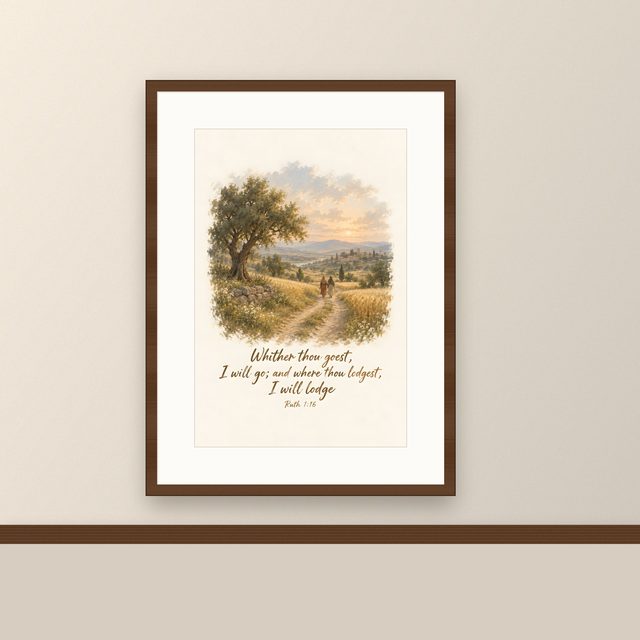
Ruth 1 · King James Version
16 Whither thou goest, I will go; and where thou lodgest, I will lodge
Famine, exile and loss
The story is set in the days when the judges ruled, before Israel had kings. A famine drives a man named Elimelech out of Bethlehem with his wife Naomi and their two sons, Mahlon and Chilion. They settle in Moab, east of the Dead Sea, a neighboring people Israel often regarded with suspicion. There Elimelech dies. The sons marry two Moabite women, Orpah and Ruth, and about ten years later both sons die too.
Naomi is left with no husband, no children and no land in a foreign country. When she hears that the LORD has given his people bread again, she sets out for home with her two daughters-in-law.
Orpah goes back, Ruth clings
On the road Naomi stops and urges them to return to their mothers' houses. She blesses them and kisses them, and they weep. She has no more sons to give them as husbands, she says, and the hand of the LORD has gone out against her. Orpah kisses her mother-in-law and turns back, a reasonable choice that the text does not condemn. But Ruth clave unto her.
What does “Whither thou goest, I will go” mean?
Ruth answers in verses 16 and 17: Intreat me not to leave thee, for whither thou goest, I will go; and where thou lodgest, I will lodge: thy people shall be my people, and thy God my God. She goes on to say that where Naomi dies, she will die and be buried, and she seals the promise with an oath in the name of the LORD.
It is a vow of total loyalty. Ruth gives up her homeland, her family and her gods to follow a widow with nothing to offer her. The Hebrew word often used for the quality she shows is hesed, faithful love that goes beyond duty, and it runs through the whole book.
That is why couples choose these words for their weddings, though they were first spoken between two women bound by grief. Our Naomi and Her Daughter print shows two figures walking together through the fields. As Christian wall art it suits a mother and daughter, a daughter-in-law, close friends, or a newly married couple.
Back in Bethlehem
The two women arrive at Bethlehem at the beginning of barley harvest. Naomi tells the townswomen to call her Mara, meaning bitter. Yet the harvest is the start of a reversal. Ruth will marry Boaz and become the great-grandmother of King David, and Matthew 1 names her in the genealogy of Jesus.