Bible verse wall art
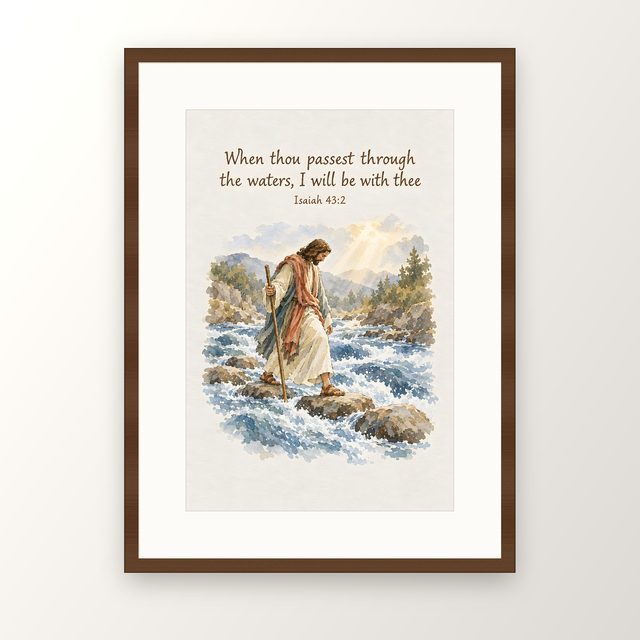
Isaiah 43: “When thou passest through the waters, I will be with thee”
The promise is not that there will be no floods or fires. It is that no one will go through them alone, and it is spoken by a God who says he knows his people by name.
Isaiah 43 print
Isaiah 43 · King James Version
2 When thou passest through the waters, I will be with thee
Redeemed and called by name
Isaiah 43 belongs to the same group of chapters as 40 and 41, messages of comfort for Israel in exile in Babylon. The end of chapter 42 has just explained that the exile was a consequence of the people's refusal to listen. Chapter 43 opens with a sudden “But now”, and the tone changes completely.
Verse 1 gives the ground for everything that follows. God is the one who created and formed Israel, and he says: fear not, for I have redeemed thee, I have called thee by thy name; thou art mine. To redeem meant to buy back, as a relative would buy back family land or free a family member from debt.
What does Isaiah 43:2 mean?
Verse 2 names the worst dangers the ancient world could imagine, deep water and fire, and promises company through both. Rivers will not overflow you; flames will not kindle upon you. The key word is “through”. The verse does not say around or over. God's people will go into the water and the fire, and come out on the other side.
Israel's history made the promise concrete. Their ancestors had passed through the Red Sea on dry ground and crossed the Jordan into the promised land. Now, the prophet says, the same God will bring the exiles home. Later readers have also seen in the fire an echo of the three young men in Daniel 3, who walked unhurt in Nebuchadnezzar's furnace with a fourth figure beside them.
Verse 4 adds the reason, in some of the most affectionate language in the prophets: Israel is precious in God's sight, honored, and loved.
Hard seasons and baptism
The verse is often shared with people facing illness, divorce, grief, or a natural disaster, and it is sometimes read at funerals and memorial services. Because it speaks of passing through water and being named by God, many families also choose it for a baptism or christening print.
The new exodus
Later in the chapter, verses 18 and 19 tell Israel not to dwell on the former things, because God will do a new thing and make a way in the wilderness. The New Testament picks up the language of being called by name in John 10, where the shepherd calls his own sheep by name and leads them out.