Bible verse wall art
Numbers 6: the Lord bless thee, and keep thee
Three short lines, given to Aaron and his sons to speak over the people, and still spoken over congregations and newborn children more than three thousand years into their story.
Numbers 6 prints
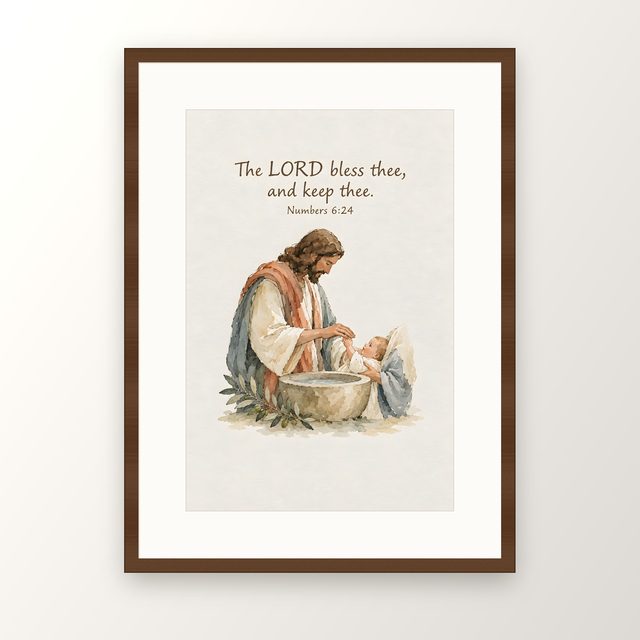
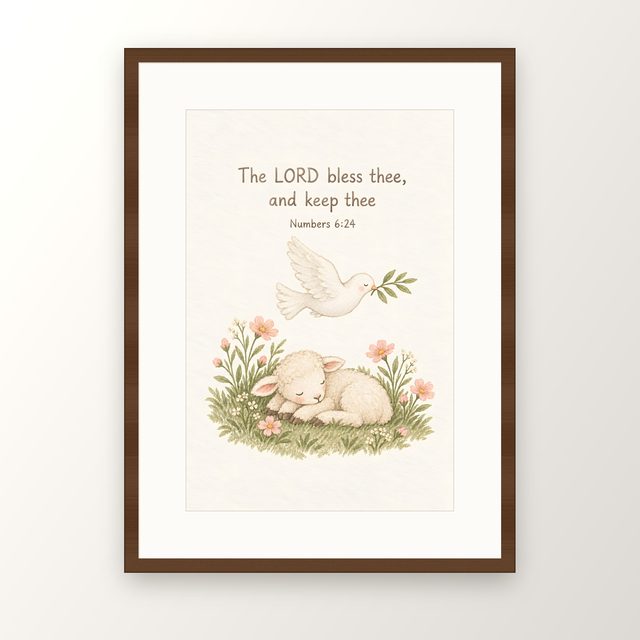
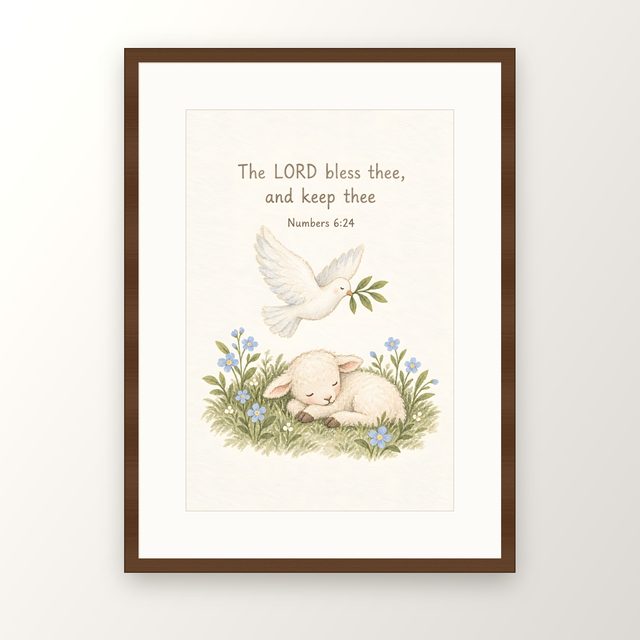
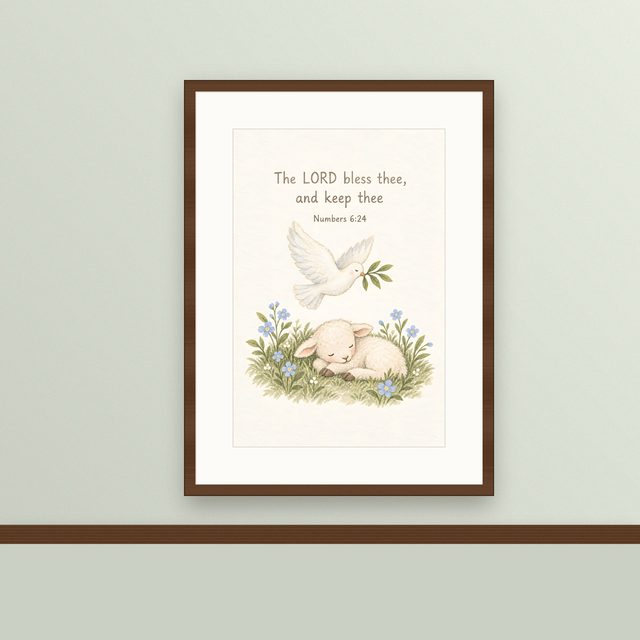
Numbers 6 · King James Version
24 The LORD bless thee, and keep thee.
A blessing in the middle of a law book
Most of Numbers 6 concerns the Nazirite vow: a man or woman set apart for a time, with no wine, no haircut and no contact with the dead (6:1 to 21). Then, at verse 22, God tells Moses to give Aaron a set form of words for blessing Israel. The passage ends with its purpose: “And they shall put my name upon the children of Israel; and I will bless them” (6:27).
In the King James the blessing reads: “The LORD bless thee, and keep thee: The LORD make his face shine upon thee, and be gracious unto thee: The LORD lift up his countenance upon thee, and give thee peace.”
What the three lines say
Each line is longer than the one before, in Hebrew as in English, and each names the LORD. The first asks for provision and protection: to be blessed is to be given what you need, to be kept is to be guarded. The second turns to God's face. A face that shines is a face that is glad to see you, and grace is kindness you did not earn. The third asks God to lift his countenance, to look up and pay attention, and it ends on peace, shalom, the word for wholeness.
The address is singular, “thee”, even though the whole people is being blessed. Each person hears it as spoken to them.
The oldest words of Scripture we can hold
In 1979 archaeologists excavating burial caves at Ketef Hinnom, just outside the Old City of Jerusalem, found two tiny rolled silver amulets. Unrolled, they carried a form of this blessing, and they are usually dated to around the sixth century BC. They are the oldest known objects bearing a text that also appears in the Bible.
Where it is spoken today
In synagogues the priestly blessing is pronounced by descendants of Aaron with raised hands. Many churches close their Sunday service with it, and it is a natural blessing at a christening, a dedication or a baby's first homecoming. John Rutter's choral setting has carried it into countless weddings and funerals. On a nursery wall it becomes a prayer said every night without anyone needing to say it.