Annunciation, Luke 1:31 Wall Art
Luke 1:31 · King James Version Free US shipping
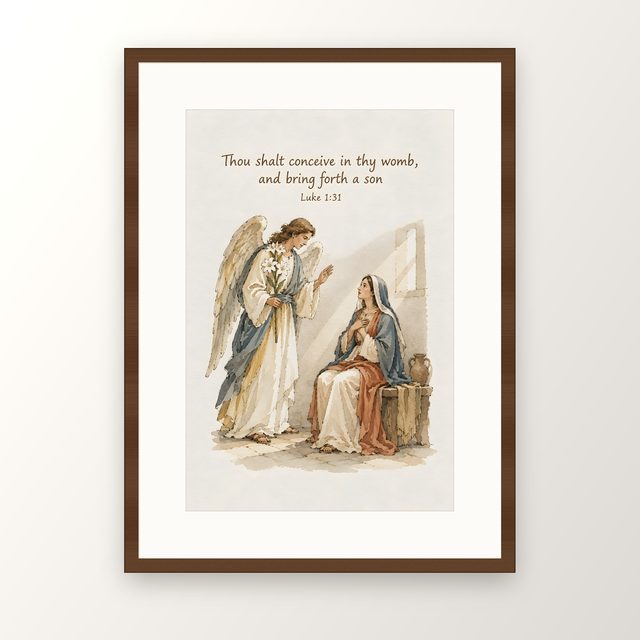
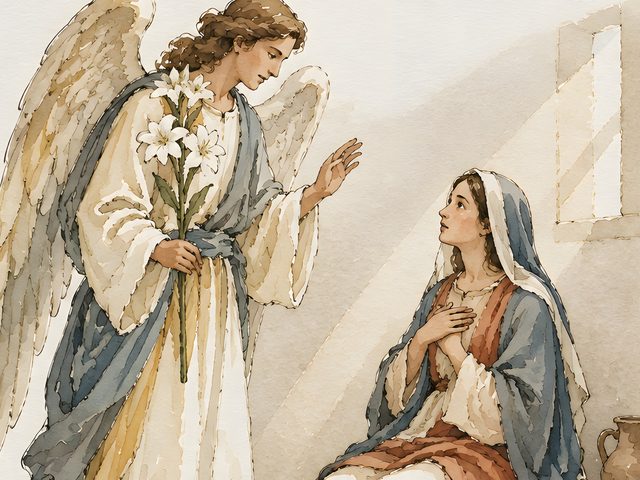
“Thou shalt conceive in thy womb, and bring forth a son”
Luke 1:31
Build a gallery wall: save 25% on 3 prints or more, applied in your cart.
- Free US shipping
- Printed in the USA
- 30-day returns
- King James text, checked
- 11
- words of Scripture
- 8
- prints from Luke 1
- $29
- smallest print
- 2–5
- days to dispatch
The print
A giclée print on thick archival matte paper of at least 200gsm. The verse is set into the painting in the King James Version, with a blank paper margin that makes framing easy. Sold without a frame.
Shipping
Printed to order and shipped within 2 to 5 business days, from a print studio in the United States. Shipping is free on every order.
Returns
Returns accepted within 30 days of delivery.
Digital download
Seven high-resolution files covering every common frame ratio, 4096 × 6144 px, good for printing up to A1. Nothing is shipped.
About this print
Annunciation, Luke 1:31
A young woman in a plain room, a winged visitor with lilies, and the first announcement of the name of Jesus.
Gabriel's visit, painted in light
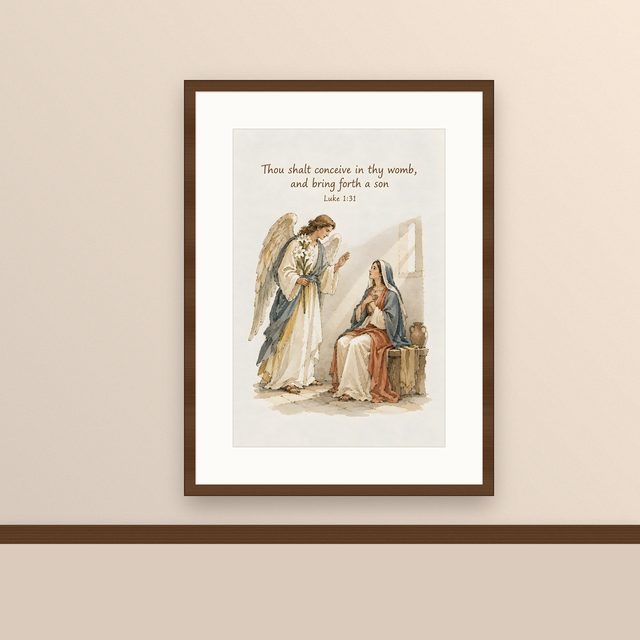
Gabriel stands on the left, tall and slender, wings folded behind him in cream and gray. He holds a stem of white lilies against a blue and ivory robe and lifts his free hand in greeting. Mary sits on a low wooden bench across from him, veiled in white under a blue mantle, a red cloth over her knees. One hand is pressed to her chest as she looks up at the angel.
The room is almost bare: a clay jar on the bench, a folded cloth, a tiled floor, and a single high window from which a wide beam of pale light slants down between them. The words of the angel are lettered overhead, “Thou shalt conceive in thy womb, and bring forth a son”, followed by Luke 1:31.
What is the Annunciation?
Luke tells that in the sixth month of Elizabeth's pregnancy, the angel Gabriel was sent to a town in Galilee called Nazareth, to a virgin engaged to Joseph, of the house of David. After his greeting troubles her, Gabriel explains why he has come. Verse 31 carries on past the lettering: she will call the child Jesus, a name that in Hebrew means roughly “the LORD saves”. The verses that follow promise that he will be great, will receive the throne of David and will reign without end.
Mary's reply is practical: how can this be, since she has no husband? Gabriel answers that the Holy Spirit will come upon her, and gives her a sign in her aged cousin Elizabeth, now expecting a son. The scene ends with Mary's consent in verse 38, and she soon sets out to visit Elizabeth.
The feast of the Annunciation falls on March 25, nine months before Christmas, and is kept by Catholic, Orthodox, Anglican and Lutheran churches. The Hail Mary opens with Gabriel's greeting from verse 28. As for the lilies, they are not in the text: painters added them in the Middle Ages as a sign of purity, and they have stayed in the scene ever since.
A gift for her
Soft and luminous, the painting suits a bedroom, a Marian prayer corner or a Catholic home entryway. It is a meaningful present for a woman expecting a child, for a new mother, for a goddaughter at her baptism, or for anyone who keeps the feast in March.
Luke's first chapter inspires six other paintings in the collection, from Gabriel's greeting and Mary's answer to the Magnificat, Our Lady of Guadalupe and Our Mother of Perpetual Help. Read Luke 1 and what it means
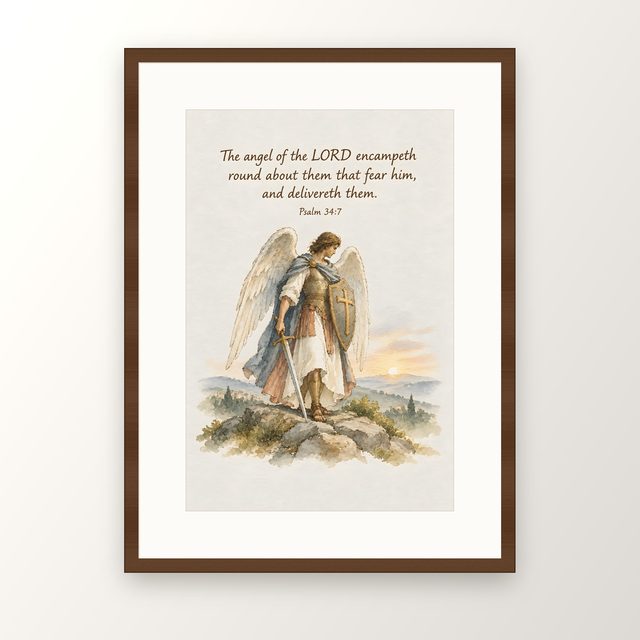
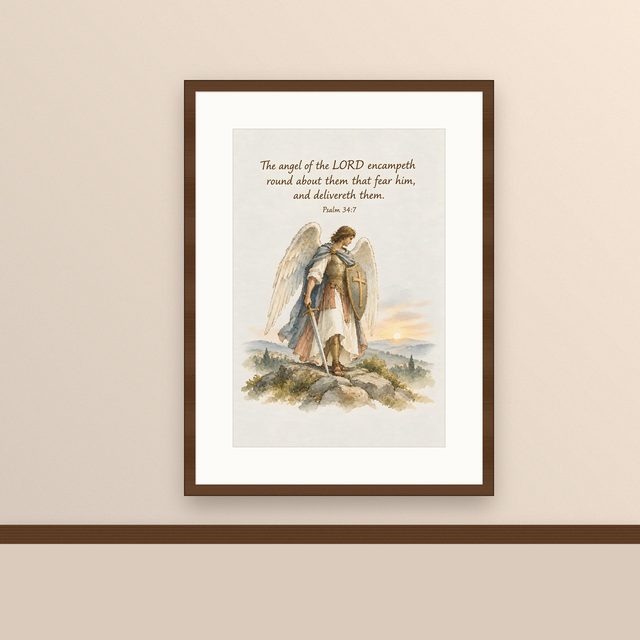
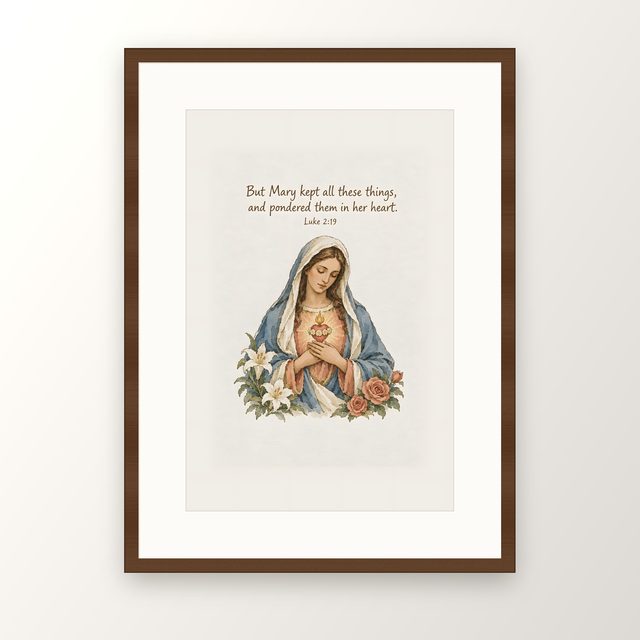
Hang them together
Complete the wall
Hang three together and save 25% on your prints.