Bible verse wall art
Luke 1: the Annunciation and the Magnificat
Luke 1 is the chapter in which Mary enters the story. It gives the church the words of the angel's greeting, Elizabeth's blessing and Mary's own song, and it is lettered on more of our prints than any other chapter.
Luke 1 prints
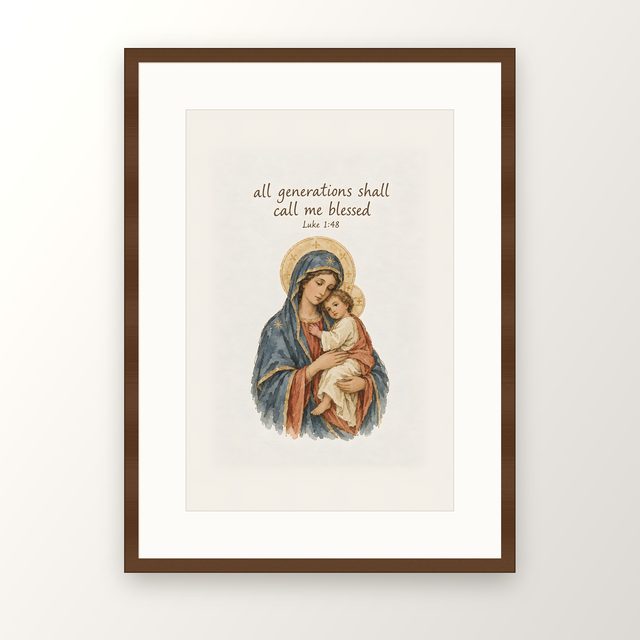
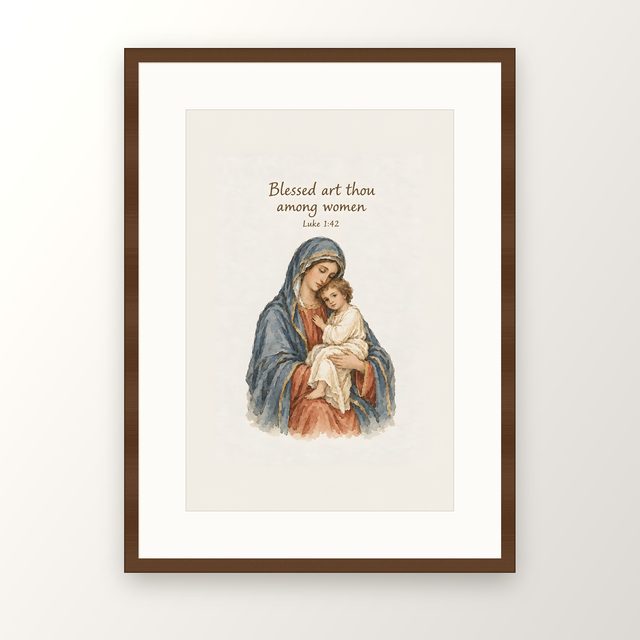

Luke 1 · King James Version
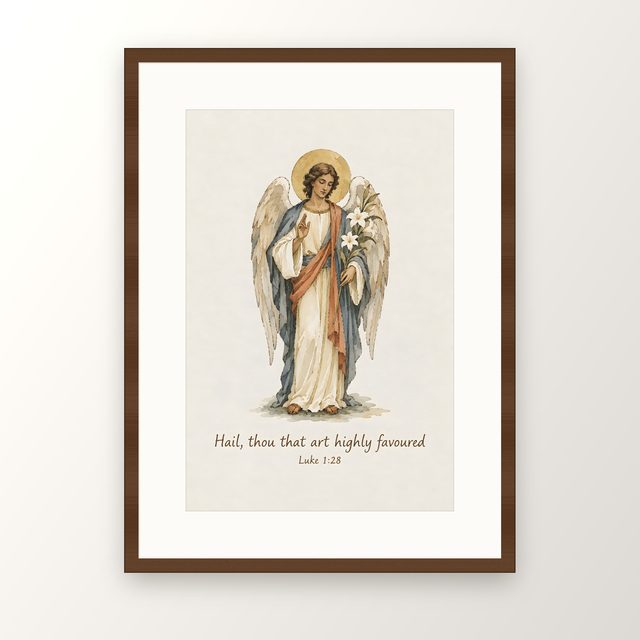
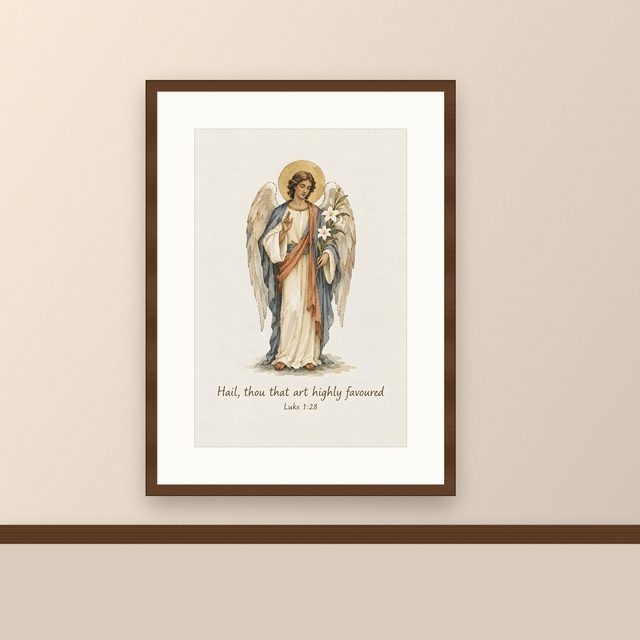
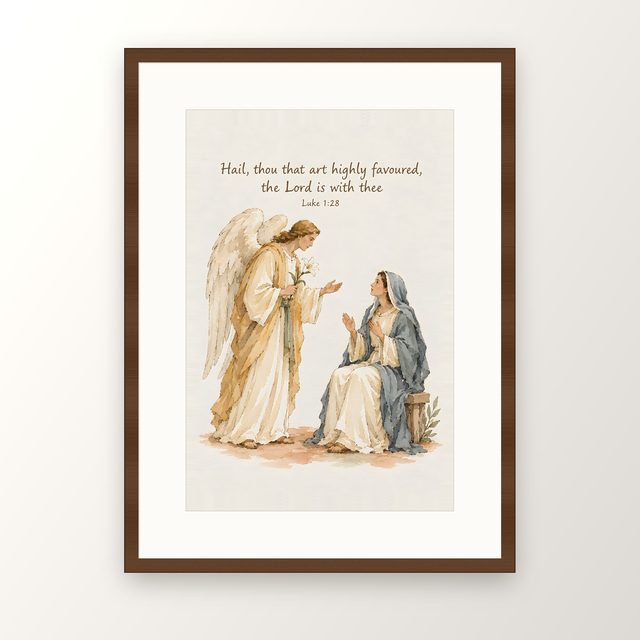
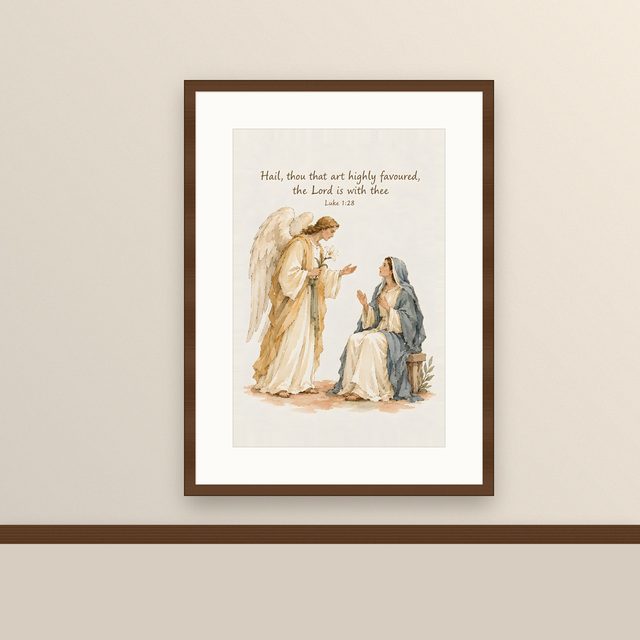
28 Hail, thou that art highly favoured
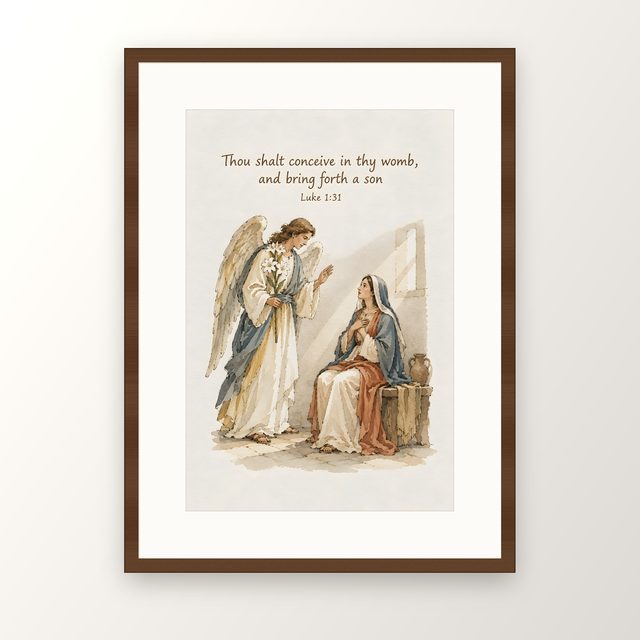
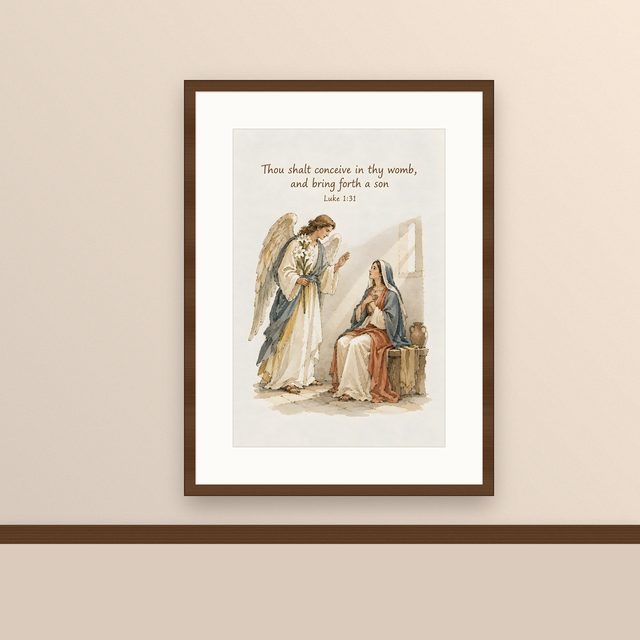
31 Thou shalt conceive in thy womb, and bring forth a son
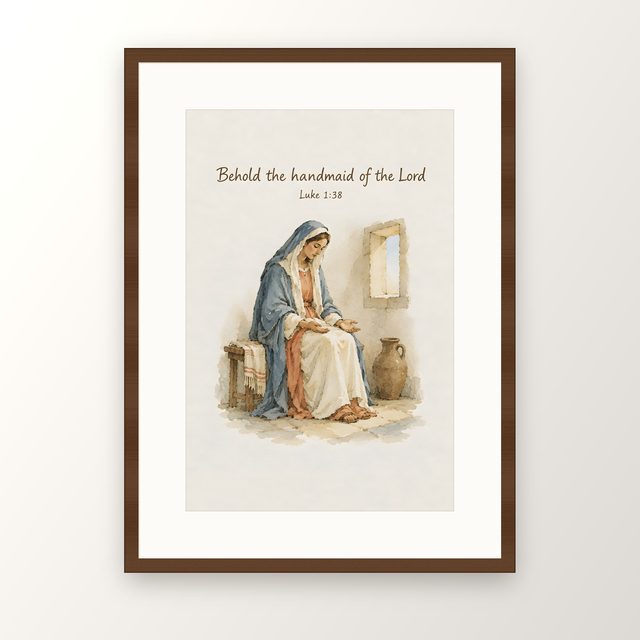
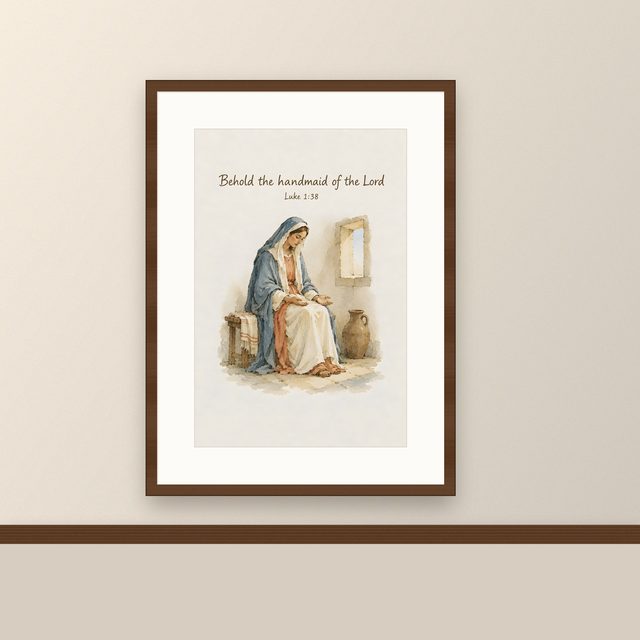
38 Behold the handmaid of the Lord
42 Blessed art thou among women
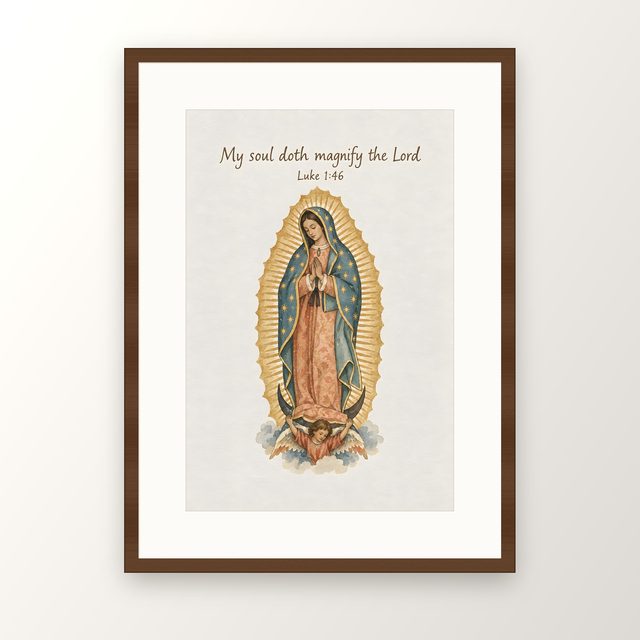
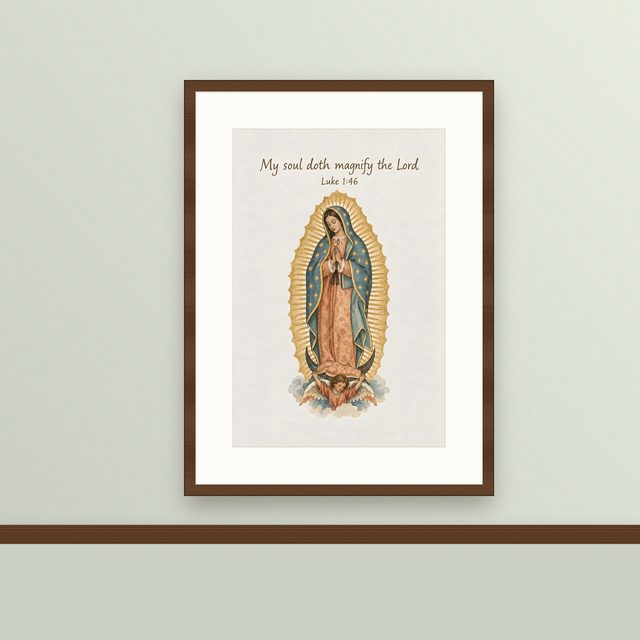
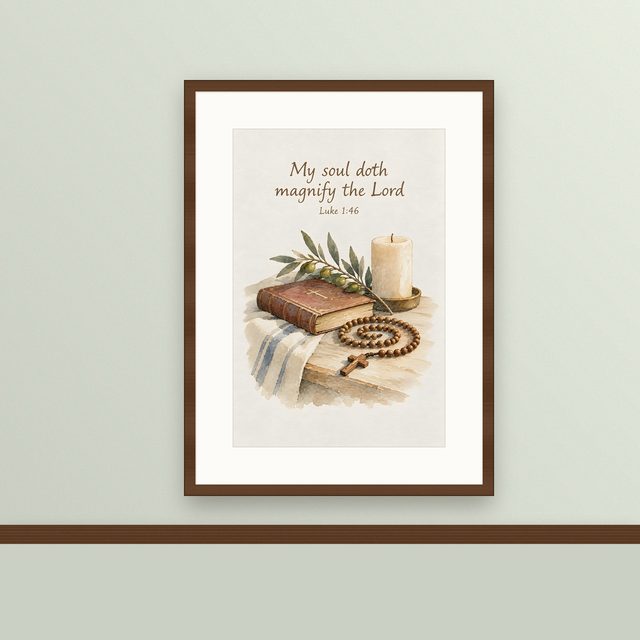
46 My soul doth magnify the Lord
48 all generations shall call me blessed
Luke writes an orderly account
Luke is the only evangelist who begins with a personal preface. He tells a reader named Theophilus that he has investigated everything carefully from the beginning, in order to write an orderly account. He then opens not in Nazareth but in the temple, where an angel appears to the elderly priest Zechariah and announces that his wife Elizabeth, long childless, will bear a son, John the Baptist.
What did Gabriel say to Mary?
In Elizabeth's sixth month, the angel Gabriel is sent to a young woman in Nazareth, engaged to Joseph. His greeting in verse 28 begins, Hail, thou that art highly favoured, and continues, the Lord is with thee. Mary is troubled, and Gabriel tells her in verse 31 that she will conceive in her womb and bring forth a son, to be named Jesus, who will receive the throne of David.
Mary asks a reasonable question: how can this be, since she has not known a man? The angel answers that the Holy Ghost will come upon her, and adds that with God nothing shall be impossible. Her reply in verse 38, Behold the handmaid of the Lord, is a free and simple consent. This moment is the Annunciation, celebrated on March 25, nine months before Christmas.
What does “My soul doth magnify the Lord” mean?
Mary then travels to the hill country of Judea to visit Elizabeth, a scene known as the Visitation. When Mary arrives, the child leaps in Elizabeth's womb, and Elizabeth cries out in verse 42, Blessed art thou among women. Together with Gabriel's greeting, these lines form the first half of the Hail Mary.
Mary answers with a song, the Magnificat, named from its first word in Latin. To magnify the Lord is to make him great in one's praise. The song moves quickly from Mary's own story to the whole world: God has regarded the low estate of his handmaiden, and from now on all generations shall call her blessed (verse 48); he has put down the mighty and lifted up the humble, filled the hungry and sent the rich away empty. It closely echoes the song of Hannah in 1 Samuel 2.
Sung every evening
The Magnificat is sung or said at Vespers in Catholic and Orthodox practice and at Evensong in the Anglican tradition, so it has been prayed daily for many centuries. Mary's titles on our prints come from that long devotion: Theotokos, “God-bearer,” affirmed at the Council of Ephesus in 431; Our Lady of Perpetual Help, a Byzantine-style icon venerated in Rome; and Our Lady of Guadalupe, who appeared, according to Mexican tradition, to Juan Diego in 1531. The chapter closes with the birth of John and his father's song of praise, the Benedictus.