He That Hath Pity Upon the Poor, Proverbs 19:17 Print
Proverbs 19:17 · King James Version Free US shipping
“He that hath pity upon the poor lendeth unto the LORD”
Proverbs 19:17
Build a gallery wall: save 25% on 3 prints or more, applied in your cart.
- Free US shipping
- Printed in the USA
- 30-day returns
- King James text, checked
- 11
- words of Scripture
- 1
- print from Proverbs 19
- $29
- smallest print
- 2–5
- days to dispatch
The print
A giclée print on thick archival matte paper of at least 200gsm. The verse is set into the painting in the King James Version, with a blank paper margin that makes framing easy. Sold without a frame.
Shipping
Printed to order and shipped within 2 to 5 business days, from a print studio in the United States. Shipping is free on every order.
Returns
Returns accepted within 30 days of delivery.
Digital download
Seven high-resolution files covering every common frame ratio, 4096 × 6144 px, good for printing up to A1. Nothing is shipped.
About this print
He That Hath Pity Upon the Poor, Proverbs 19:17
Two hands, one loaf, and a lot of empty paper: a minimal watercolor of the proverb that says every gift to the poor is a loan to God.
Two hands and a loaf
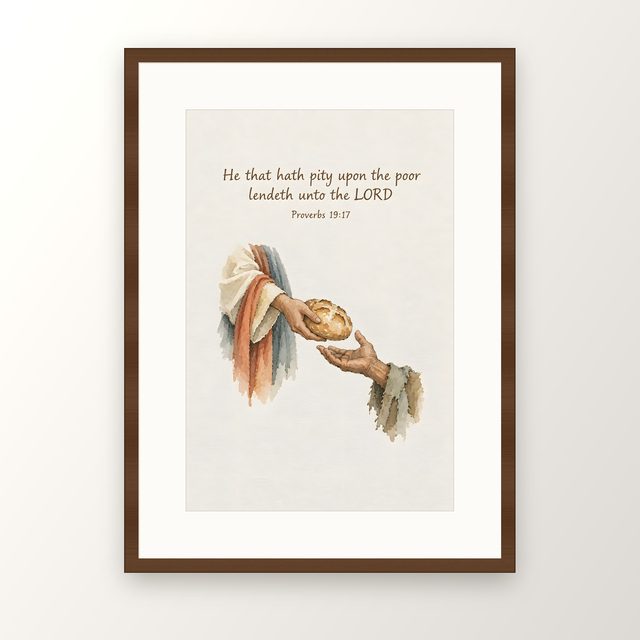
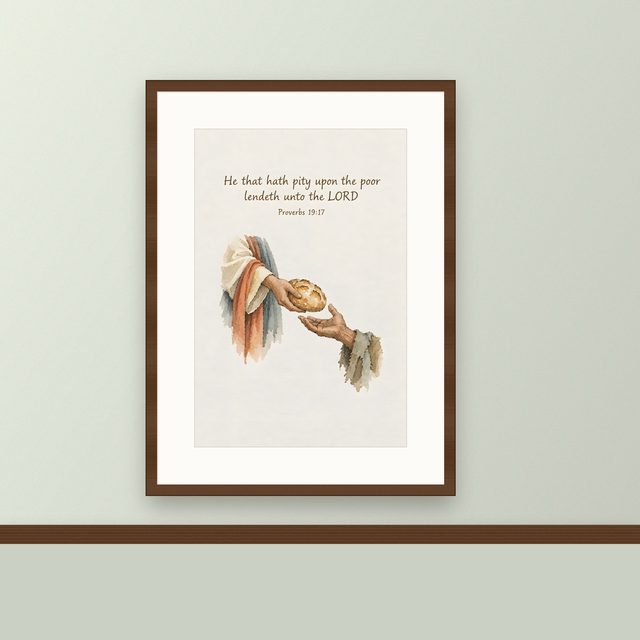
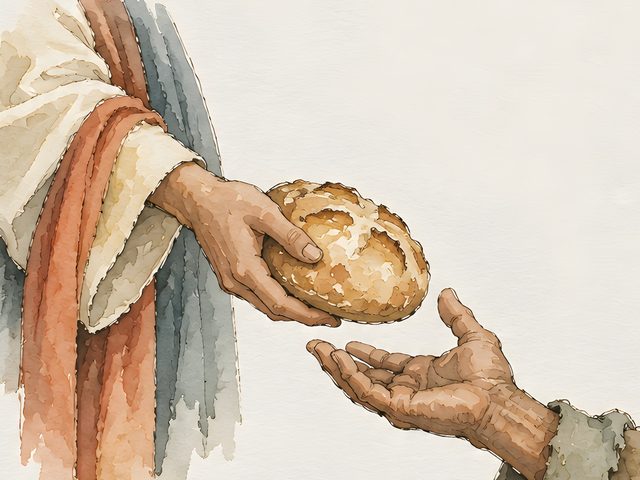
The composition is almost diagrammatic. From the upper left, a hand emerges from layered sleeves of cream, rust and slate blue, holding out a round golden loaf scored with a cross on its crust. From the lower right, a thinner, sun-browned hand reaches up with the palm open, its sleeve frayed into gray-green rags. The two do not quite touch; the bread is still in the air between them.
Nothing identifies either person. There are no faces, no setting and no background, which leaves the viewer free to stand on either side of the gesture. Above, the words “He that hath pity upon the poor lendeth unto the LORD” are lettered in brown, followed by Proverbs 19:17.
What does Proverbs 19:17 mean?
The King James Version completes the line: “He that hath pity upon the poor lendeth unto the LORD; and that which he hath given will he pay him again.” It belongs to the long collection that the book heads “The proverbs of Solomon”, short sayings meant to be memorized and turned over in the mind.
The surprise is in the bookkeeping. A gift to someone who can never repay looks like a loss. The proverb moves the entry to another account: God himself takes on the debt, and he is a borrower who does not default. The capitals in “LORD” mark the divine name, so the saying ties generosity directly to the God of Israel rather than to good luck.
The idea runs through the whole Bible. Elsewhere in Proverbs, mocking or oppressing the poor is described as an insult to their Maker. In the Gospels, Jesus tells a host to invite those who cannot invite him back, since he will be repaid at the resurrection of the just. Jewish and Christian traditions of charity alike have long drawn on this verse, which is part of its quiet appeal.
Where to hang it
Because it shows only hands and bread, this print looks at home in a kitchen or dining area, as a reminder to set another place. Churches hang it near an offering box or in a food pantry, and it is a fitting present for a pastor, a deacon or a friend who runs a charity. A simple natural wood frame suits the warm browns of the loaf.
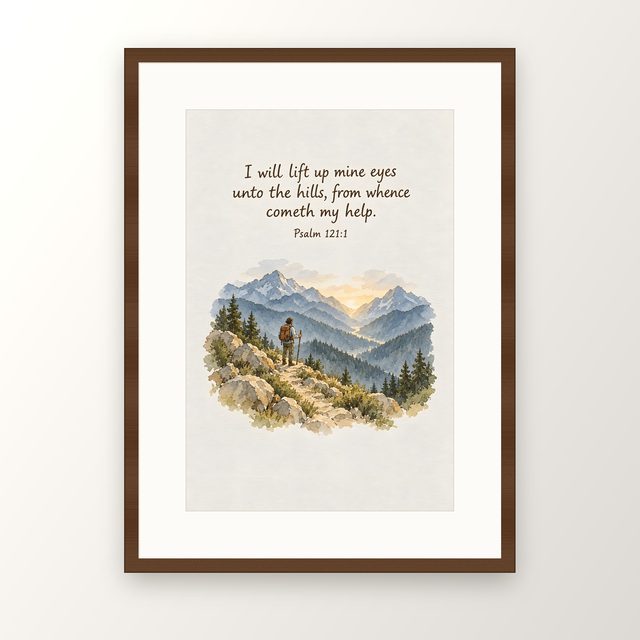
Hang them together
Complete the wall
Hang three together and save 25% on your prints.