Bible verse wall art
Proverbs 19: he that hath pity upon the poor
A proverb built like a bank note. Whoever gives to a person in need, it says, has made a loan, and the borrower is God himself.
Proverbs 19 print
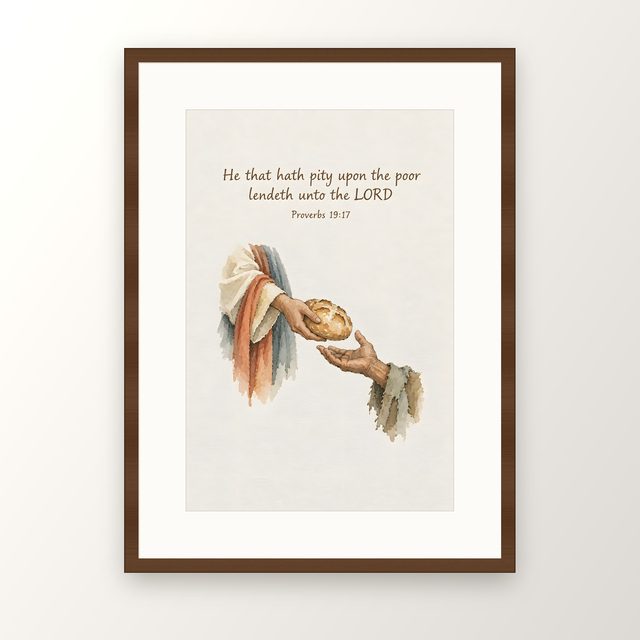
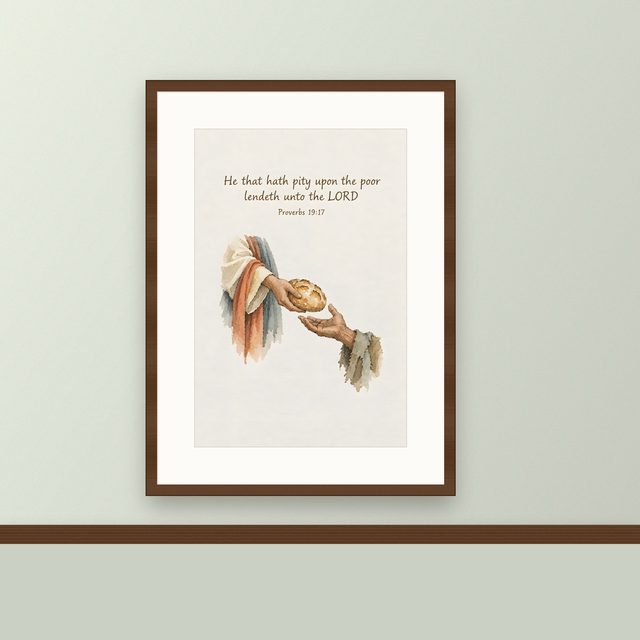
Proverbs 19 · King James Version
17 He that hath pity upon the poor lendeth unto the LORD
The proverbs of Solomon
Chapters 10 to 22 of Proverbs are a long collection of two-line sayings introduced as “The proverbs of Solomon”. They are not arranged as an argument. They move from topic to topic the way a grandparent's advice does: laziness, speech, money, anger, friendship, the king. Chapter 19 alone touches false witnesses, a foolish son, a quarrelsome wife and the value of listening to counsel.
Poverty comes up again and again in this chapter. Wealth brings many friends, a poor man's brothers hate him (19:4 and 7). Against that hard realism, verse 17 stands out.
What does Proverbs 19:17 mean?
The whole verse reads: “He that hath pity upon the poor lendeth unto the LORD; and that which he hath given will he pay him again.” The Hebrew word for lending is ordinary commercial language. The surprise is who signs for the debt. Money given to someone who can never repay it is not lost: God treats it as owed to himself.
The proverb is not a scheme for getting rich. It says nothing about when or how the repayment comes. What it does say is that the poor are not invisible to God, and that he takes their side personally. Proverbs 14:31 makes the same point from the other direction: “He that oppresseth the poor reproacheth his Maker.”
From the Law to the Gospels
The Law of Moses had already told Israel to open its hand to a poor neighbor (Deuteronomy 15). Jesus pushes the idea as far as it can go in the parable of the sheep and the goats: what was done to the hungry, the stranger and the prisoner was done to him (Matthew 25:40). Christian charity, from the almsgiving of the early church to the food pantry in the parish hall, grows from this root, and Jewish tradition calls the same duty tzedakah, justice.
Where the verse belongs
It sits naturally in a kitchen or dining room, near the place where bread is shared, and it makes a fitting thank-you for someone who runs a food drive or volunteers at a shelter.