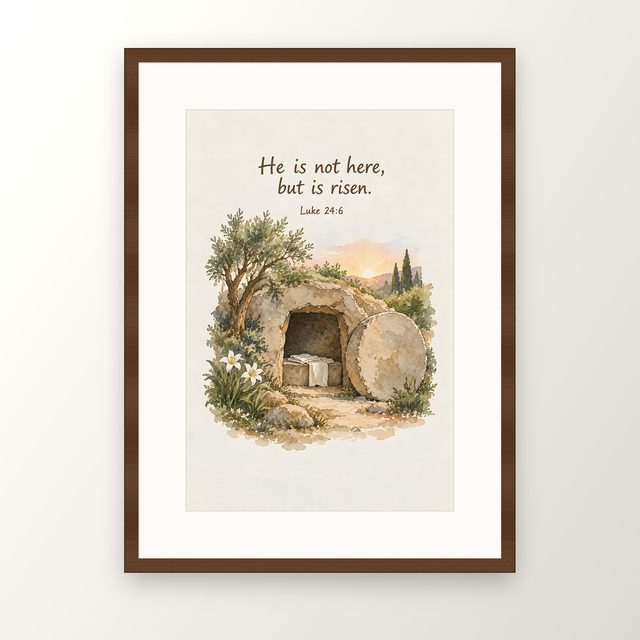
This Is My Body Broken for You, 1 Corinthians 11:24 Print
1 Corinthians 11:24 · King James Version Free US shipping
“This is my body, which is broken for you”
1 Corinthians 11:24
Build a gallery wall: save 25% on 3 prints or more, applied in your cart.
- Free US shipping
- Printed in the USA
- 30-day returns
- King James text, checked
- 9
- words of Scripture
- 1
- print from 1 Corinthians 11
- $29
- smallest print
- 2–5
- days to dispatch
The print
A giclée print on thick archival matte paper of at least 200gsm. The verse is set into the painting in the King James Version, with a blank paper margin that makes framing easy. Sold without a frame.
Shipping
Printed to order and shipped within 2 to 5 business days, from a print studio in the United States. Shipping is free on every order.
Returns
Returns accepted within 30 days of delivery.
Digital download
Seven high-resolution files covering every common frame ratio, 4096 × 6144 px, good for printing up to A1. Nothing is shipped.
About this print
This Is My Body Broken for You, 1 Corinthians 11:24
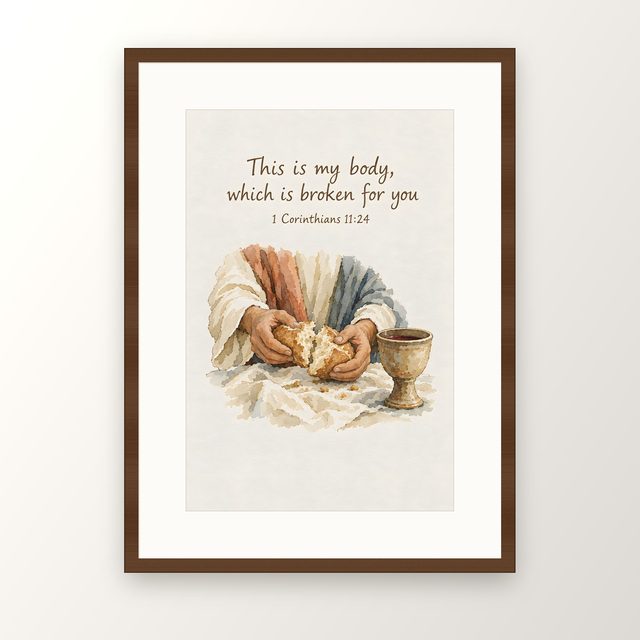
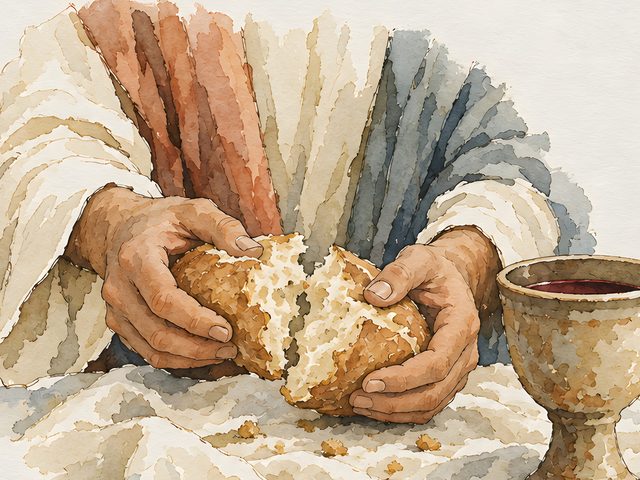
No face, no halo, only two hands tearing a loaf in half over a white cloth: a watercolor built around the moment the bread is broken.
Hands, bread and a cup
The painting is cropped close. We see a pair of forearms in loose sleeves of cream, rust and slate blue, and two strong hands pulling apart a round, crusty loaf so that the soft crumb shows in the tear. Crumbs have fallen onto the rumpled tablecloth. On the right stands a plain stoneware cup, speckled and unglazed, filled almost to the brim with dark red wine.
Leaving out the face was a deliberate choice: the viewer looks at the gesture the way someone seated at the table would have. The lettering above reads “This is my body, which is broken for you”, with 1 Corinthians 11:24 in smaller script.
The oldest written account of the Last Supper
Most people meet these words in the Gospels, but Paul wrote them down first, in a letter to the church in Corinth sent around the middle of the 50s AD, years before Mark, Matthew or Luke were put in writing. Paul's complete sentence, as the 1611 translators rendered it: “And when he had given thanks, he brake it, and said, Take, eat: this is my body, which is broken for you: this do in remembrance of me.”
Paul presents it as something handed on, not invented. In the verse just before, he says he received it from the Lord and delivered it to them, using the language of a teacher passing on a tradition word for word. That is why the passage is still recited at the altar in so many churches today.
The reason he writes it at all is less peaceful. The Corinthians met for a shared meal, but the wealthier members ate and drank before the poor arrived, so some went home hungry. Paul reminds them what the bread means: a body given for everyone at the table, which leaves no room for a first and second class of guests. Some modern translations read “which is for you” because older manuscripts lack the word “broken”; the King James keeps it.
On the dining room wall
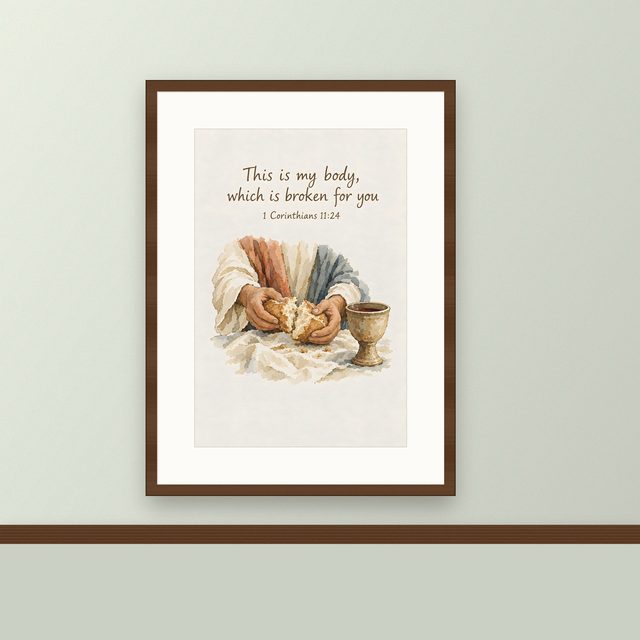
A table scene belongs near a table. Hung above a sideboard or in a breakfast nook, it turns an ordinary meal into a small reminder of the Lord's Supper. For a First Communion, it gives the child an image of the sacrament that is warm and human, and a Catholic family can hang it next to a crucifix or a picture of the Sacred Heart without clashing.
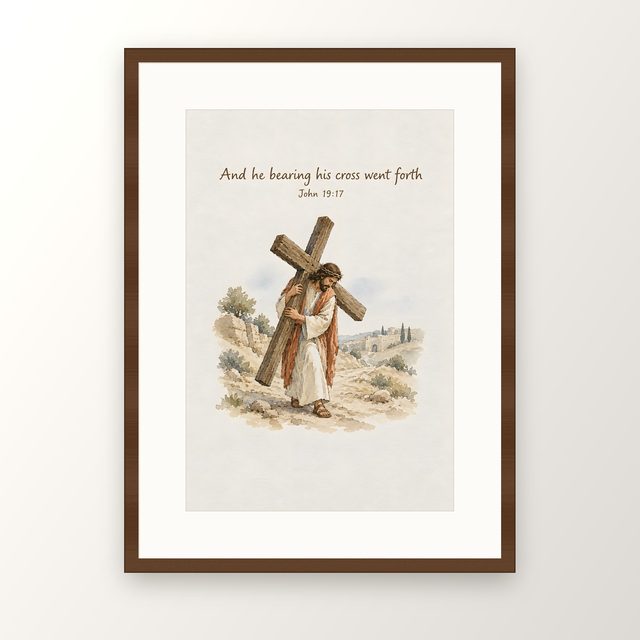
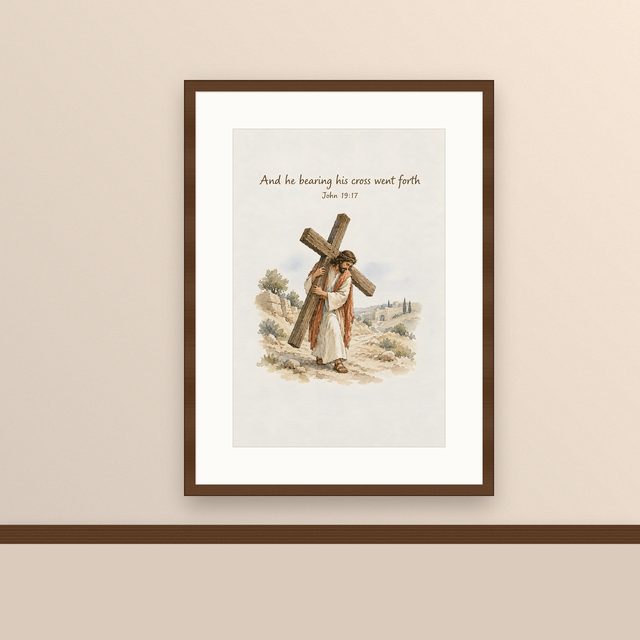
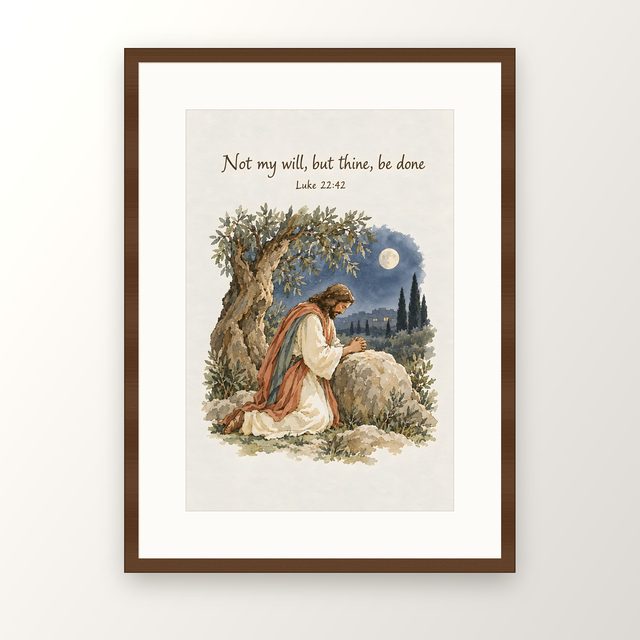
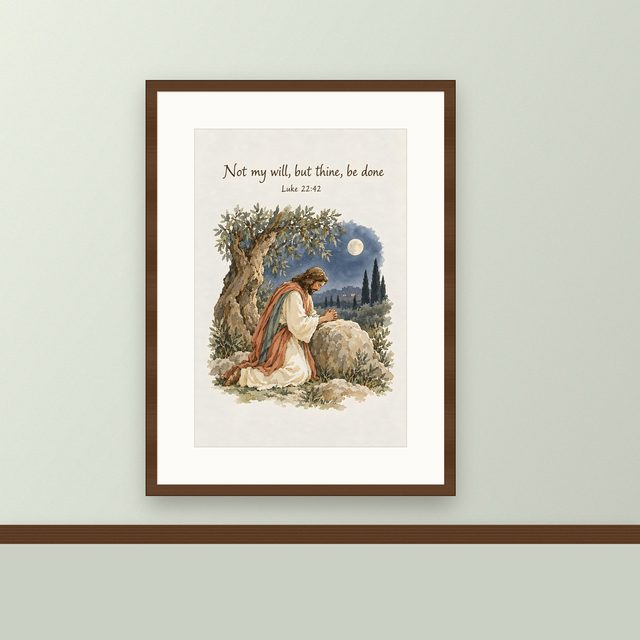


Hang them together
Complete the wall
Hang three together and save 25% on your prints.