Divine Mercy, Lamentations 3:22 Wall Art
Lamentations 3:22 · King James Version Free US shipping

“his compassions fail not”
Lamentations 3:22
Build a gallery wall: save 25% on 3 prints or more, applied in your cart.
- Free US shipping
- Printed in the USA
- 30-day returns
- King James text, checked
- 4
- words of Scripture
- 1
- print from Lamentations 3
- $29
- smallest print
- 2–5
- days to dispatch
The print
A giclée print on thick archival matte paper of at least 200gsm. The verse is set into the painting in the King James Version, with a blank paper margin that makes framing easy. Sold without a frame.
Shipping
Printed to order and shipped within 2 to 5 business days, from a print studio in the United States. Shipping is free on every order.
Returns
Returns accepted within 30 days of delivery.
Digital download
Seven high-resolution files covering every common frame ratio, 4096 × 6144 px, good for printing up to A1. Nothing is shipped.
About this print
Divine Mercy, Lamentations 3:22
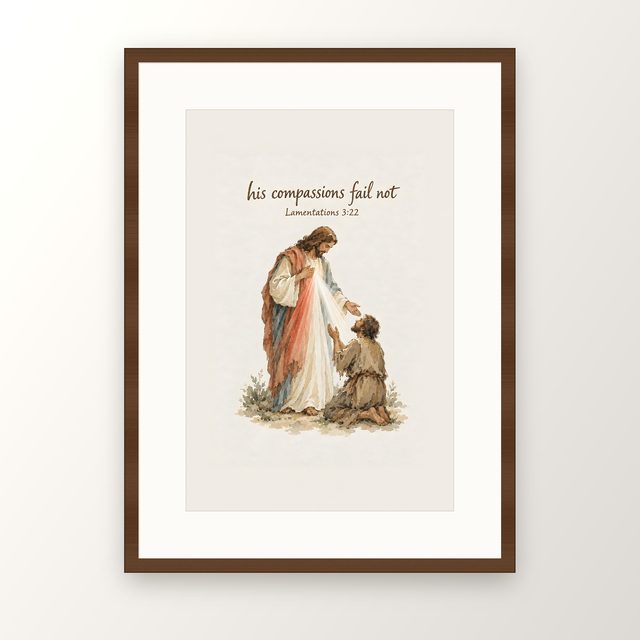
The familiar rays of the Divine Mercy image, placed in a story: a man on his knees in rags, and Christ bending down to take his hand.
Two figures and two rays
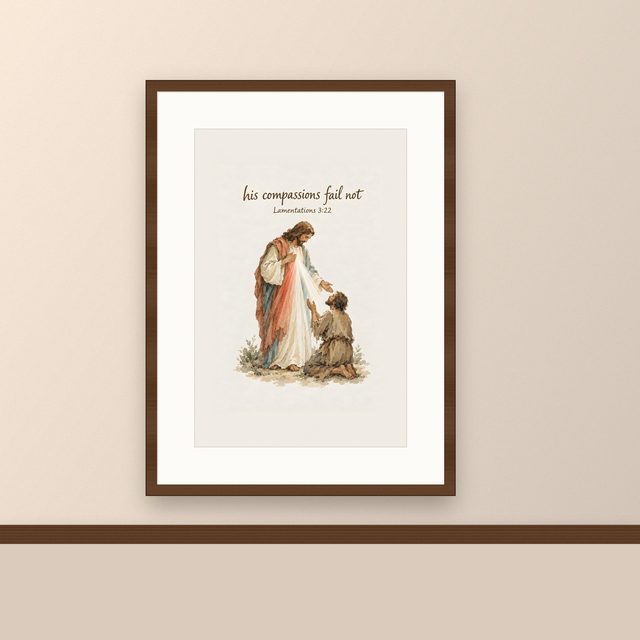
Jesus stands on the left in a long white robe, with a blue under-mantle and a rust-red cloak hanging from one shoulder. His right hand rests over his heart. From beneath it, two broad beams fan downward across his robe, one coral red, one pale and almost white. His head is bowed, and his left hand is extended, open, toward the man before him.
The man kneels barefoot on the sandy ground, his tunic torn and patched in earthy browns, a rope belt at his waist. He lifts his hands and face toward Jesus, so close their fingers nearly meet. A few gray-green plants grow around them. Lettered above in brown is a brief line from Lamentations 3:22: “his compassions fail not”.
Hope in the middle of a lament
Lamentations is a book of grief. It was written after the Babylonian army destroyed Jerusalem and its Temple in 587 BC, and Jewish and Christian tradition have long linked it with the prophet Jeremiah. Its five poems describe hunger, ruin and shame without softening anything. Chapter 3 is the longest and the most personal: a man who has “seen affliction” speaks in the first person.
Then, right in the center of the book, the tone turns. The full verse says: “It is of the LORD's mercies that we are not consumed, because his compassions fail not.” The next line continues: “They are new every morning: great is thy faithfulness.” The Hebrew word behind “compassions” is related to the word for a mother's womb, a love that is instinctive and protective. The hymn Great Is Thy Faithfulness, written by Thomas Chisholm in 1923, grew from these two verses.
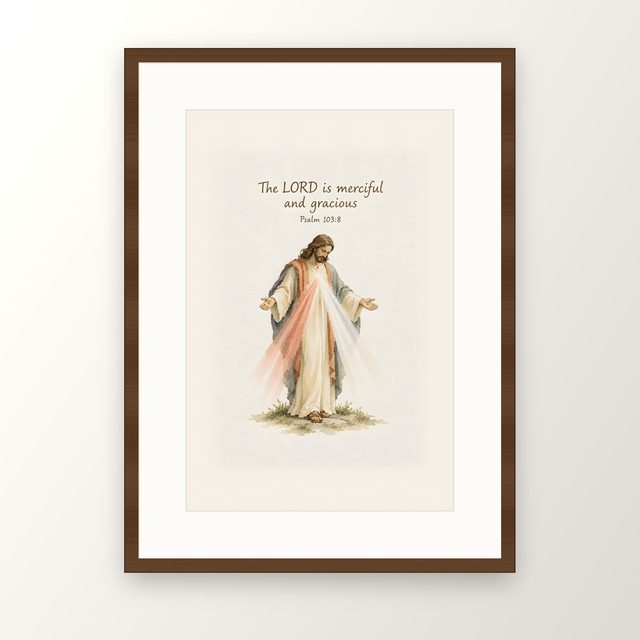
The image draws on the Divine Mercy devotion that began in Poland in the 1930s with Sister Faustina Kowalska. She described Christ with two rays coming from his heart, the red standing for blood and the pale for water, recalling the pierced side of Jesus on the cross. Pope John Paul II canonized her in 2000 and set the Sunday after Easter as Divine Mercy Sunday. Pairing her vision with Lamentations joins an ancient promise to a modern devotion.
A companion for grief and for Catholic homes
Many Catholic families keep an image of Divine Mercy in the home, often near the entrance or in the living room where the Chaplet is prayed. This watercolor offers a softer, narrative version of it.
Because the verse was born in mourning, it is also an appropriate sympathy gift or memorial piece, for someone who has lost a loved one or is carrying a burden they cannot put into words. It reminds them that mercy is renewed each morning.






Hang them together
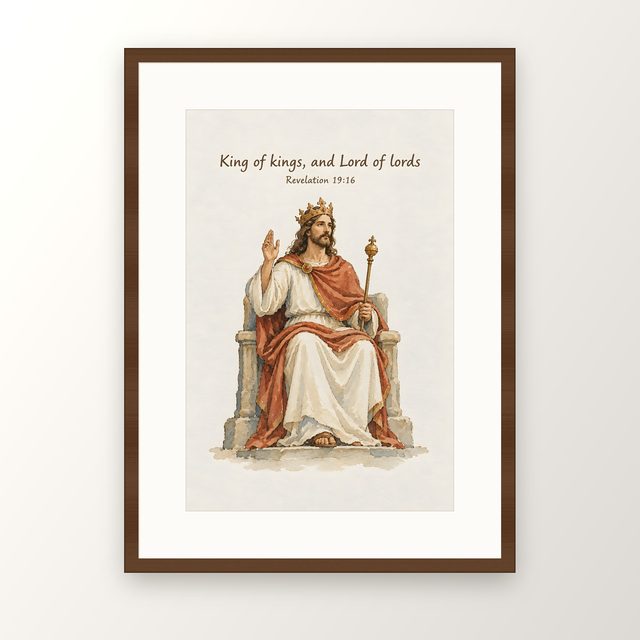
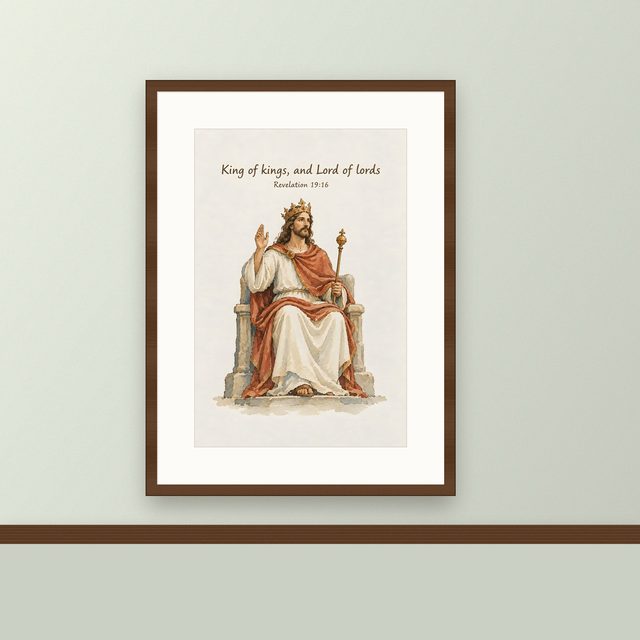
Complete the wall
Hang three together and save 25% on your prints.