Divine Mercy, Psalm 103:8 Wall Art
Psalm 103:8 · King James Version Free US shipping
“The LORD is merciful and gracious”
Psalm 103:8
Build a gallery wall: save 25% on 3 prints or more, applied in your cart.
- Free US shipping
- Printed in the USA
- 30-day returns
- King James text, checked
- 6
- words of Scripture
- 1
- print from Psalm 103
- $29
- smallest print
- 2–5
- days to dispatch
The print
A giclée print on thick archival matte paper of at least 200gsm. The verse is set into the painting in the King James Version, with a blank paper margin that makes framing easy. Sold without a frame.
Shipping
Printed to order and shipped within 2 to 5 business days, from a print studio in the United States. Shipping is free on every order.
Returns
Returns accepted within 30 days of delivery.
Digital download
Seven high-resolution files covering every common frame ratio, 4096 × 6144 px, good for printing up to A1. Nothing is shipped.
About this print
Divine Mercy, Psalm 103:8
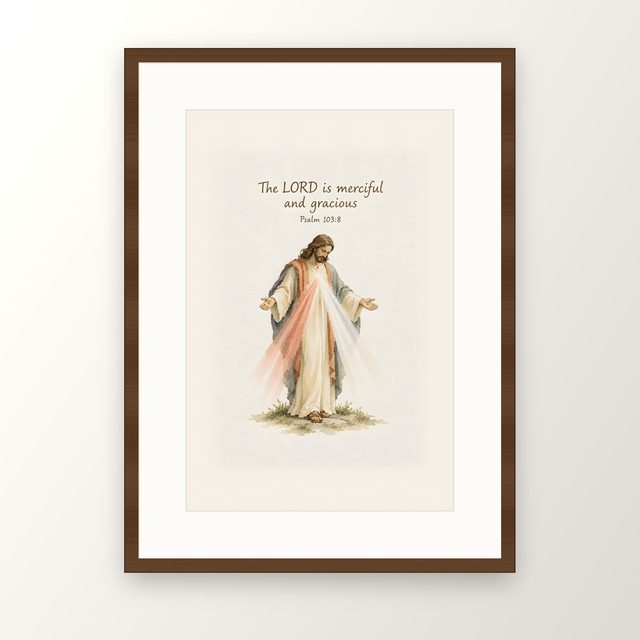
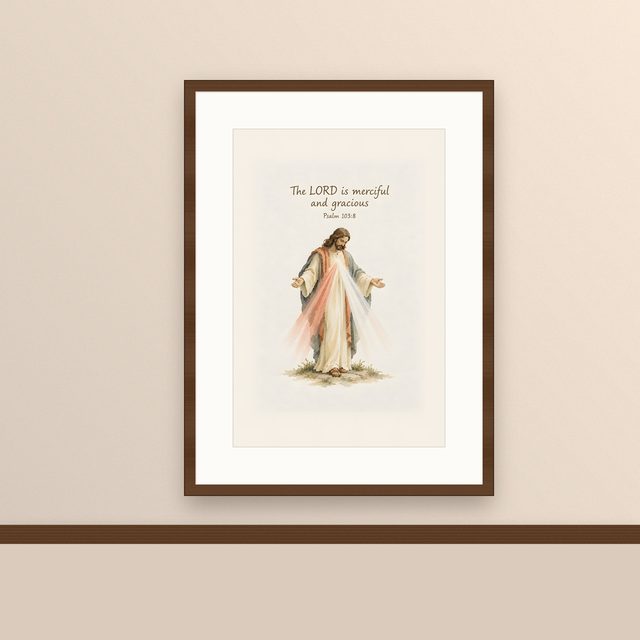
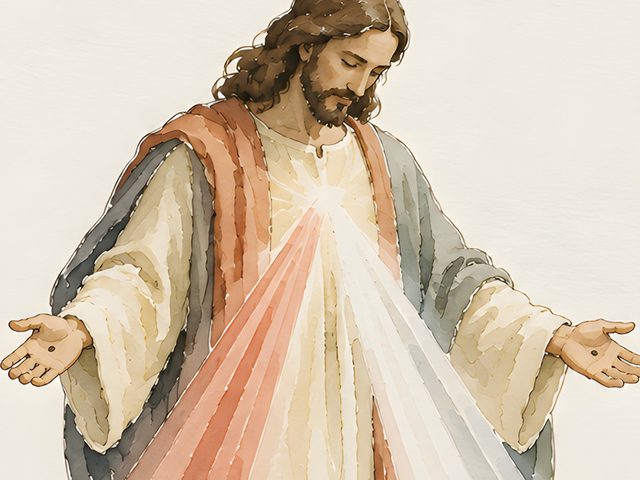
Jesus steps toward us with his arms open and two broad rays of light, one red and one pale, pouring from his chest, beneath David's summary of who God is.
Rays of red and pale light
He stands in sandals on a small patch of grass and stone, the only ground in the picture. His robe is long and cream, edged with a coral mantle and a soft blue cloak, and both arms are held out low and wide, palms turned up in welcome. His head is bowed a little, his expression gentle.
From a point of light over his heart two fans of color spread downward: on his right a coral-red beam, on his left a pale, almost white one tinged with blue. They grow wider and fainter as they reach the hem of his robe. Most of the page is left empty and warm, and at the top it reads: “The LORD is merciful and gracious”.
Psalm 103 and the Divine Mercy devotion
Psalm 103 is headed “A Psalm of David” and is a song of thanks from start to finish, beginning with the famous call, “Bless the LORD, O my soul”. Verse 8 continues in the King James text: “The LORD is merciful and gracious, slow to anger, and plenteous in mercy.” David is quoting almost word for word what God proclaimed about himself to Moses on Mount Sinai in Exodus 34, when the covenant was renewed after the golden calf. A few verses later the psalm says that God removes our transgressions as far as the east is from the west.
The painting draws on a much more recent tradition. In the 1930s a Polish nun, St. Faustina Kowalska, described a vision of Jesus with two rays coming from his heart and was asked to have it painted with the words “Jesus, I trust in you”. In her diary the pale ray signifies water and the red ray blood, recalling John 19:34, where blood and water flow from Christ's side. The Catholic Church has kept the Second Sunday of Easter as Divine Mercy Sunday since 2000.
In the classic Divine Mercy image, Jesus raises one hand in blessing. Here the artist has opened both arms instead, joining the rays to the psalm's picture of a God who welcomes.
In prayer and in mourning
Many Catholic homes keep a Divine Mercy image near the place where the family prays the chaplet, often at three in the afternoon. Because mercy is what people most want to hear about when someone has died, this print is also given in sympathy and displayed at memorial gatherings.
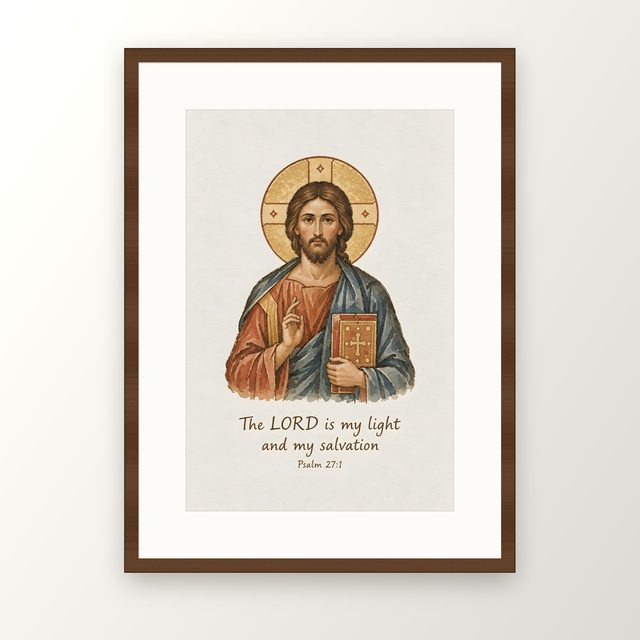
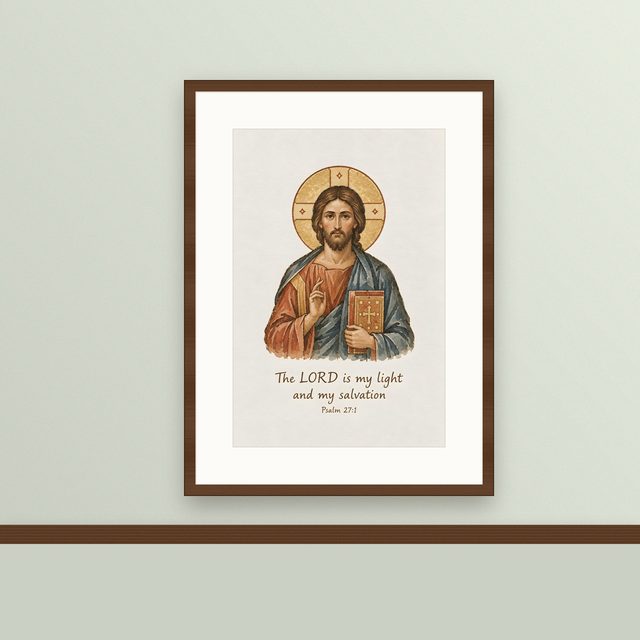
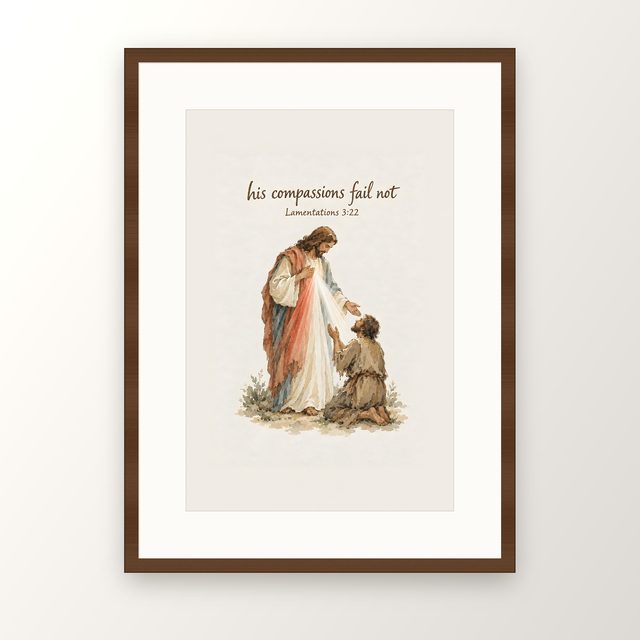
Hang them together
Complete the wall
Hang three together and save 25% on your prints.