The Prodigal Son, Luke 15:20 Wall Art
Luke 15:20 · King James Version Free US shipping
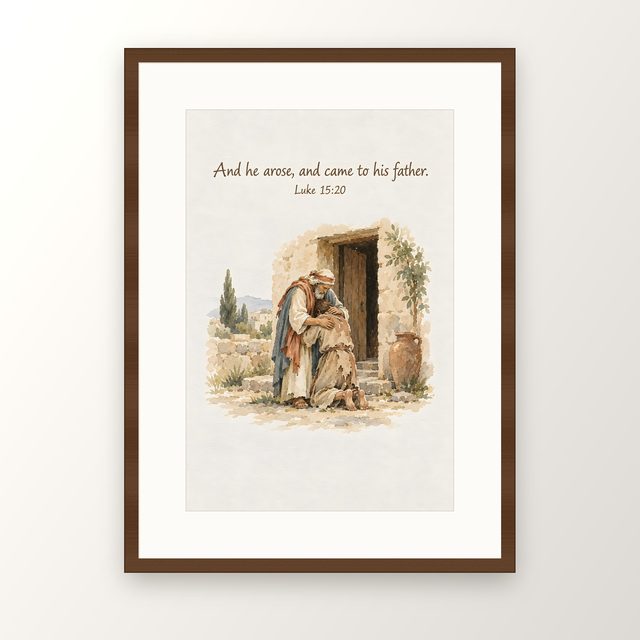
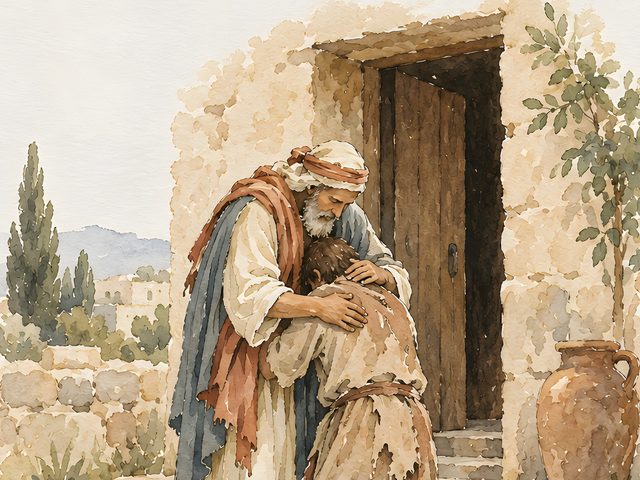
“And he arose, and came to his father.”
Luke 15:20
Build a gallery wall: save 25% on 3 prints or more, applied in your cart.
- Free US shipping
- Printed in the USA
- 30-day returns
- King James text, checked
- 8
- words of Scripture
- 4
- prints from Luke 15
- $29
- smallest print
- 2–5
- days to dispatch
The print
A giclée print on thick archival matte paper of at least 200gsm. The verse is set into the painting in the King James Version, with a blank paper margin that makes framing easy. Sold without a frame.
Shipping
Printed to order and shipped within 2 to 5 business days, from a print studio in the United States. Shipping is free on every order.
Returns
Returns accepted within 30 days of delivery.
Digital download
Seven high-resolution files covering every common frame ratio, 4096 × 6144 px, good for printing up to A1. Nothing is shipped.
About this print
Prodigal Son, Luke 15:20
A ragged son on his knees, a gray-bearded father bending over him at the door of the family house, and the short line from Luke where everything turns.
The embrace at the door
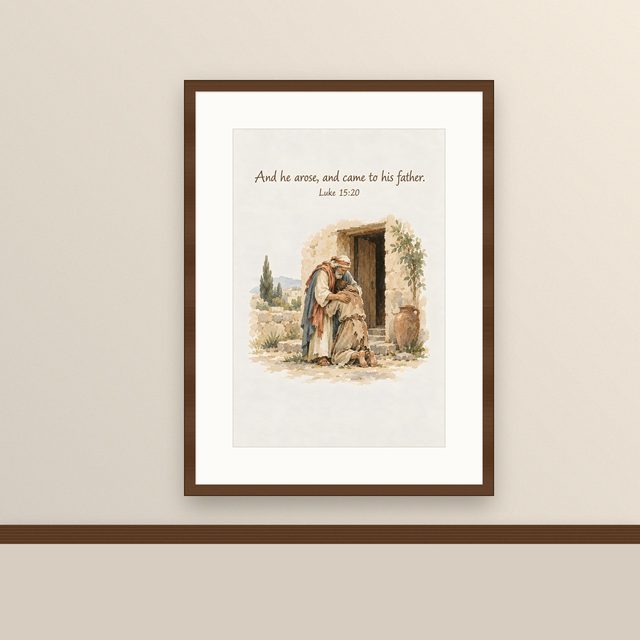
The father is old, with a white beard and a striped cloth tied around his head. He wears a long cream robe, a blue mantle and a rust-colored shawl, and he bends forward to cradle his son's head against his chest with both hands. The son kneels on the dusty ground, barefoot, in a torn tunic the color of sackcloth, the soles of his feet turned toward us.
Behind them is the house they both left in different ways: sandstone walls, three worn steps and a heavy wooden door standing half open. A tall clay jar waits by the step and a young tree climbs the wall. To the left, a stone terrace, two cypresses and the roofs of a village on a blue hill. The words above read “And he arose, and came to his father.”, with Luke 15:20 below.
What does Luke 15:20 mean?
Luke 15 opens with religious leaders grumbling that Jesus receives sinners and eats with them. His answer is three stories about something lost and found: a sheep, a silver coin, and a son. The younger son takes his inheritance early, which amounted to treating his father as already dead, spends it in a far country, and ends up feeding pigs, the lowest job imaginable for a Jewish listener.
The printed words are the son's decision put into action. The whole verse goes on: “But when he was yet a great way off, his father saw him, and had compassion, and ran, and fell on his neck, and kissed him.” In that culture a respected elder did not run in public. The father does, before the son can finish his rehearsed speech about being unworthy.
The painting brings the meeting to the doorstep and borrows the pose made famous by Rembrandt in his late Return of the Prodigal Son, with the son kneeling and the father's hands resting on him. The parable does not end there: an elder brother refuses to join the feast, and Jesus leaves the story open, as a question for the listeners who were grumbling.
For Sunday school, a pastor, or someone coming home
Few parables are easier to tell to children, and the picture tells it without words, which is why teachers hang it in Sunday school rooms. Pastors often keep it in a study as a reminder of what forgiveness looks like.
It is also a tender gift for a baptism, or for anyone returning to faith, to a family, or to a church after a long time away.
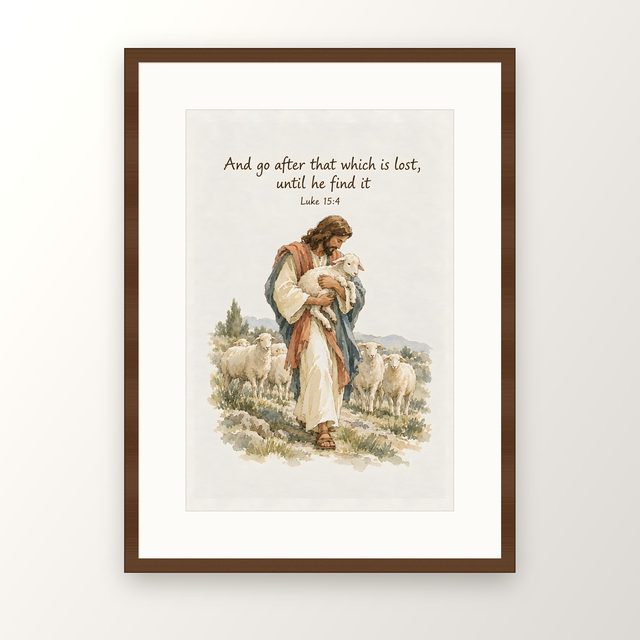
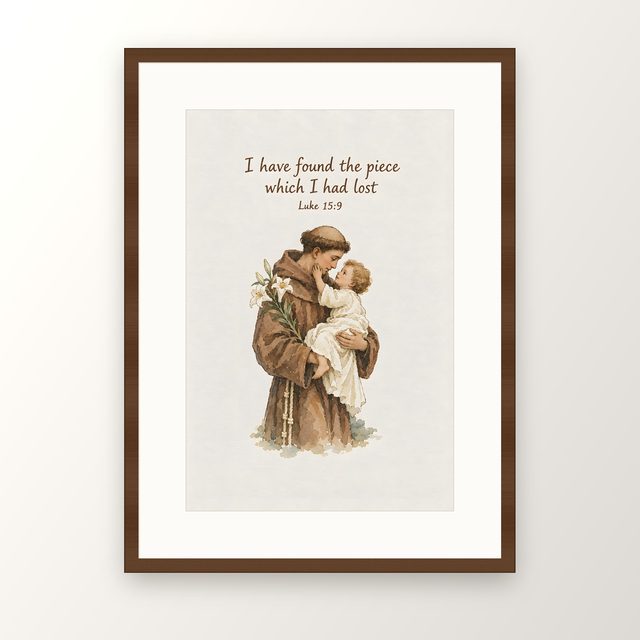
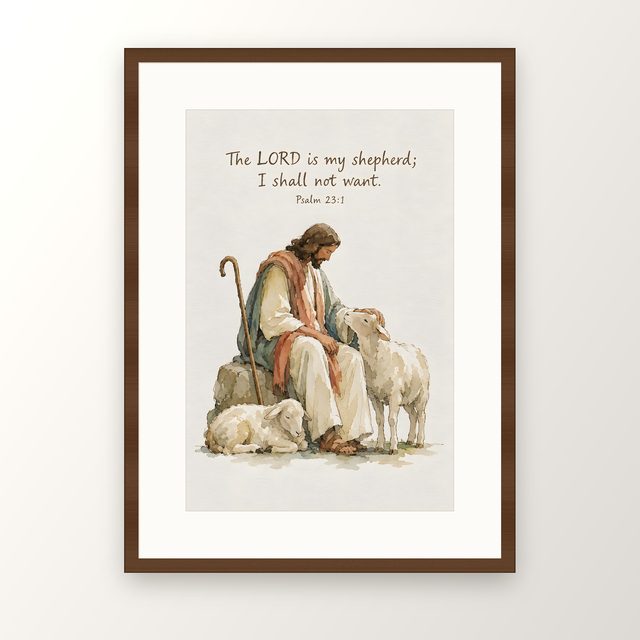
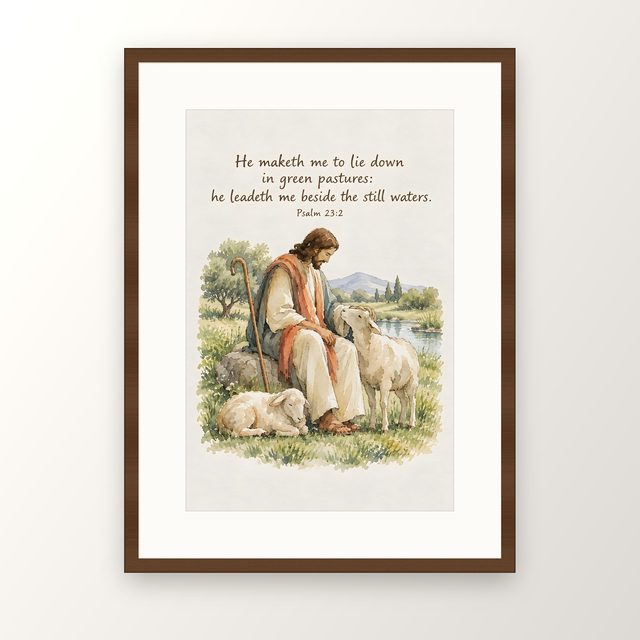
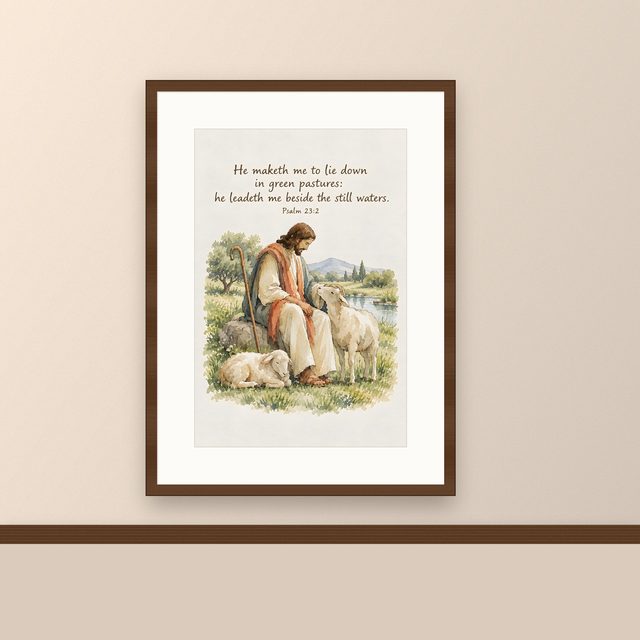
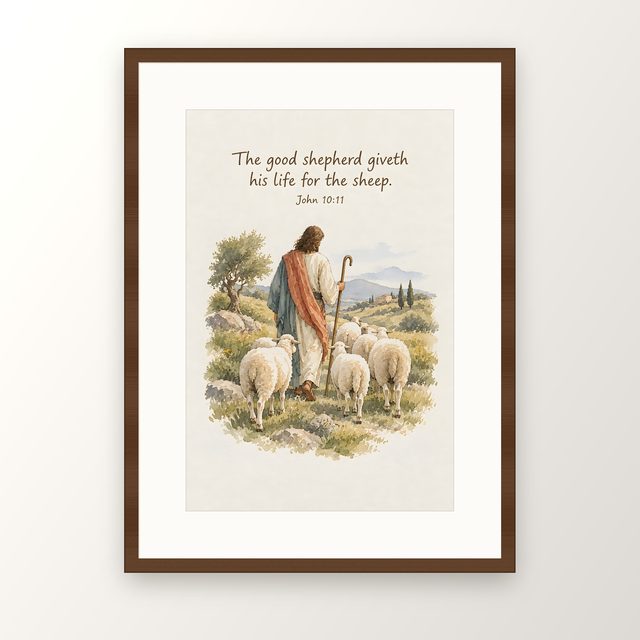
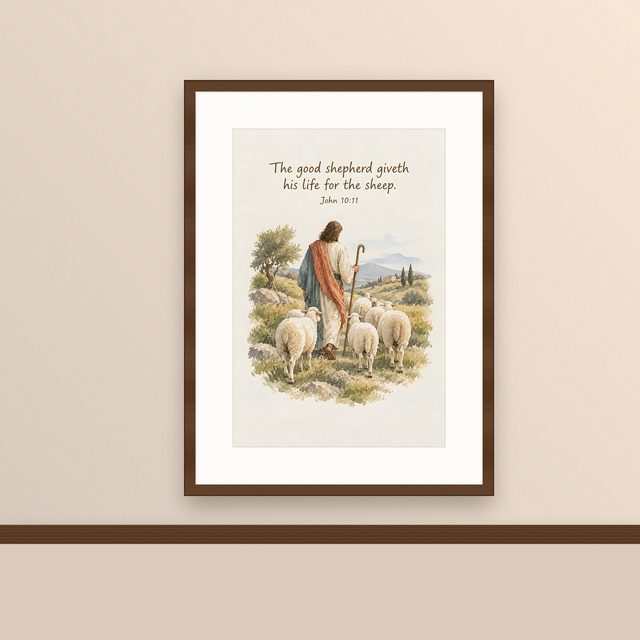
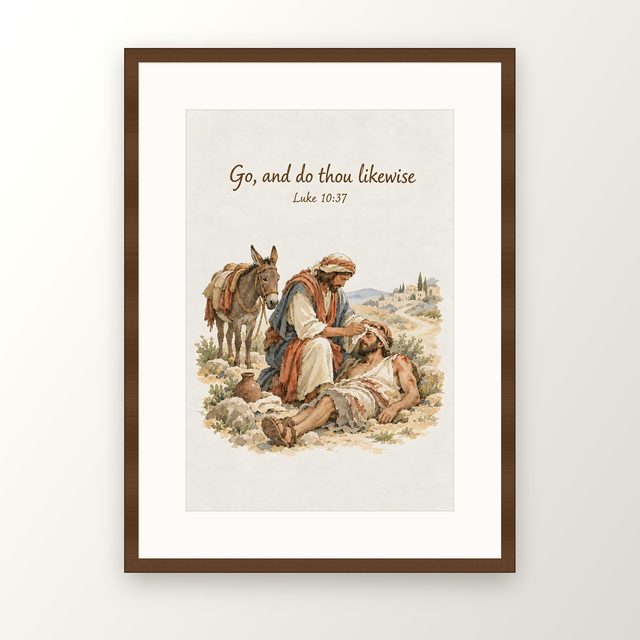
Luke 15 is painted three more times in the series: the lost sheep, a Saint Anthony print lettered with the verse of the recovered coin, and the feast for the son who was dead and is alive again. Read Luke 15 and what it means
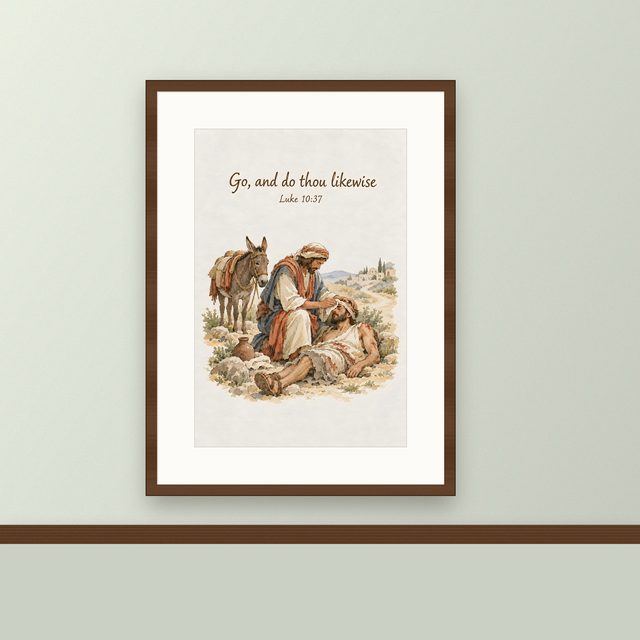
Hang them together
Complete the wall
Hang three together and save 25% on your prints.