Bible verse wall art
Luke 15: the lost sheep, the lost coin and the prodigal son
Luke 15 is three stories told in a row, each about something lost and then found, each ending in a party. Together they are among the clearest pictures of God that Jesus ever drew.
Luke 15 prints

Luke 15 · King James Version
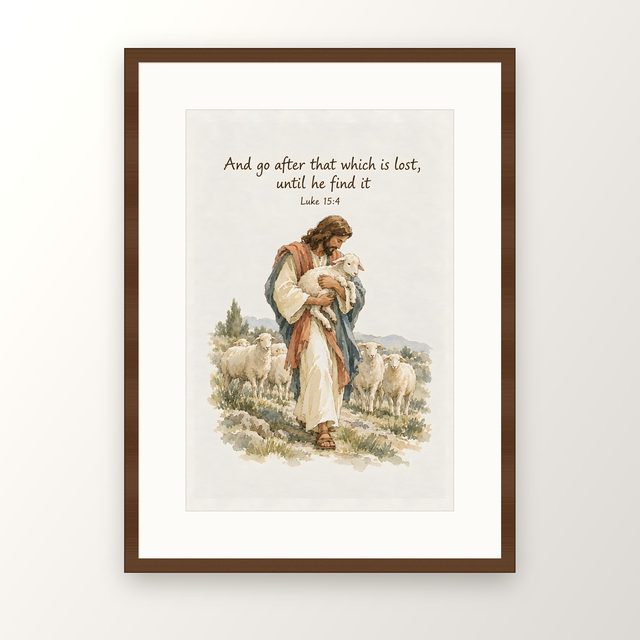
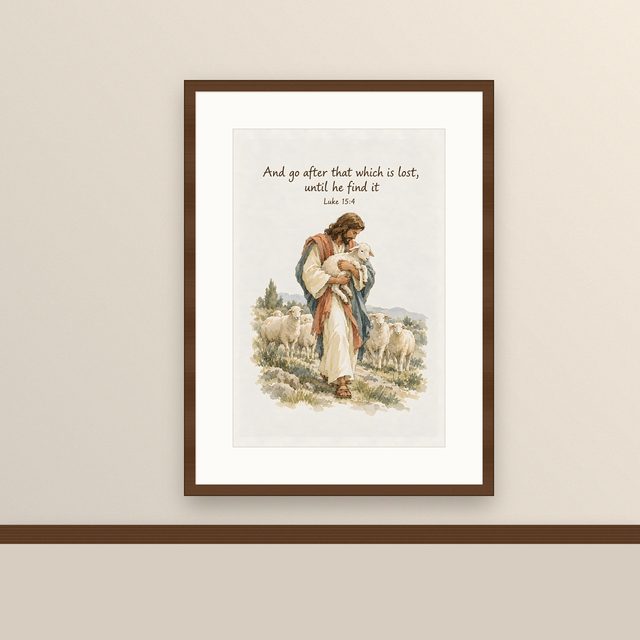
4 And go after that which is lost, until he find it
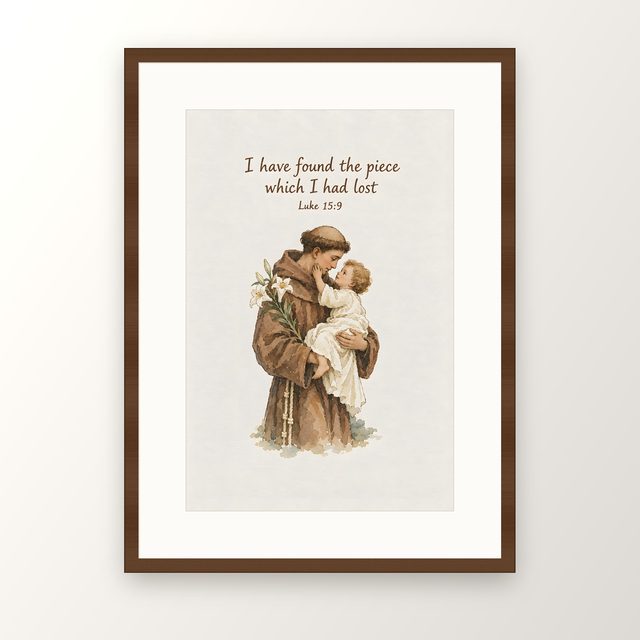
9 I have found the piece which I had lost
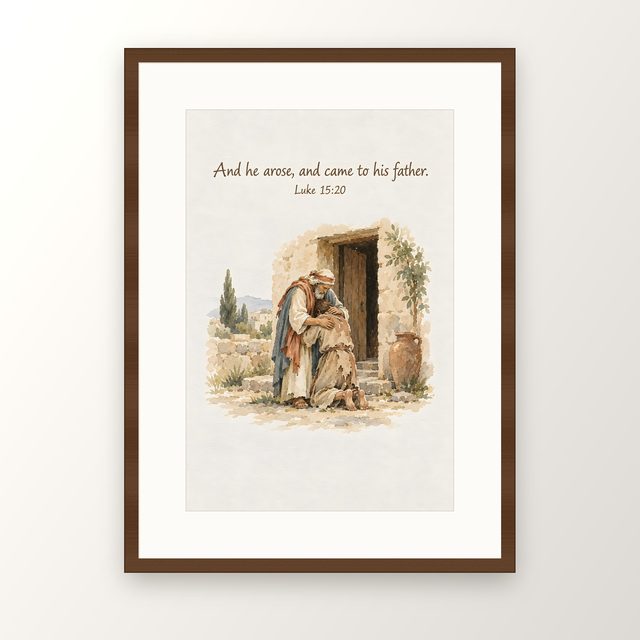
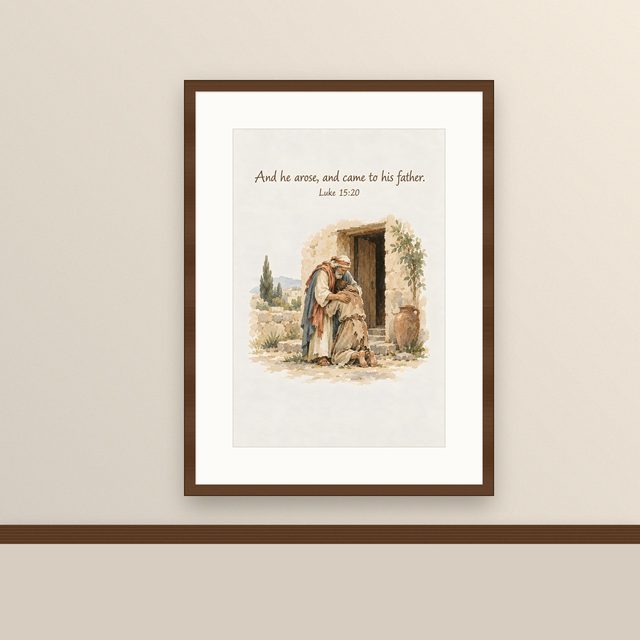
20 And he arose, and came to his father.
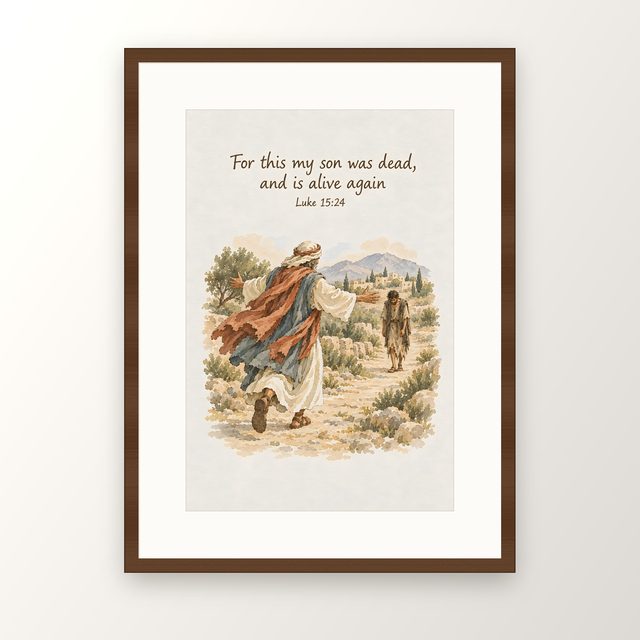
24 For this my son was dead, and is alive again
Why Jesus told them
The chapter opens with a complaint. Tax collectors and sinners have been gathering to hear Jesus, and the Pharisees and scribes murmur that this man receives sinners and eats with them. Sharing a table in that culture meant accepting someone. Jesus does not argue the point directly; he tells three parables, each one longer and closer to home than the last.
The lost sheep and the lost coin
In the first, a shepherd with a hundred sheep loses one. He leaves the ninety and nine in the wilderness and goes after that which is lost, until he find it (verse 4), then carries it home on his shoulders and calls his friends to celebrate. Matthew 18 tells a similar parable.
In the second, a woman has ten pieces of silver and loses one. She lights a candle, sweeps the house and searches carefully. When she finds it, she tells her neighbors: I have found the piece which I had lost (verse 9). A single silver coin could be a day's wages, and some suggest it came from a bride's headdress. Both parables end with the same refrain: there is joy in heaven over one sinner that repents. Catholic tradition links this searching woman to Saint Anthony of Padua, invoked for lost things.
What does the Prodigal Son mean?
The third story is the longest parable in the Gospels. A younger son asks for his share of the inheritance, in effect treating his father as already dead, and wastes it in a far country. Reduced to feeding pigs, he comes to himself and heads home with a rehearsed apology. And he arose, and came to his father (verse 20). The father sees him from a great way off, runs to meet him (something a dignified older man simply did not do) and kisses him before the speech is finished. He calls for a robe, a ring and a fatted calf, because, in verse 24, this my son was dead, and is alive again.
The story does not stop there. The older son, who stayed and worked, refuses to come in to the feast, and the father goes out to plead with him too. The parable ends without telling us whether he enters. Jesus leaves the Pharisees, and every reader, standing at that door.
Rembrandt and reconciliation
Rembrandt's late painting of the prodigal's return, now in the Hermitage in Saint Petersburg, is one of the most famous images in Western art. The chapter is read often during Lent, and it is a gentle gift for a family welcoming someone home.