The Lord Is My Shepherd, Psalm 23:1 Wall Art
Psalm 23:1 · King James Version Free US shipping
“The LORD is my shepherd; I shall not want.”
Psalm 23:1
Build a gallery wall: save 25% on 3 prints or more, applied in your cart.
- Free US shipping
- Printed in the USA
- 30-day returns
- King James text, checked
- 9
- words of Scripture
- 7
- prints from Psalm 23
- $29
- smallest print
- 2–5
- days to dispatch
The print
A giclée print on thick archival matte paper of at least 200gsm. The verse is set into the painting in the King James Version, with a blank paper margin that makes framing easy. Sold without a frame.
Shipping
Printed to order and shipped within 2 to 5 business days, from a print studio in the United States. Shipping is free on every order.
Returns
Returns accepted within 30 days of delivery.
Digital download
Seven high-resolution files covering every common frame ratio, 4096 × 6144 px, good for printing up to A1. Nothing is shipped.
About this print
The Lord Is My Shepherd, Psalm 23:1
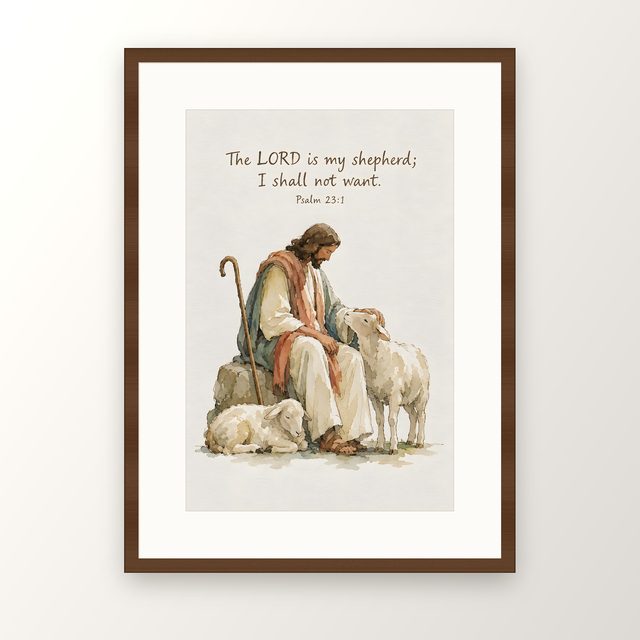
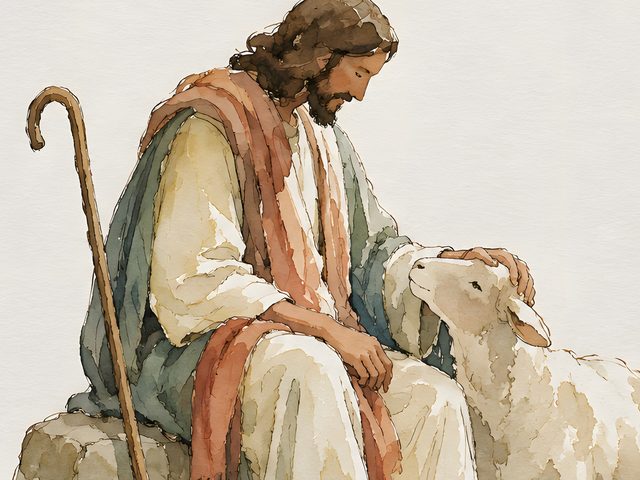
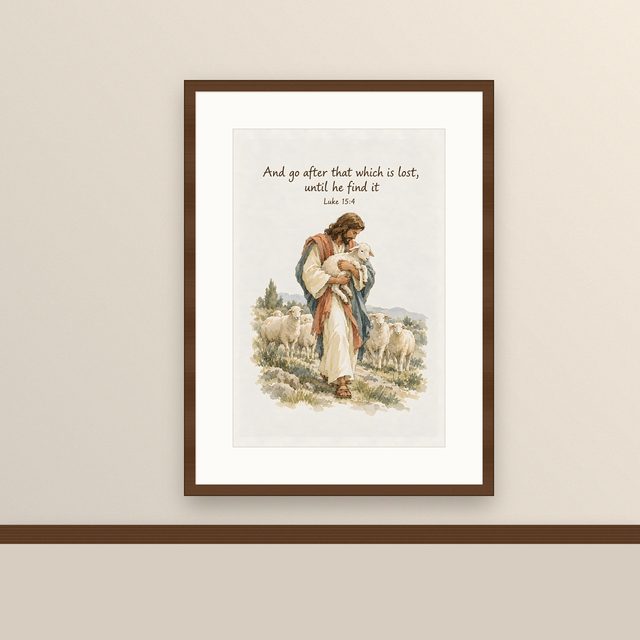
A quiet watercolor of the Good Shepherd resting with his flock, lettered in a soft script with the first line of the most loved psalm in the Bible.
What is painted
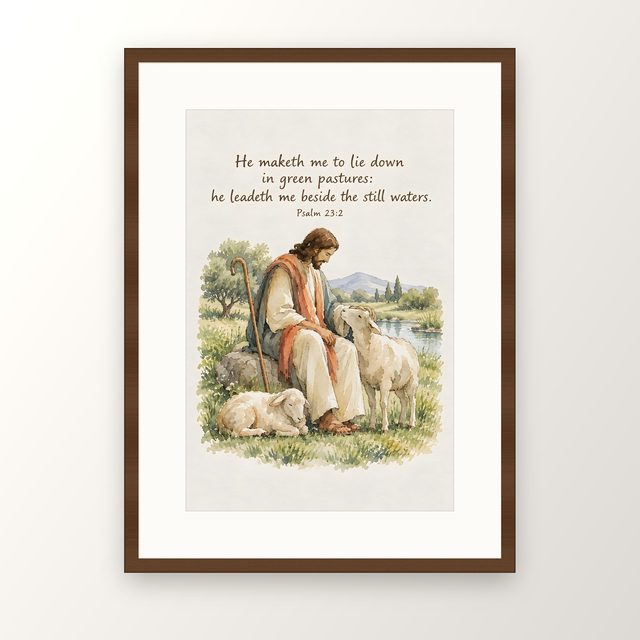
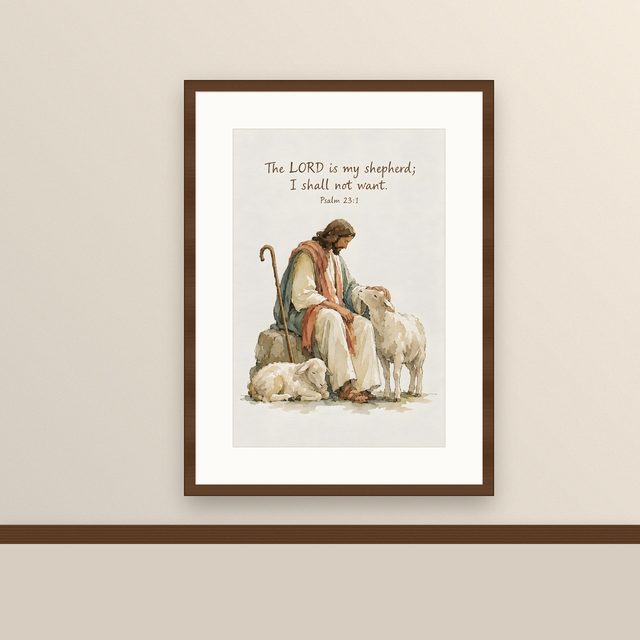
Jesus sits on a low rock, a rust-red mantle over a slate-blue robe, and rests his hand on the head of a sheep that has come up to him. A lamb sleeps against his feet. His shepherd's crook leans on the stone beside him, set down for now. There is no landscape to speak of, only a line of grass and a lot of pale paper, so the eye goes straight from the words to the gesture.
Above them, in loose sepia lettering: “The LORD is my shepherd; I shall not want.” The reference, Psalm 23:1, sits smaller underneath. It is drawn in ink line with transparent washes of terracotta, slate blue and sage, the kind of watercolor where you can still see where the brush stopped.
Why “LORD” is written in capitals
The capitals are not a style choice, they are the translators'. In the King James Bible of 1611, “LORD” in small capitals marks the place where the Hebrew text has the personal name of God, the four letters YHWH, which Jewish readers did not pronounce aloud. So the first line of Psalm 23 is more intimate than it sounds in English: it names God, then calls him “my shepherd”.
The psalm is headed “A Psalm of David”, and David had kept his father's sheep near Bethlehem before he was ever a king (1 Samuel 16:11). He knew what a shepherd actually does: finds water in dry country, walks in front of the flock, counts them at night. “I shall not want” means “I will lack nothing”, the confidence of an animal that trusts the one who leads it.
Christians have always read the verse through the words of Jesus in John 10:11, “I am the good shepherd”. That is why the painting shows him, and not a nameless herdsman: the psalm and the Gospel are meant to be heard together.
Where it belongs
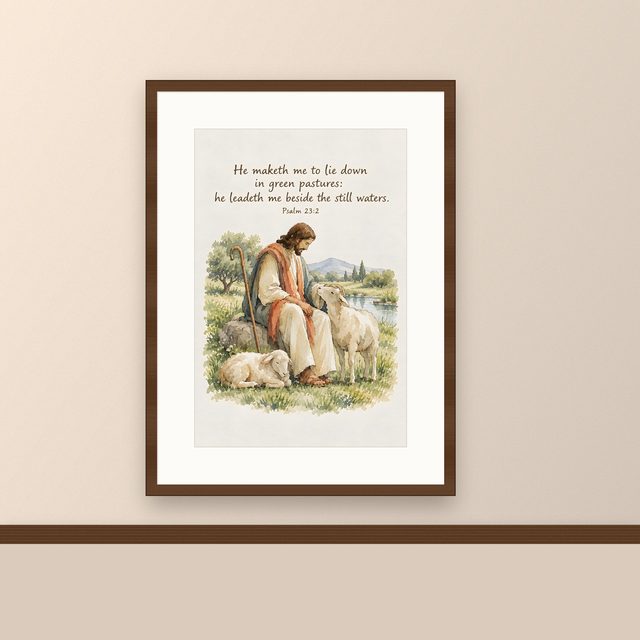
Because the painting is calm and mostly white space, it sits easily above a bed, at the end of a hallway or in a reading corner, and it does not fight with a busy wall. Many people choose Psalm 23 for a room they return to at the end of the day.
It is also one of the verses most often read at funerals and memorial services, so it is chosen as a gift of sympathy, to say something when words are hard. With the sleeping lamb at the shepherd's feet, others give it for a baptism or hang it in a child's room. Framed in light oak it stays soft; in dark wood it becomes more solemn.
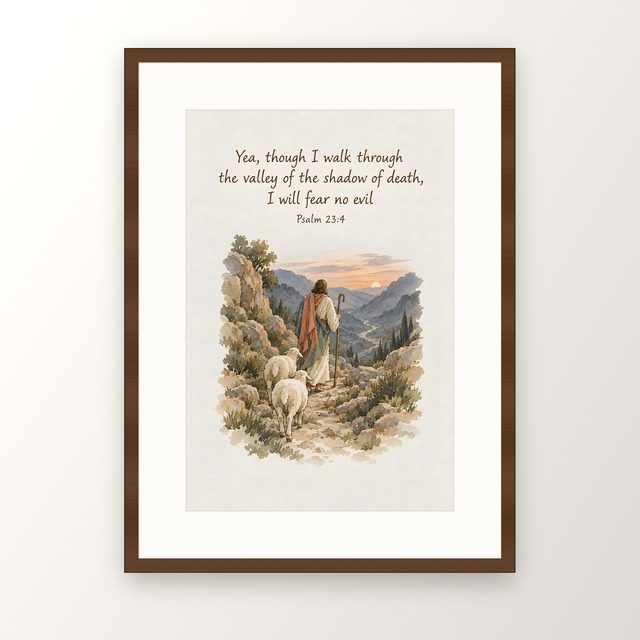
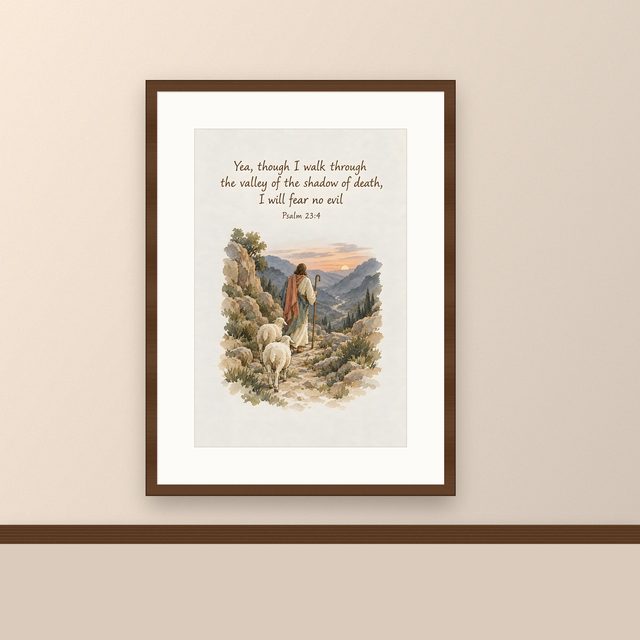
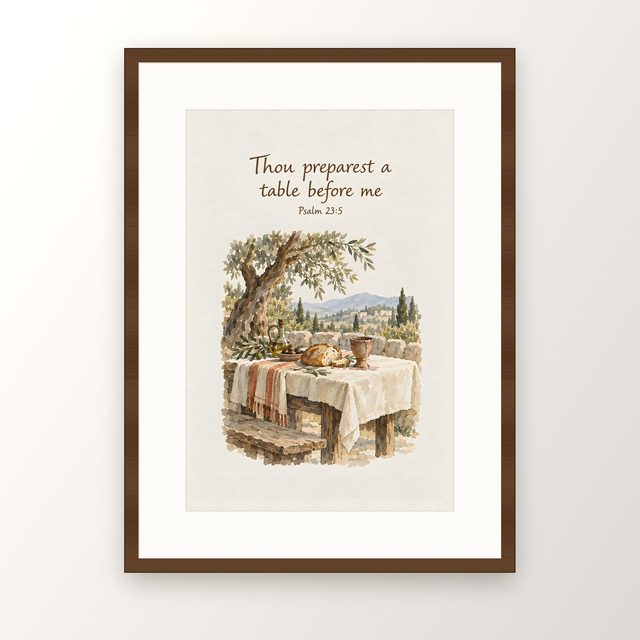
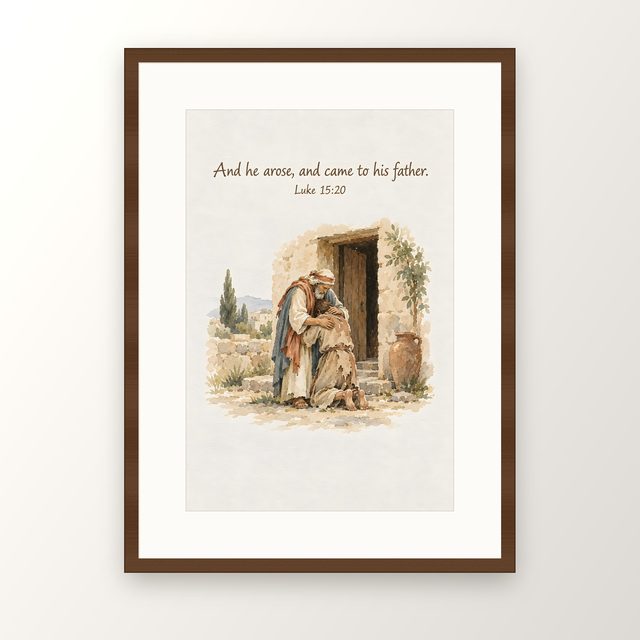
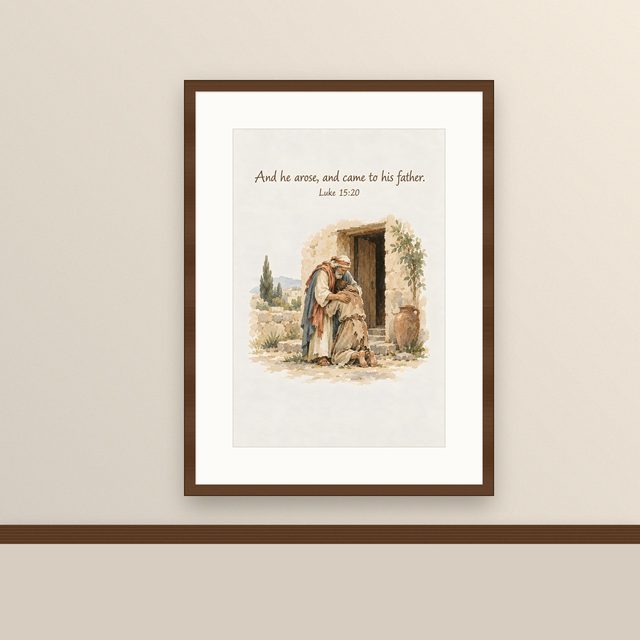
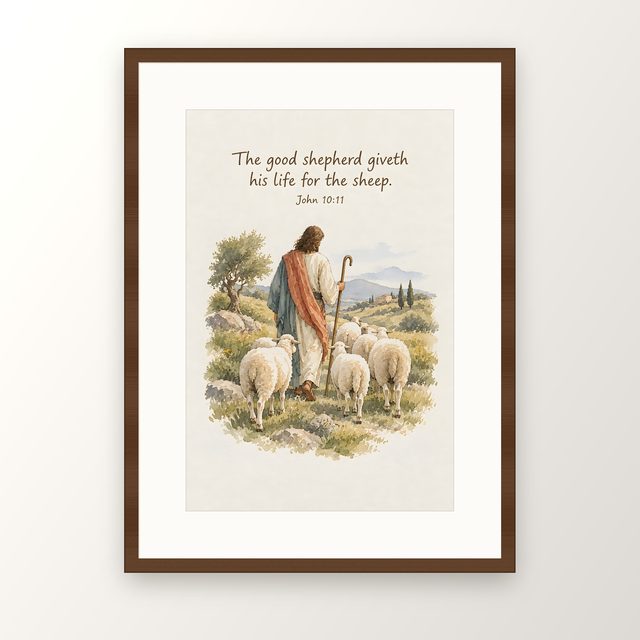
Psalm 23 has six verses, and three more of them are painted in this series: the green pastures, the valley of the shadow of death and the table prepared before me. Read Psalm 23 and what it means
Hang them together
Complete the wall
Hang three together and save 25% on your prints.