Road to Emmaus, Luke 24:31 Wall Art
Luke 24:31 · King James Version Free US shipping
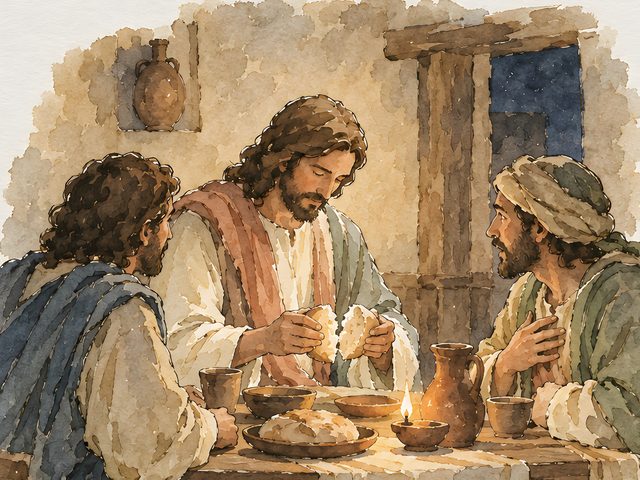
“And their eyes were opened, and they knew him”
Luke 24:31
Build a gallery wall: save 25% on 3 prints or more, applied in your cart.
- Free US shipping
- Printed in the USA
- 30-day returns
- King James text, checked
- 9
- words of Scripture
- 4
- prints from Luke 24
- $29
- smallest print
- 2–5
- days to dispatch
The print
A giclée print on thick archival matte paper of at least 200gsm. The verse is set into the painting in the King James Version, with a blank paper margin that makes framing easy. Sold without a frame.
Shipping
Printed to order and shipped within 2 to 5 business days, from a print studio in the United States. Shipping is free on every order.
Returns
Returns accepted within 30 days of delivery.
Digital download
Seven high-resolution files covering every common frame ratio, 4096 × 6144 px, good for printing up to A1. Nothing is shipped.
About this print
Road to Emmaus, Luke 24:31
A simple supper by lamplight, and the moment two tired travelers realize who has been walking with them all day.
Supper at Emmaus, as painted here
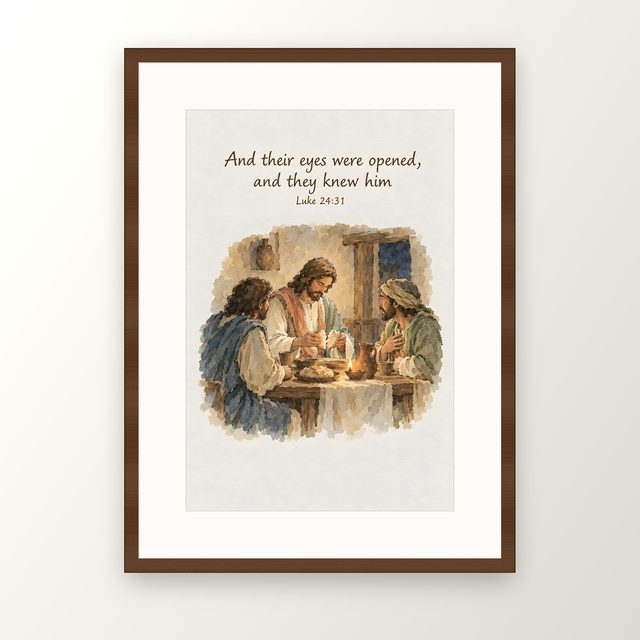
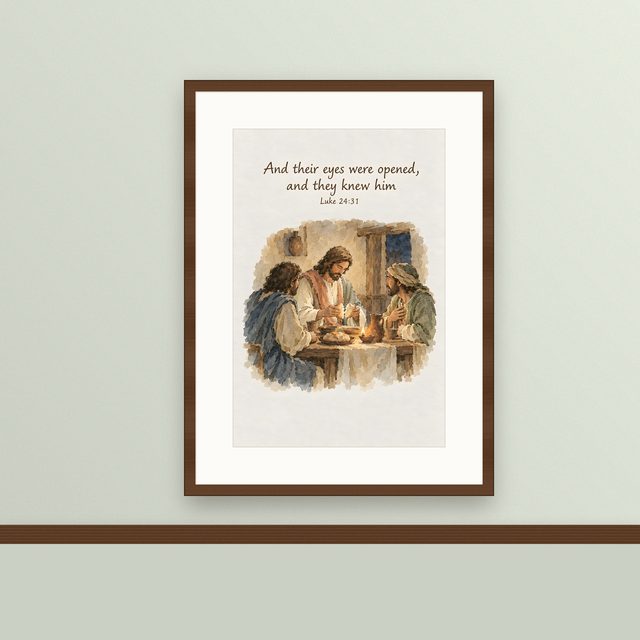
Three men sit at a rough wooden table covered with a linen cloth. In the middle, Jesus looks down at the round loaf he is tearing in two, a rose colored stole over his shoulders. On the left, a disciple in a heavy blue cloak leans forward, seen mostly from behind. On the right, the second disciple in a striped head wrap and olive coat has put a hand to his chest, mouth slightly open, the look of someone whose heart has just jumped.
The table holds a platter of bread, earthen bowls, a clay jug, cups and a little oil lamp with a single flame. Behind them, a jar sits in a wall niche and a small window shows the deep blue of night. Across the top: “And their eyes were opened, and they knew him”, with the reference Luke 24:31.
What happened at Emmaus?
On the afternoon of the first Easter, two followers of Jesus were walking from Jerusalem to a village called Emmaus, about seven miles away. Luke gives the name of one of them, Cleopas. A stranger joined them and asked why they were so sad. They told him about the crucifixion and the strange report of the women at the tomb, and he answered by opening the Scriptures to them, beginning at Moses and all the prophets.
When they reached the village, they urged him to stay, because the day was far spent. At the table he took bread, blessed it, broke it and gave it to them. That is the instant of verse 31: they recognized him, and in the same breath he vanished from their sight. They then asked each other whether their hearts had not burned within them on the road.
Luke closes the episode by saying Jesus was known to them in the breaking of bread. The phrase echoes the Last Supper and became, for the early Christians, a name for their shared meal. Whatever one's tradition, the story ties the risen Christ to two ordinary gestures: explaining the Bible and sitting down to eat.
Around the table at home
The warm ochres and lamplight suit a dining room or kitchen wall, where the painting can hang over the very place a family shares its meals. It belongs to the Easter season but reads well all year, and it is sometimes chosen for a baptism or for a pastor's office.
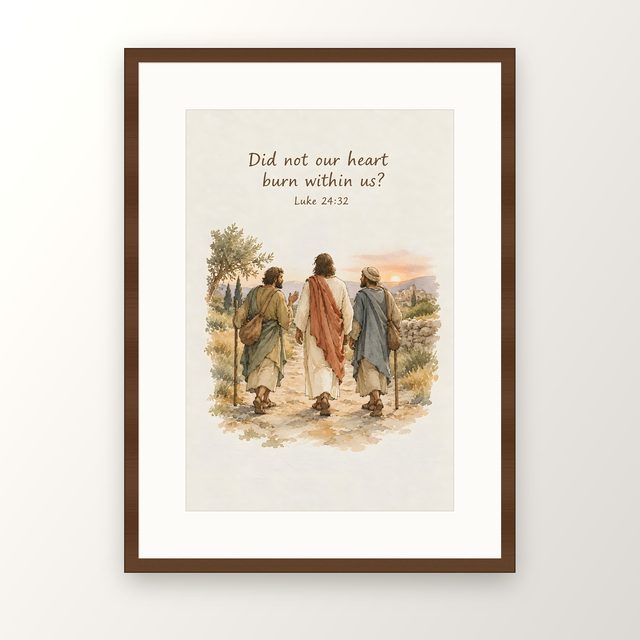
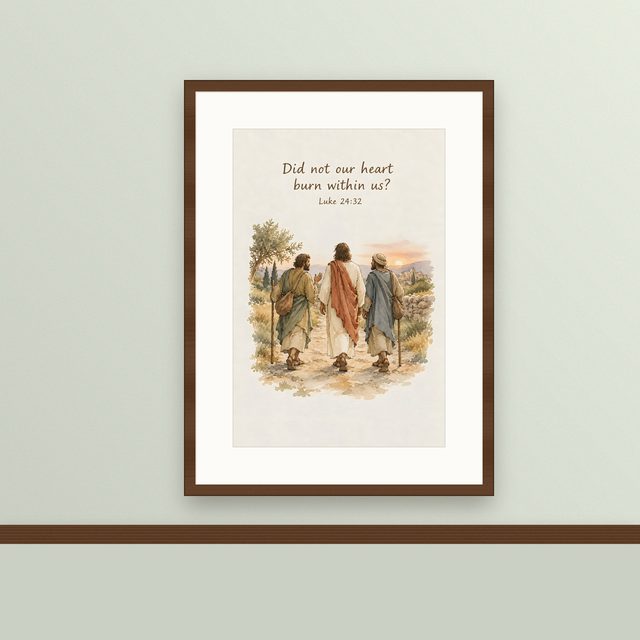
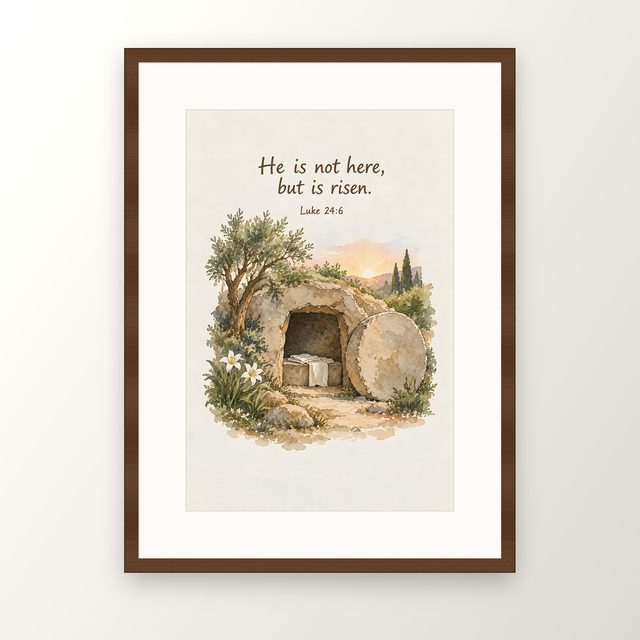
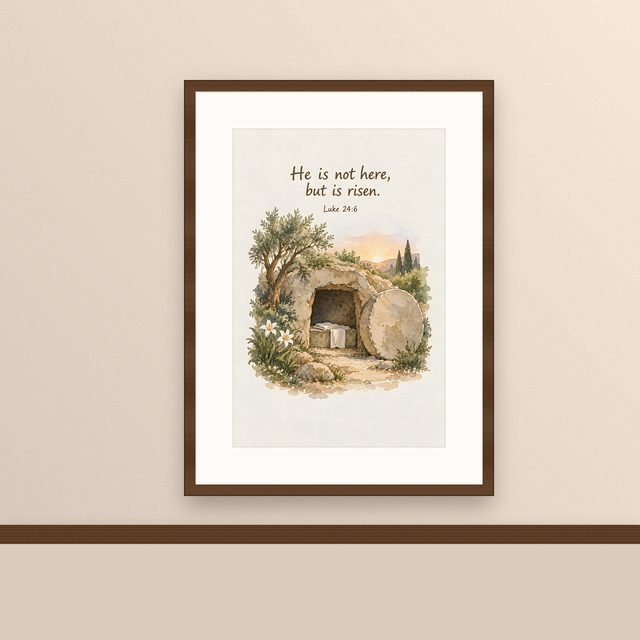
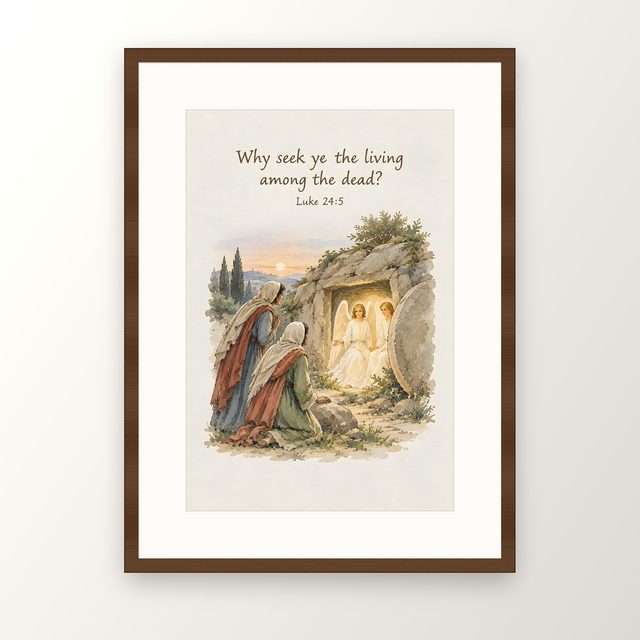
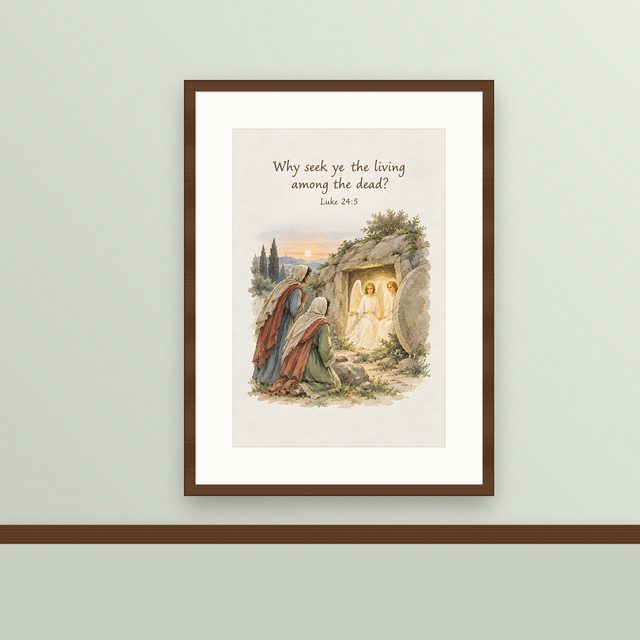
Emmaus is painted again for verse 32, and the same chapter also gives us the women at the tomb and the empty tomb itself. Read Luke 24 and what it means
Hang them together
Complete the wall
Hang three together and save 25% on your prints.