Bible verse wall art
Luke 24: the empty tomb and the road to Emmaus
Luke 24 is Easter Sunday from dawn to nightfall. It begins with women carrying spices to a grave and ends with the disciples worshipping in the temple, and in between comes one of the most beautiful walks ever written.
Luke 24 prints
Luke 24 · King James Version
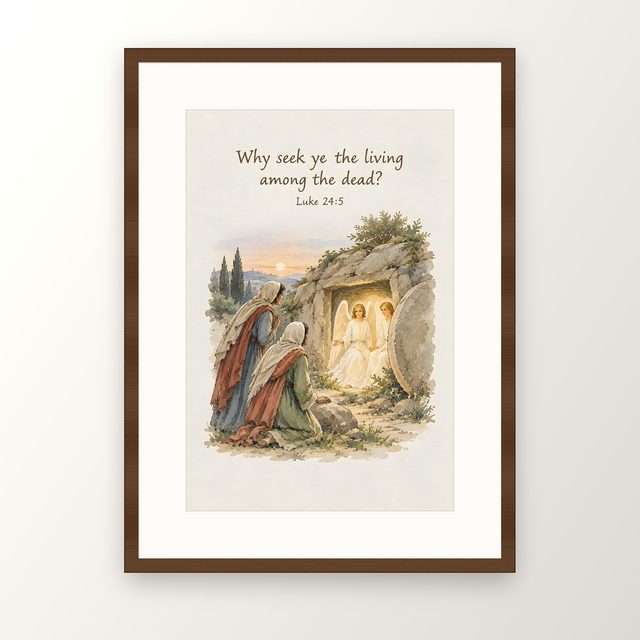
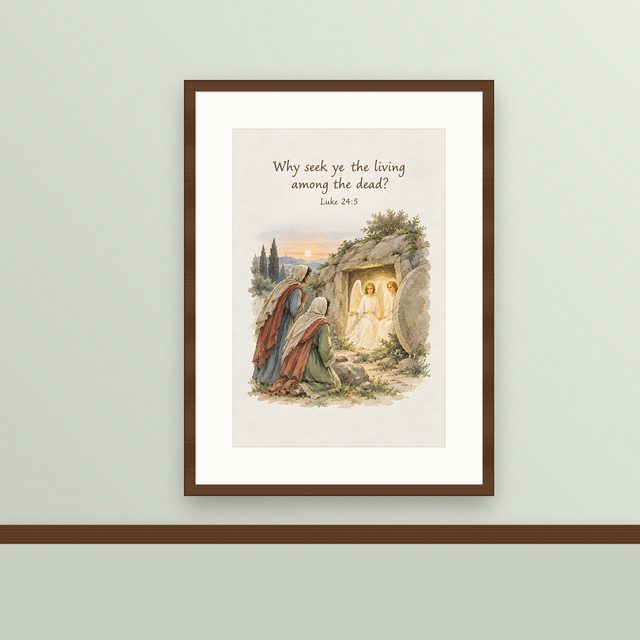
5 Why seek ye the living among the dead?
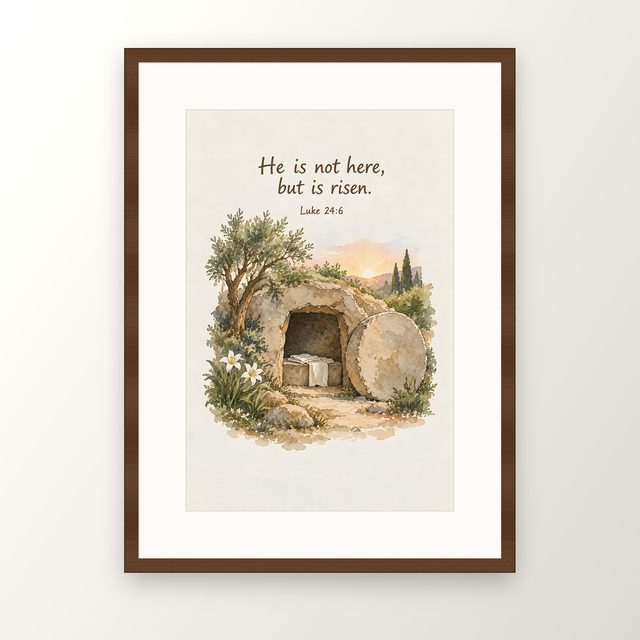
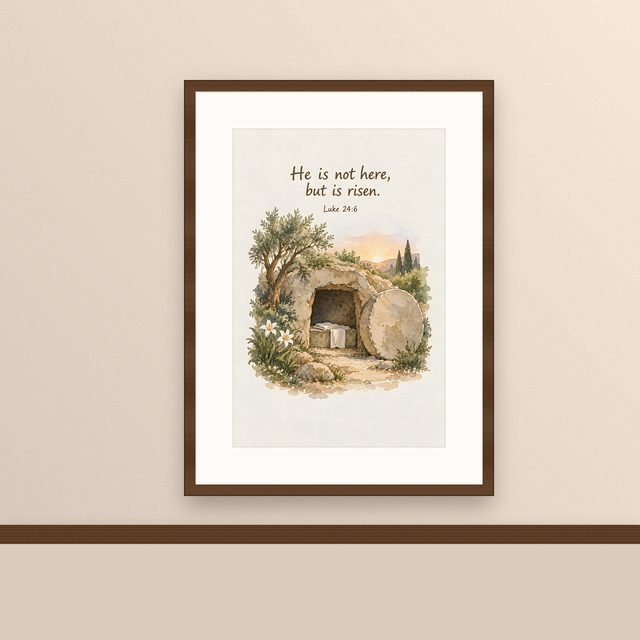
6 He is not here, but is risen.
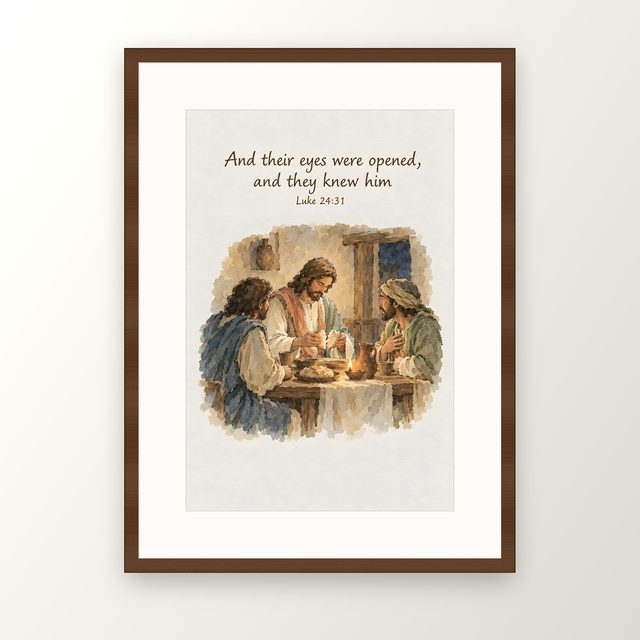
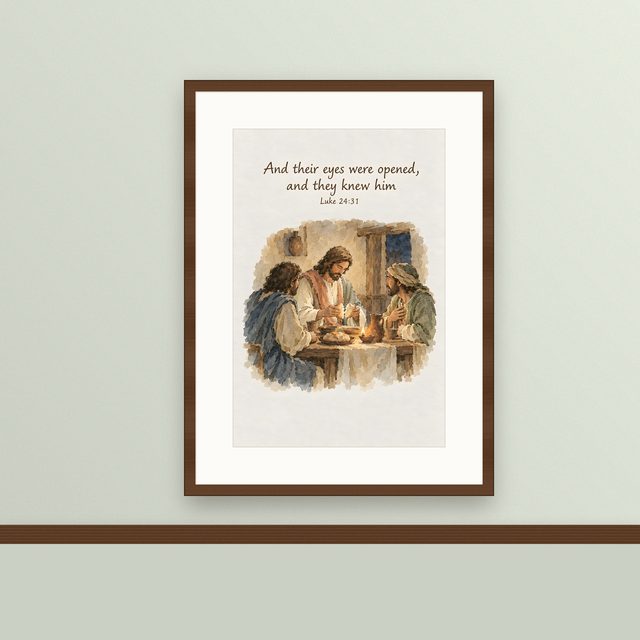
31 And their eyes were opened, and they knew him
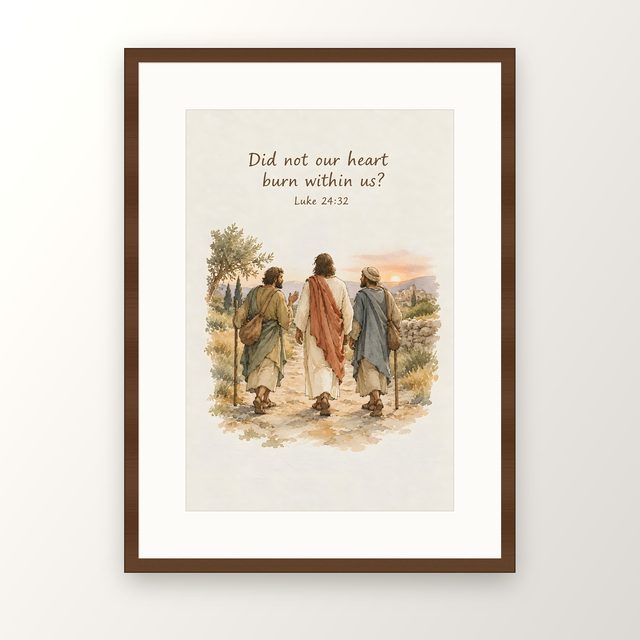
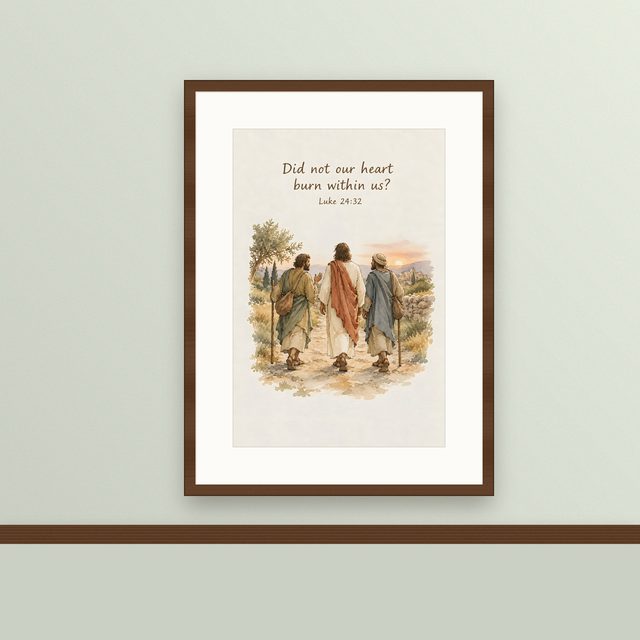
32 Did not our heart burn within us?
Why seek ye the living among the dead?
Very early on the first day of the week, the women who had followed Jesus from Galilee come to the tomb with the spices they have prepared. They find the stone rolled away and the body gone. Two men in shining garments stand beside them and ask, in verse 5, Why seek ye the living among the dead? Then, in verse 6, He is not here, but is risen, and they remind the women of what Jesus had said in Galilee about being crucified and rising on the third day.
Luke names the witnesses: Mary Magdalene, Joanna, Mary the mother of James and other women. When they report to the apostles, their words seem to the men like idle tales. Peter alone runs to the tomb and goes home wondering. The first proclaimers of the resurrection, in all four Gospels, are women.
What happened on the road to Emmaus?
That afternoon two disciples, one of them named Cleopas, walk to a village called Emmaus, about seven miles from Jerusalem. Jesus joins them, but they do not recognize him. They tell him, sadly, that they had hoped he was the one to redeem Israel. Beginning at Moses and all the prophets, he explains to them the things concerning himself.
As evening falls, they urge the stranger to stay, because the day is far spent. At the table he takes bread, blesses it, breaks it and gives it to them. And their eyes were opened, and they knew him (verse 31), and he vanishes from their sight. They say to each other in verse 32, Did not our heart burn within us? They had felt it on the road, while he opened the Scriptures; they understood it only in the breaking of the bread. They walk straight back to Jerusalem in the dark to tell the others.
Easter, the breaking of bread and an evening hymn
The empty tomb account is one of the Gospel readings for Easter, and the Emmaus story is traditionally read in Easter week. Its pattern, Scripture explained and then bread broken, mirrors the two parts of a communion service. The disciples' plea to their guest also inspired Henry Francis Lyte's hymn “Abide with Me.” An Emmaus print suits a dining table, a Bible study room or a home where people argue about the Scriptures over supper.
The last scenes of Luke
Jesus appears to the eleven, shows his hands and feet and eats a piece of broiled fish to prove he is not a ghost. He tells them to wait in Jerusalem for power from on high, leads them out as far as Bethany, blesses them and is carried up into heaven. Luke picks up the story again, with the ascension retold, in the first chapter of Acts.