Bible verse wall art
Psalm 23: the Lord is my shepherd
Six verses, a little over a hundred words in English, and probably the most memorised passage of the Old Testament. Here is what it says, line by line, and the four verses we have painted.
Psalm 23 prints
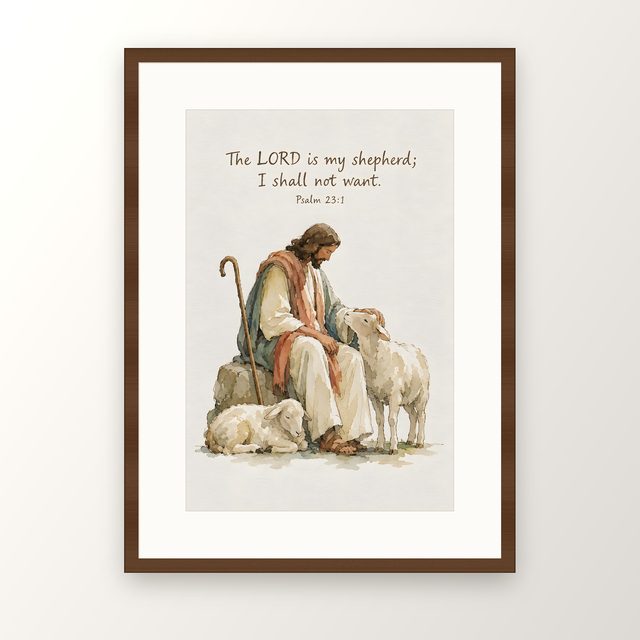
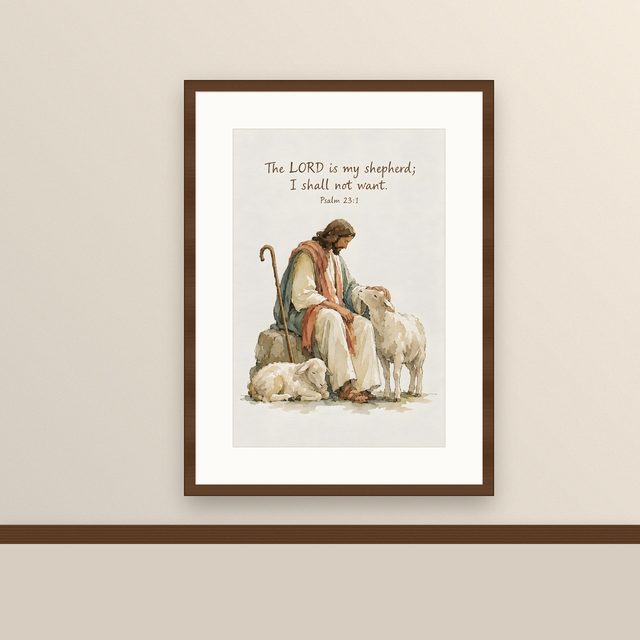
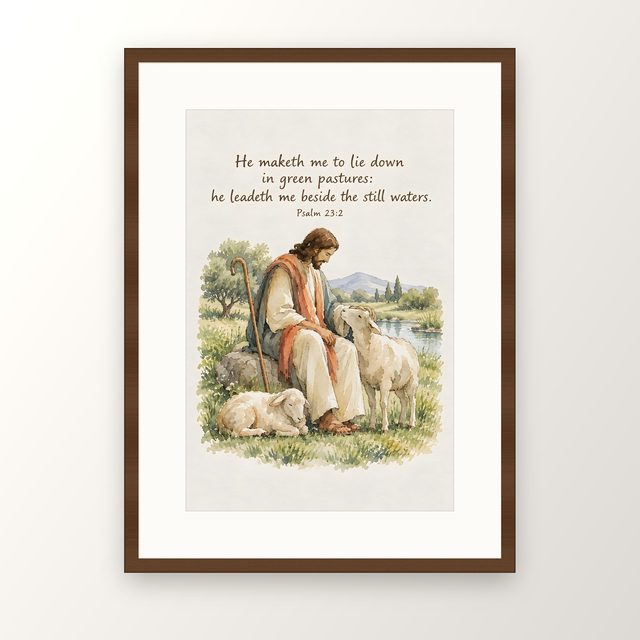
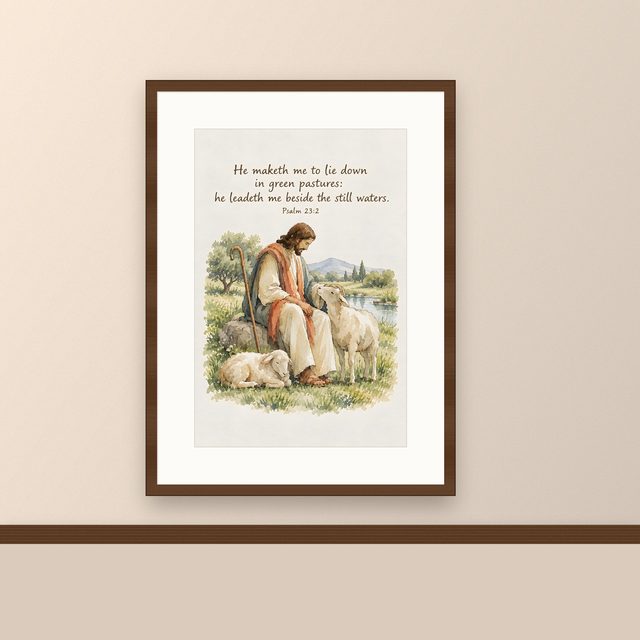
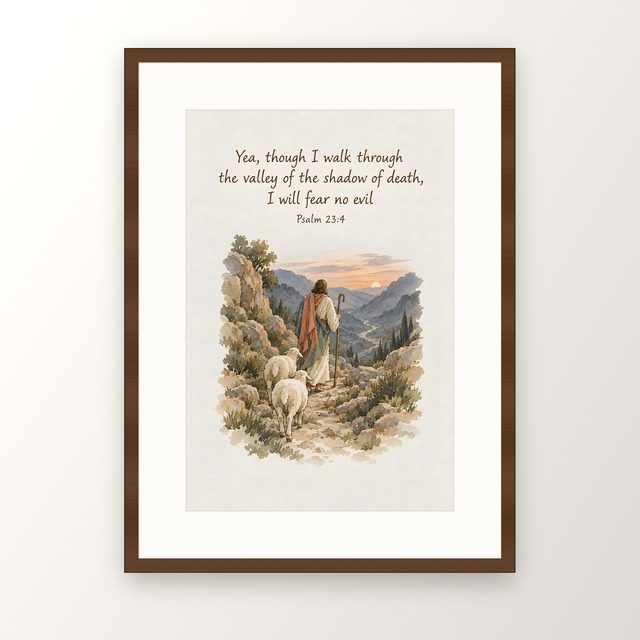
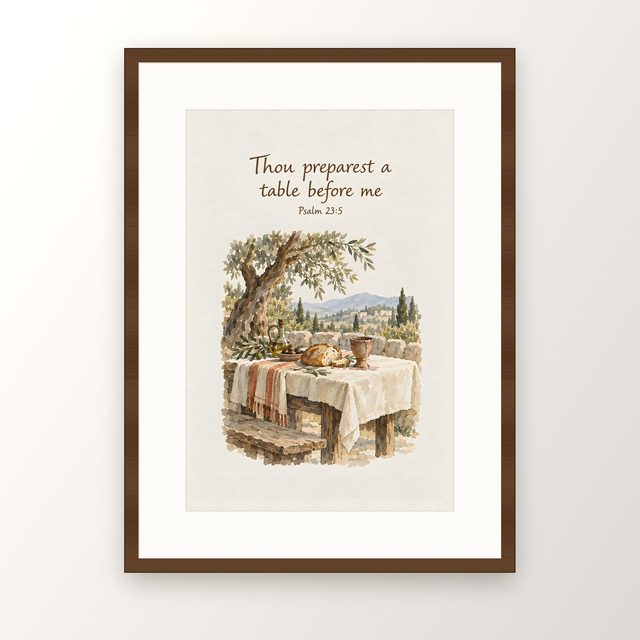
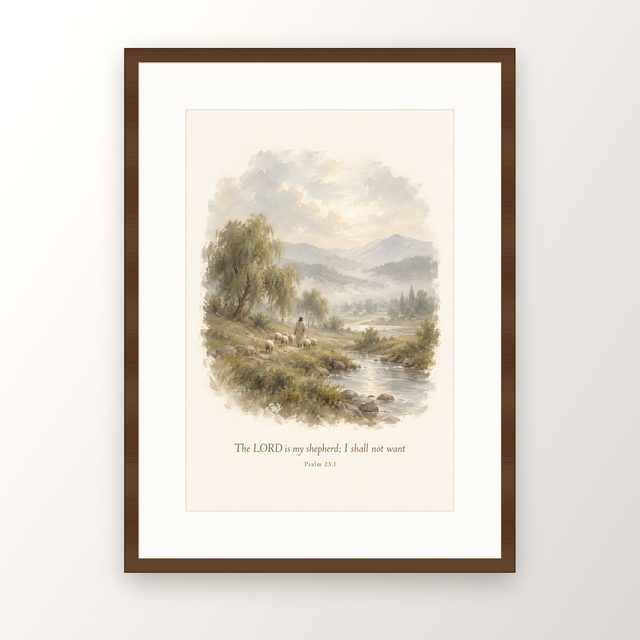
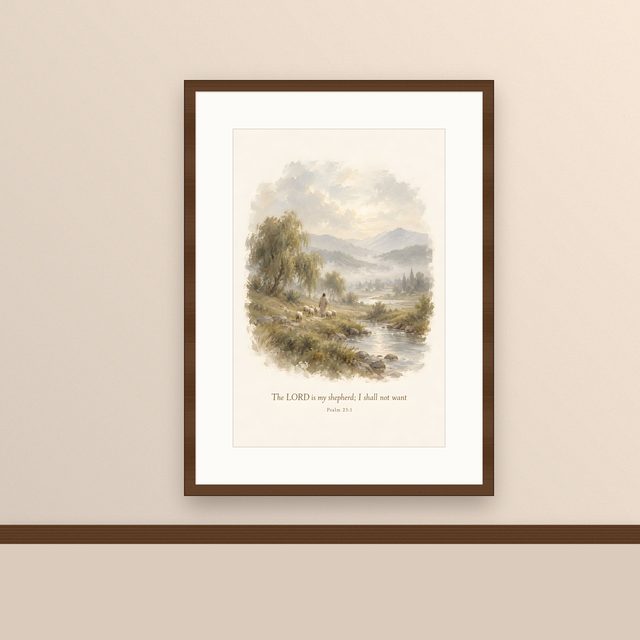
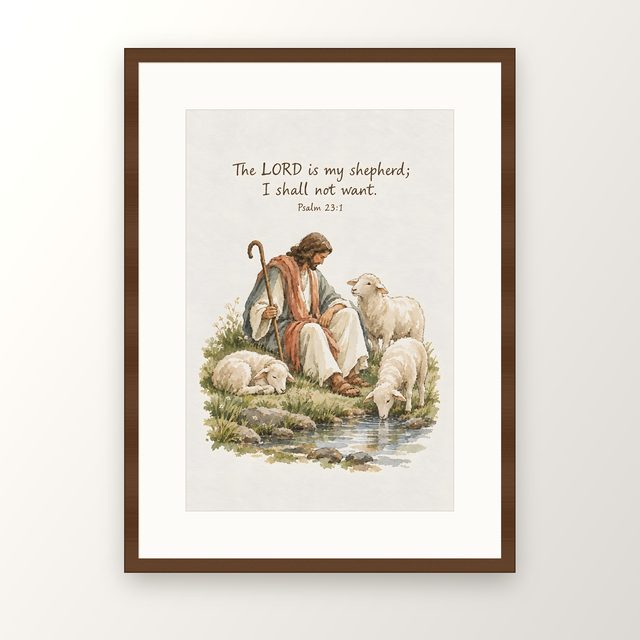
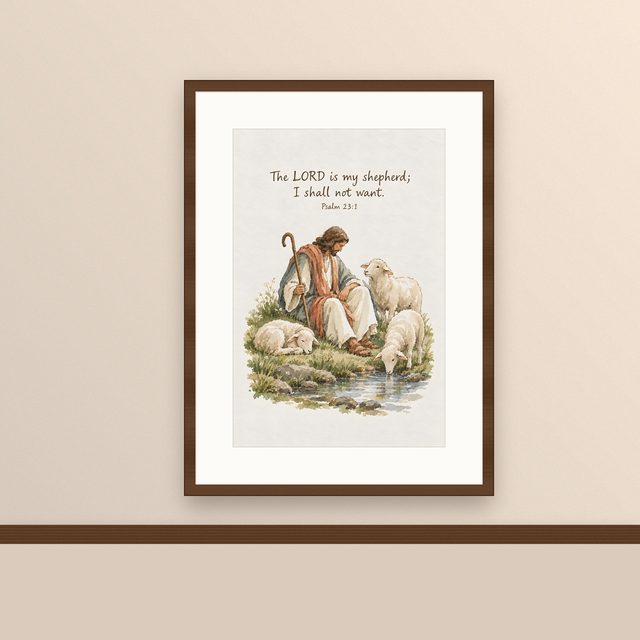
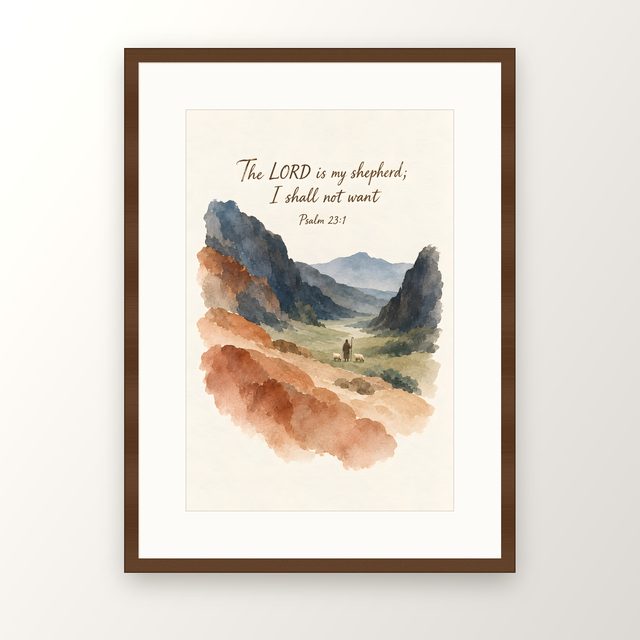

Psalm 23 · King James Version
1 The LORD is my shepherd; I shall not want.
2 He maketh me to lie down in green pastures: he leadeth me beside the still waters.
3 He restoreth my soul: he leadeth me in the paths of righteousness for his name's sake.
4 Yea, though I walk through the valley of the shadow of death, I will fear no evil: for thou art with me; thy rod and thy staff they comfort me.
5 Thou preparest a table before me in the presence of mine enemies: thou anointest my head with oil; my cup runneth over.
6 Surely goodness and mercy shall follow me all the days of my life: and I will dwell in the house of the LORD for ever.
Who wrote it
The psalm carries the heading “A Psalm of David”. Before he was king, David was the youngest son of Jesse, the one left out with the sheep near Bethlehem when the prophet Samuel came to the house (1 Samuel 16:11). Whether or not he wrote every word, the psalm is written by someone who knew the work from the inside.
The meaning, verse by verse
Verses 1 to 3 are the shepherd's day. In plain English, “I shall not want” is a promise of enough. Green pastures and still waters are not decoration: in the dry hills of Judea grass is thin and water is scarce for much of the year, and a shepherd who finds both has done real work. The “paths of righteousness” are simply the right paths, the ones that lead somewhere safe.
Verse 4 is the turn. The psalm stops talking about God and starts talking to him: “thou art with me”. The valley of the shadow of death is a real kind of place, a deep ravine where the light goes early, and it is also every dark stretch of a life. The rod drove off wild animals; the staff, with its crook, pulled a sheep back from the edge. Both comfort because both are in the shepherd's hand.
Verses 5 and 6 change the picture to a host receiving a guest. Oil on the head was an old sign of welcome, and a cup that runs over is hospitality with nothing held back. The psalm ends at home, “in the house of the LORD for ever”.
Why it is read at funerals
Because verse 4 names death plainly and answers it with company rather than explanation. For that reason Psalm 23 is read at a great many Christian funerals and memorial services in the English-speaking world, very often in the King James wording, and it is why prints of it are so often given as sympathy gifts.
The shepherd in the Gospels
When Jesus says “I am the good shepherd: the good shepherd giveth his life for the sheep” (John 10:11), his listeners would have heard Psalm 23 behind it. That is why our paintings of the psalm show Jesus as the shepherd. The same image runs through the parable of the lost sheep in Luke 15.