Bible verse wall art
Ephesians 6: the whole armor of God
Paul wrote this passage in chains, probably guarded by Roman soldiers. He looked at their equipment and turned it into a picture of how to stand firm in faith.
Ephesians 6 prints
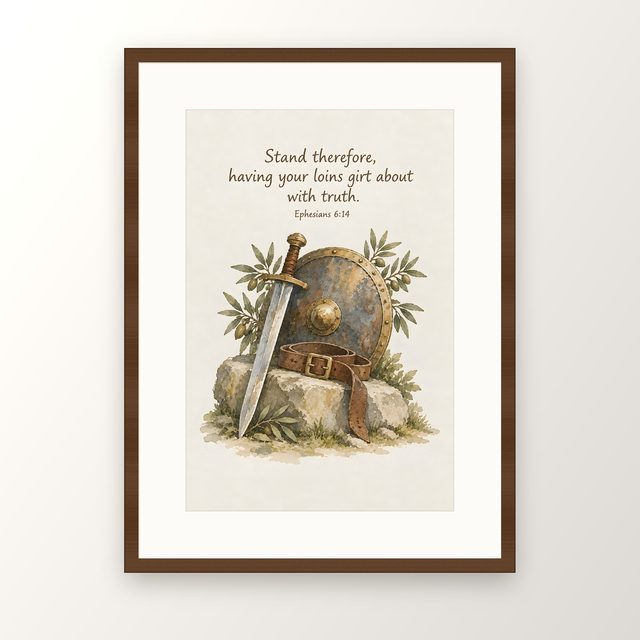
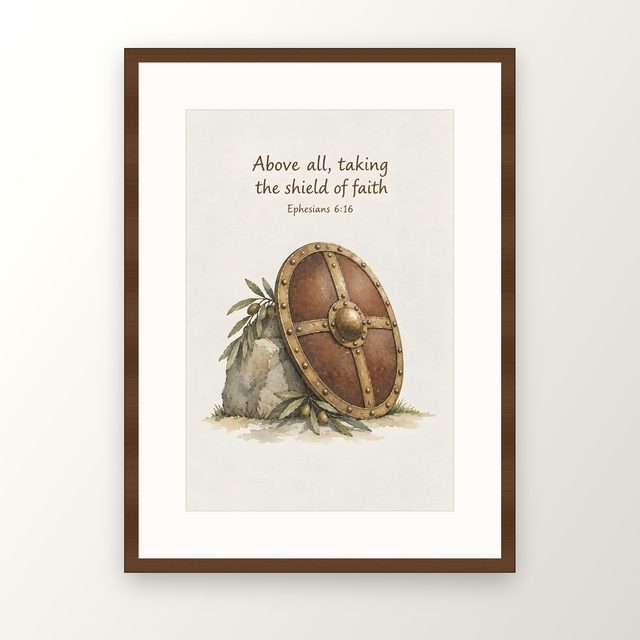
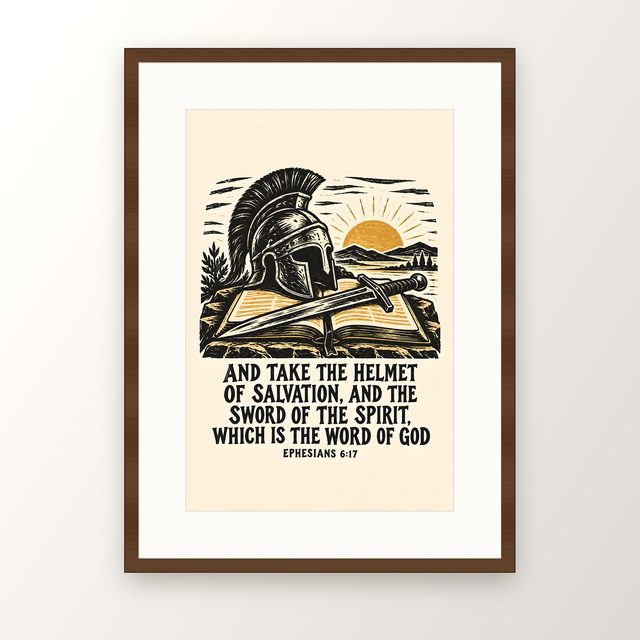
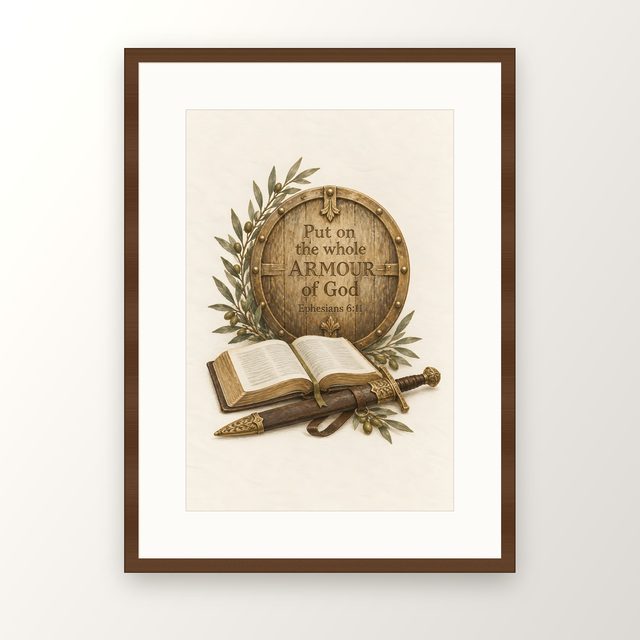
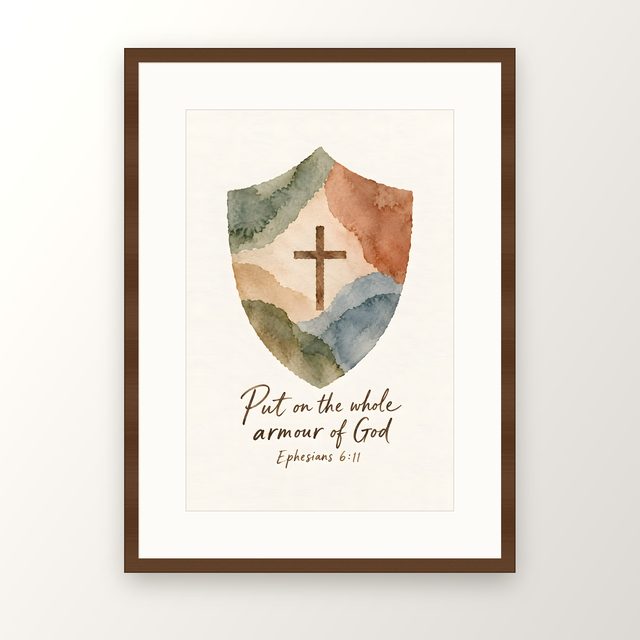
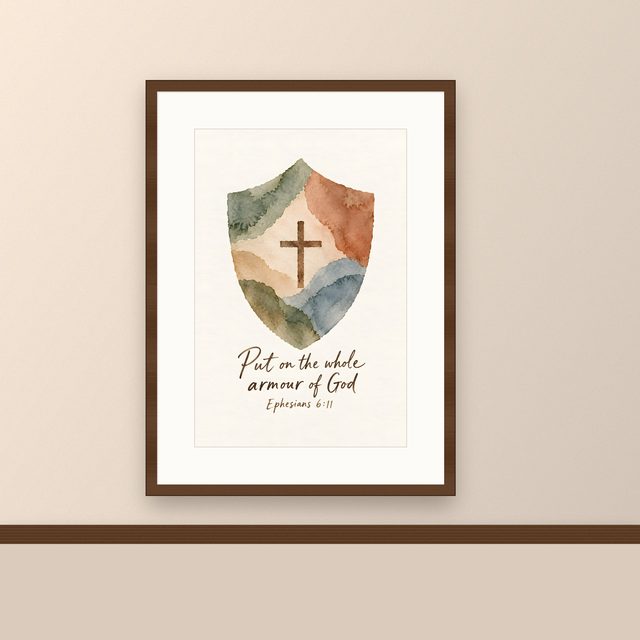
Ephesians 6 · King James Version
14 Stand therefore, having your loins girt about with truth.
16 Above all, taking the shield of faith
A prisoner's letter
Ephesians is addressed to believers in and around Ephesus, a major city on the coast of what is now Turkey. Paul calls himself “an ambassador in bonds” in verse 20, and the letter is traditionally dated to his house arrest in Rome in the early 60s. Some scholars think it was written by a close follower in his name; the imagery is the same either way.
The first half of chapter 6 gives instructions to households, children and parents, servants and masters. Then, from verse 10, Paul widens the lens. The real struggle, he says, is not against flesh and blood but against spiritual powers, and believers need protection that God himself provides.
What does the armor of God mean?
The key word is “stand”, which comes back three times in verses 11 to 14, along with “withstand”. This is not a picture of attack but of holding ground. Each item of a Roman soldier's kit becomes a spiritual reality: the belt of truth, the breastplate of righteousness, feet shod with readiness to bring the gospel of peace, the shield of faith, the helmet of salvation, and the sword of the Spirit, which Paul identifies as the word of God.
Verse 14, on our first print, starts with the belt. Having the loins girt meant tucking a long tunic into a belt so it would not tangle the legs, the ancient version of rolling up your sleeves. Truth is what holds everything else in place.
Verse 16 singles out the shield, “above all”. The Roman scutum was a large curved shield of wood faced with leather (some historians suggest it was wetted against burning arrows), and verse 16 says faith quenches the fiery darts of the wicked. Soldiers could lock such shields together in a wall, a detail that fits Paul's plural “you”: the church stands together.
Who hangs the armor of God
The passage is a favorite for boys' rooms, military families, first responders, and anyone going through a season of spiritual struggle. Youth groups and vacation Bible schools teach it with toy helmets and cardboard shields, and many adults pray through it piece by piece in the morning.
Armor imagery in the Bible
Paul borrowed much of it from Isaiah, where God himself puts on righteousness as a breastplate and a helmet of salvation (Isaiah 59:17), and from Isaiah 52, which praises the feet of those who bring good tidings of peace. He uses the image again in 1 Thessalonians 5, with a breastplate of faith and love.