Bible verse wall art
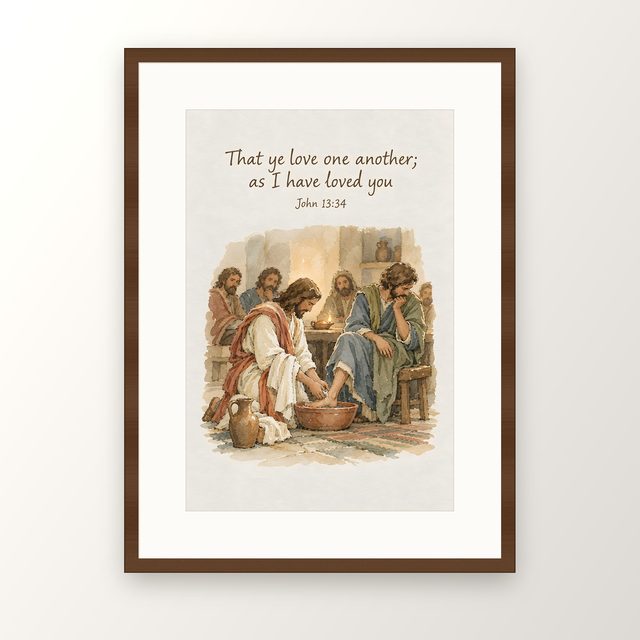
John 13: Jesus washes his disciples' feet
John 13 opens the long evening of the Last Supper in the fourth Gospel. It contains no bread and cup, but a basin and a towel, and it ends with the command that gave Maundy Thursday its name.
John 13 print
John 13 · King James Version
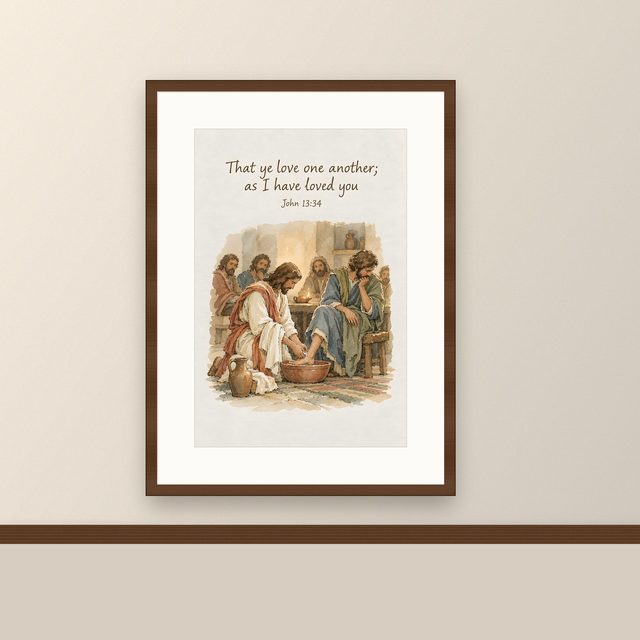
34 That ye love one another; as I have loved you
The evening before the Passion
John places the scene just before the Passover feast, knowing, as verse 1 puts it, that his hour had come. Where Matthew, Mark and Luke describe the bread and wine at this meal, John tells a different story from the same table. Jesus rises, lays aside his outer garments, ties a towel around his waist, pours water into a basin and begins to wash the feet of the twelve.
Washing a guest's feet after a dusty walk was the work of the lowest servant in a household. That is why Peter protests, “Thou shalt never wash my feet” (verse 8), and why Jesus answers that unless he washes him, Peter has no part with him. Afterward Jesus explains the gesture plainly: if the Lord and Master has washed their feet, they ought to wash one another's.
What does “love one another” mean in John 13:34?
The middle of the chapter is dark. Jesus announces that one of those at the table will betray him, hands a morsel to Judas, and Judas goes out; John adds only, “and it was night.” Right after this, Jesus gives what he calls a new commandment: that ye love one another; as I have loved you.
Love of neighbor was not new, since Leviticus 19:18 already commanded it. What is new is the measure. The disciples are to love as they have just seen Jesus love, kneeling at their feet, and as he is about to love on the cross. Verse 35 adds the outward sign: by this all people will know that they are his disciples. The chapter closes with Jesus warning Peter that he will deny him three times before the rooster crows.
Maundy Thursday and the washing of feet
The word Maundy comes from the Latin mandatum, “commandment,” the first word of an old chant based on verse 34. On the Thursday of Holy Week, Catholic parishes and many Anglican, Lutheran and Methodist congregations reenact the foot washing, the priest or pastor kneeling before members of the congregation. Some Brethren and Anabaptist churches practice it as a regular ordinance alongside communion. A John 13:34 print therefore suits a church hall, a wedding gift or any home that wants service kept in view.
Love one another across the New Testament
Jesus repeats the command in John 15:12, and the idea becomes the heartbeat of the letters of John, which return again and again to loving one another because God first loved us. Paul makes a parallel point in Philippians 2, describing Christ who took the form of a servant, the same movement the foot washing puts on stage.