Bible verse wall art
Matthew 25: unto one of the least of these
Matthew 25 is the last teaching Jesus gives in Matthew before his Passion begins, and it ends with a scene of final judgment in which the King is found in the faces of the hungry and the sick.
Matthew 25 print
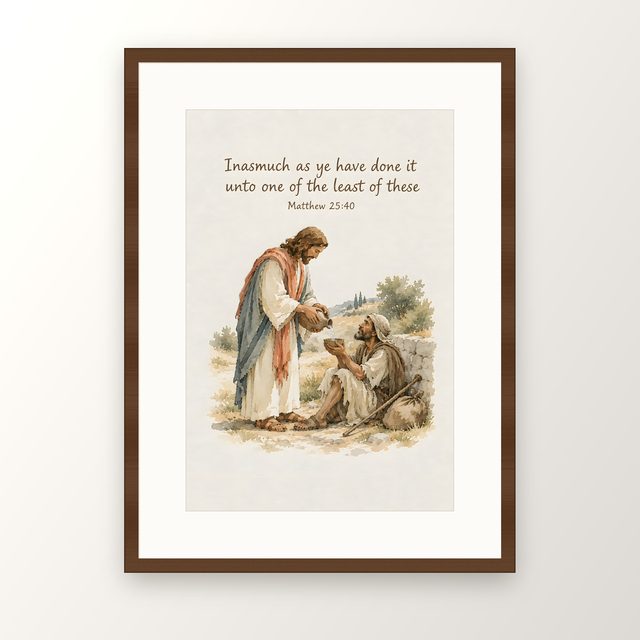
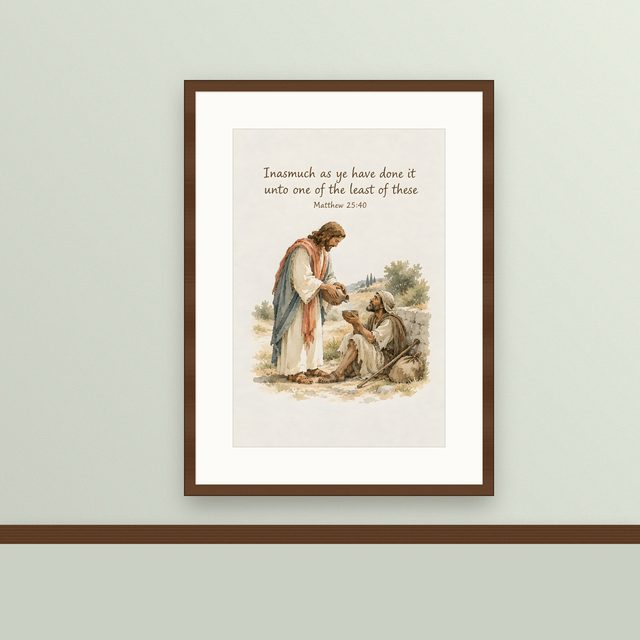
Matthew 25 · King James Version
40 Inasmuch as ye have done it unto one of the least of these
Three stories about waiting well
Chapter 25 closes a long discourse on the end of the age that Jesus delivers on the Mount of Olives. It contains three parables. In the first, ten virgins wait at night for a bridegroom, five with enough oil for their lamps and five without. In the second, a master entrusts talents to three servants before a journey; a talent was a very large sum of money, and the English word for a natural gift comes from this parable. Both stories ask the same thing: what are you doing while you wait?
What does Matthew 25:40 mean?
The third passage is not quite a parable. The Son of man comes in his glory, all nations are gathered before him, and he separates them as a shepherd divides the sheep from the goats. To those on his right, the King says that he was hungry and they fed him, thirsty and they gave him drink, a stranger and they took him in, naked and they clothed him, sick and they visited him, in prison and they came to him.
The righteous are genuinely surprised. When did they ever see him in need? His answer in verse 40 is the heart of the chapter: Inasmuch as ye have done it unto one of the least of these my brethren, ye have done it unto me. The people on the left are just as surprised, and learn that by neglecting the least, they neglected him.
Interpreters discuss whether “my brethren” means Jesus's disciples in particular or anyone in need; either way, the passage teaches that ordinary acts of care are never small in God's eyes, and that no one is too unimportant to matter to Christ.
Works of mercy
Catholic tradition draws six of its seven corporal works of mercy directly from this passage, adding the burial of the dead. Food pantries, prison ministries, hospitals and shelters around the world take their motto from verse 40. A print of it suits a volunteer, a nurse, a teacher, a social worker, a foster family or the entry of a parish hall.
Care for the poor across Scripture
The passage gathers a thread that runs through the whole Bible. Proverbs 19:17 says that whoever has pity on the poor lends to the LORD, and Isaiah 58 describes the true fast as sharing bread with the hungry and bringing the outcast home. James 2 later warns that faith without works is dead. Matthew 26 begins immediately afterward with the plot to kill Jesus.