Bible verse wall art
Matthew 11: come unto me, all ye that labour
Matthew 11 ends with an invitation so gentle that it has been set to music, carved on hospitals and read at bedsides for centuries. It comes at the close of a chapter full of doubt and rejection.
Matthew 11 prints
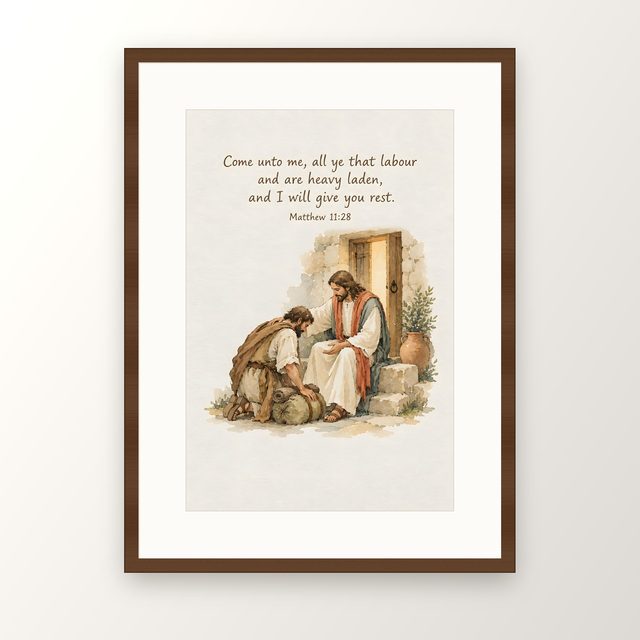
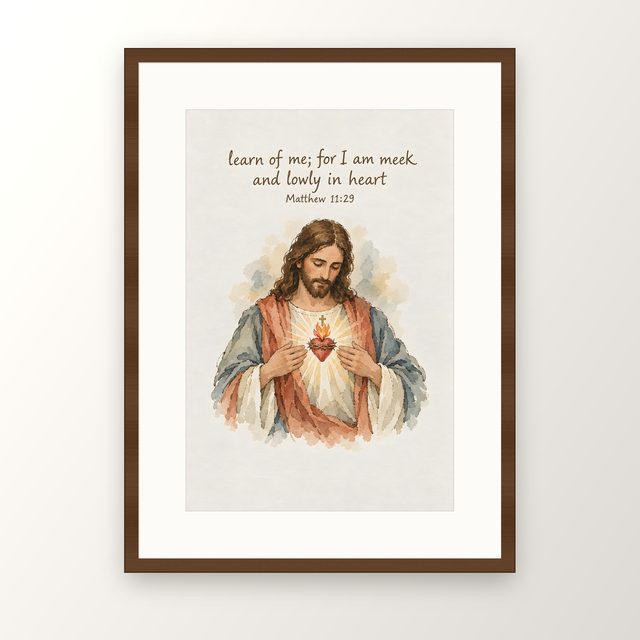
Matthew 11 · King James Version
28 Come unto me, all ye that labour and are heavy laden, and I will give you rest.
29 learn of me; for I am meek and lowly in heart
Doubt from a prison cell
The chapter opens with John the Baptist in Herod's prison. He sends his disciples to ask Jesus whether he is really the one who should come, or whether they should look for another. Jesus does not rebuke the question; he points to what is happening: the blind see, the lame walk and the poor have the gospel preached to them. He then praises John as more than a prophet.
The mood darkens. Jesus compares his generation to children in the marketplace who will not dance to happy music or mourn to sad music, and he pronounces woes on the lakeside towns of Chorazin, Bethsaida and Capernaum, where most of his miracles had been done with little effect. Then he turns to prayer, thanking the Father for hiding these things from the wise and revealing them to babes.
What does Matthew 11:28 mean?
Verse 28 widens the circle to anyone: Come unto me, all ye that labour and are heavy laden, and I will give you rest. The words describe two kinds of weariness, the tiredness of hard work and the weight of burdens carried, and they promise rest without first asking anyone to fix themselves.
A yoke was the wooden frame that joined two oxen so they could pull together. Jewish teachers of the time spoke of taking on the yoke of the law. Jesus offers his own yoke instead, one that is easy and light, and in verse 29 he describes himself: learn of me; for I am meek and lowly in heart. It is the only place in the Gospels where Jesus describes his own character, and the word he chooses is gentle. He adds that there they will find rest for their souls, a phrase borrowed from Jeremiah 6:16.
Handel, the prayer book and the Sacred Heart
Handel set these verses in Messiah: “Come unto Him” closes the aria He shall feed his flock, and a chorus follows on “His yoke is easy.” The Anglican Book of Common Prayer places verse 28 first among the Comfortable Words spoken before communion. In Catholic devotion, verse 29 is closely tied to the Sacred Heart of Jesus, a devotion that spread after the visions of Saint Margaret Mary Alacoque in seventeenth-century France; its feast falls on a Friday in June in most years.
Rest, from the Psalms to Hebrews
The promise of rest has deep roots. Psalm 55 longs for wings like a dove to fly away and be at rest, and Isaiah 40 speaks of strength renewed for the faint. Hebrews 4 later describes a rest that remains for the people of God. A Matthew 11:28 print belongs in a bedroom, a clinic or a pastor's office.