Bible verse wall art
Matthew 5: the Beatitudes and the light of the world
Matthew 5 opens the Sermon on the Mount, the longest block of Jesus's teaching in the Gospels. In a few verses it turns ordinary ideas of happiness and success upside down, then hands ordinary people a lamp.
Matthew 5 prints
Matthew 5 · King James Version
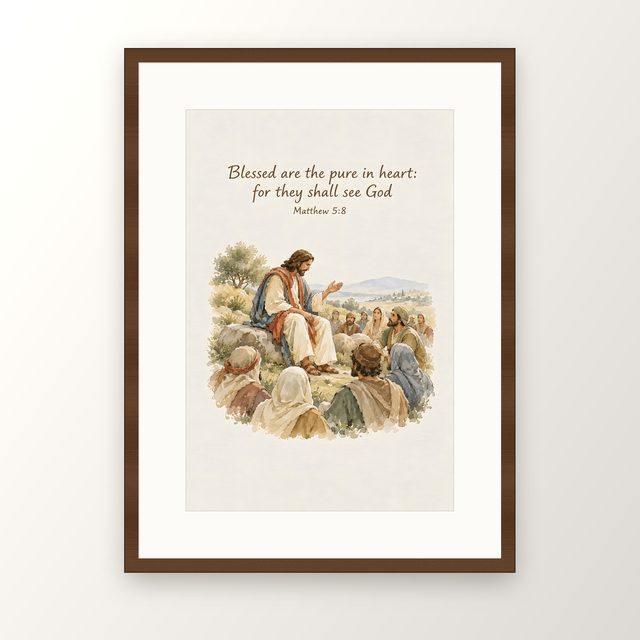
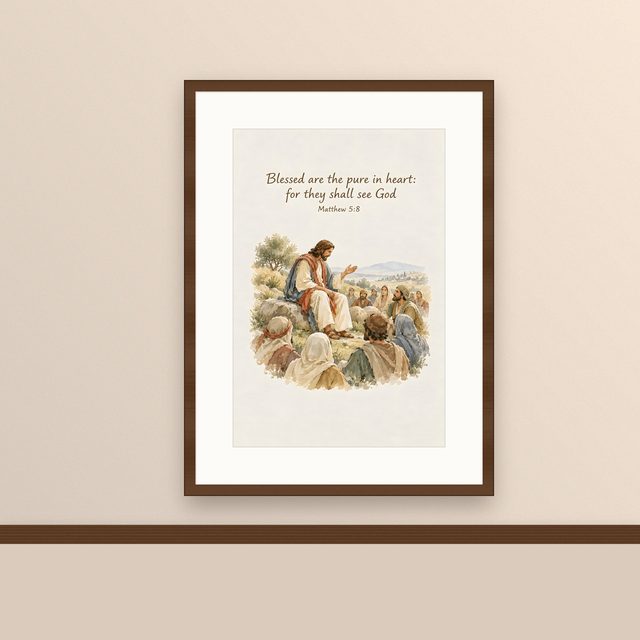
8 Blessed are the pure in heart: for they shall see God
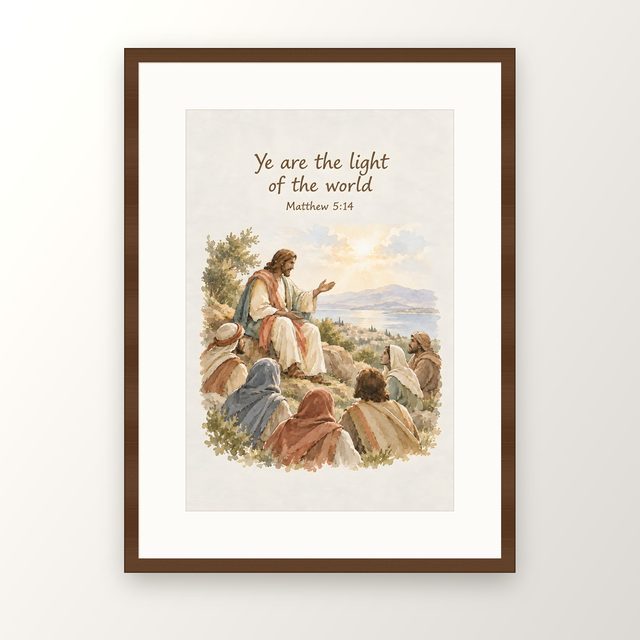
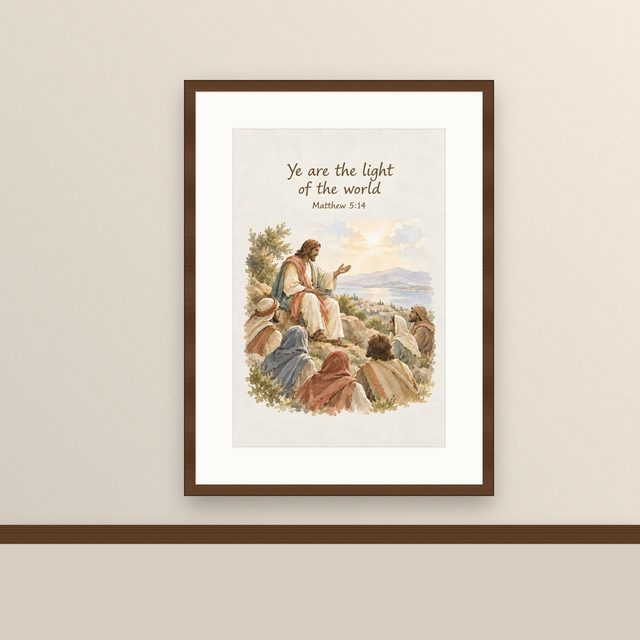
14 Ye are the light of the world
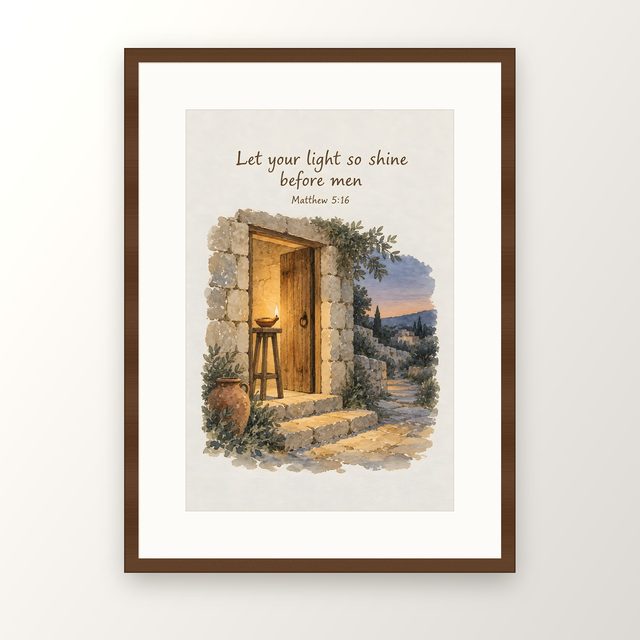
16 Let your light so shine before men
A teacher on a hillside
Seeing the multitudes, Jesus goes up into a mountain and sits down, the usual posture of a Jewish teacher, and his disciples come to him. The sermon runs through chapters 5, 6 and 7 and includes the Lord's Prayer and the Golden Rule. Readers have often compared the scene with Moses receiving the law on Mount Sinai; here a new teacher gives the heart of that law from a hill above the Sea of Galilee. Luke gives a shorter version of the same teaching on a level place, in Luke 6.
What does “Blessed are the pure in heart” mean?
The sermon begins with the Beatitudes, from the Latin word for blessed. Each one names an unlikely group, the poor in spirit, those who mourn, the meek, the merciful, the peacemakers, and declares them blessed, which means favored by God rather than simply cheerful.
The sixth Beatitude, in verse 8, is Blessed are the pure in heart: for they shall see God. Purity of heart here is less about outward rules than about an undivided heart, one that wants God without a hidden second agenda. It recalls Psalm 24, which asks who may stand in God's holy place and answers, he that hath clean hands, and a pure heart. The promise, to see God, is the greatest the Bible can offer, since Moses was told no one could see God's face and live.
What does “Ye are the light of the world” mean?
Right after the Beatitudes, Jesus tells the same listeners that they are the salt of the earth and, in verse 14, Ye are the light of the world. A city that is set on a hill cannot be hid. Houses in Galilee were lit by small clay oil lamps, and no one lit one only to put it under a bushel basket; it went on a lampstand to give light to everyone in the house.
Verse 16 draws the conclusion: Let your light so shine before men, that they may see your good works and glorify your Father in heaven. The aim is not to be admired but to point beyond oneself. In American history, the “city upon a hill” became a famous phrase through John Winthrop's 1630 sermon to Puritan settlers, and it has been quoted by presidents ever since.
Living the sermon
The rest of the chapter deepens the law: anger as well as murder, lust as well as adultery, and finally, love your enemies. The Beatitudes are read at All Saints' Day services, weddings and funerals, and verse 16 is a favorite for baptisms and graduations, where a candle or a lamp makes the meaning visible. Paul picks up the image in Philippians 2, describing believers as lights shining in a crooked world.