Bible verse wall art
Luke 22: the Last Supper and the Mount of Olives
Luke 22 covers a single night, from the upper room to the high priest's courtyard. It gives Christians the words spoken over bread at countless communion services, and one of the most honest prayers in the Bible.
Luke 22 prints
Luke 22 · King James Version
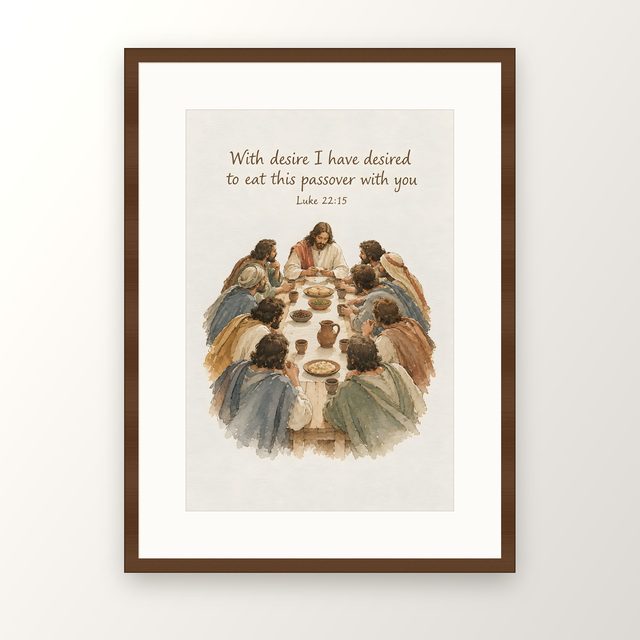
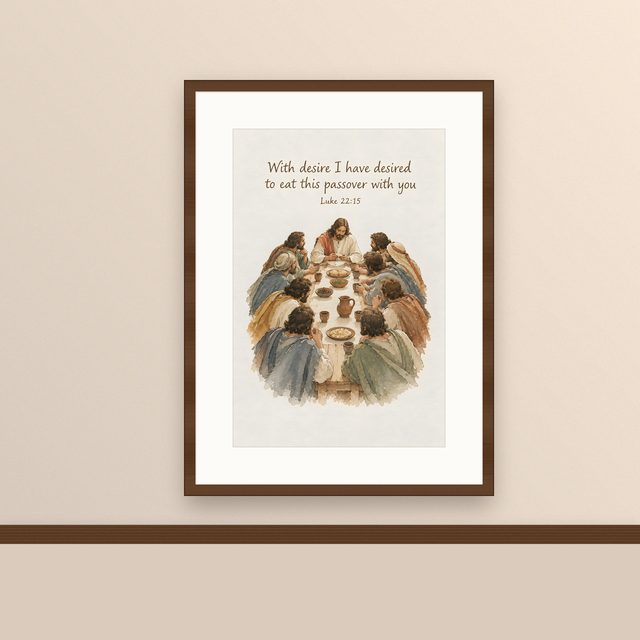
15 With desire I have desired to eat this passover with you
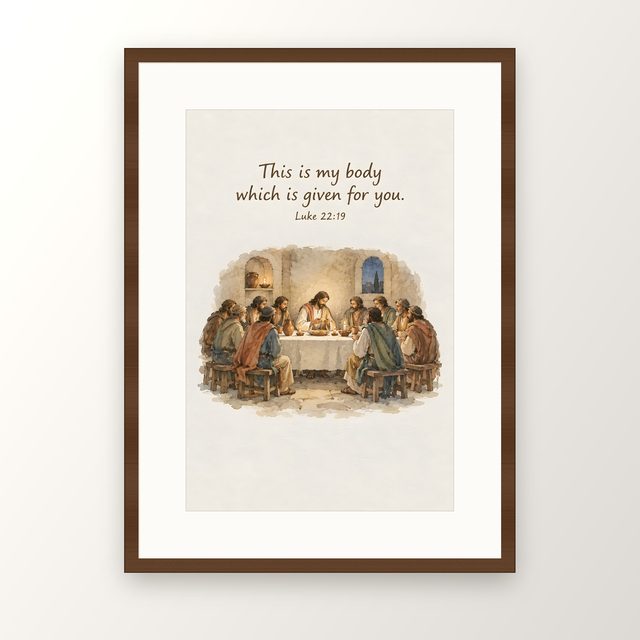
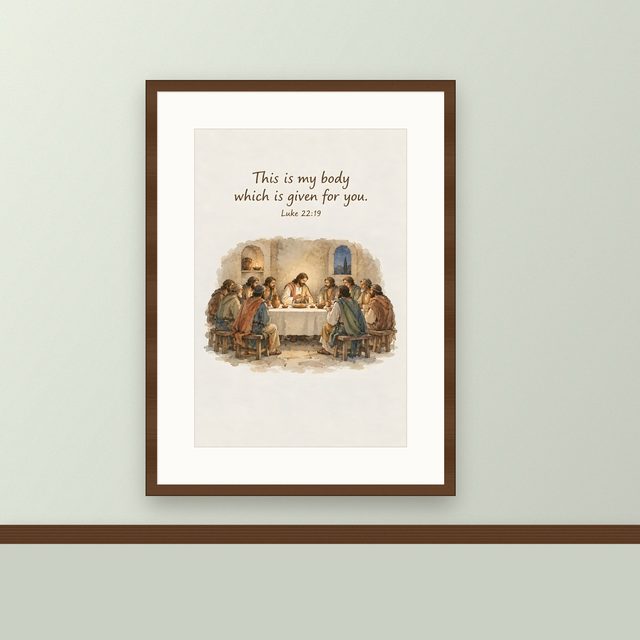
19 This is my body which is given for you.
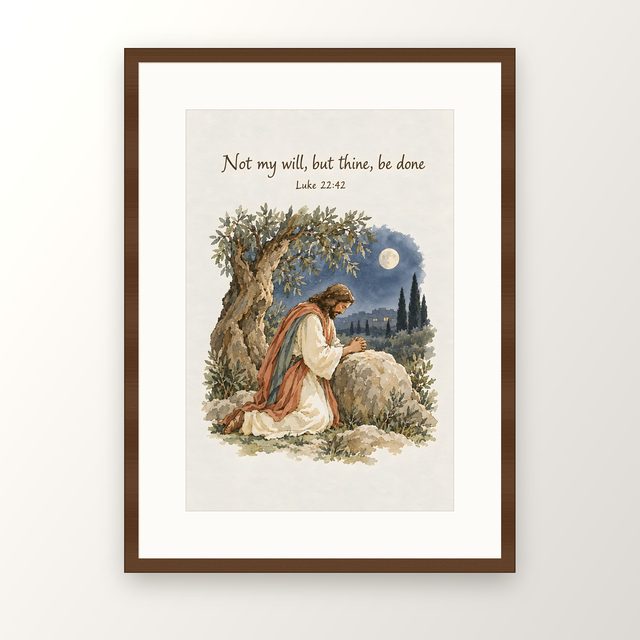
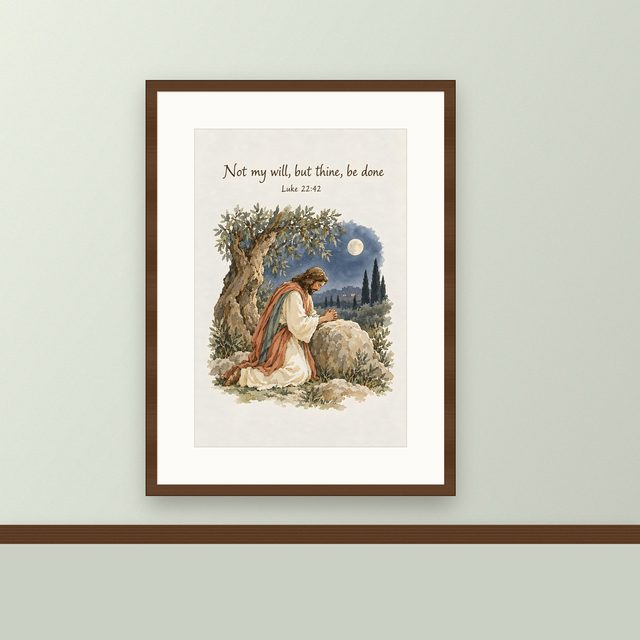
42 Not my will, but thine, be done
A Passover meal
The feast of unleavened bread is near, and the chief priests are looking for a way to kill Jesus quietly; Judas agrees to hand him over for money. Jesus sends Peter and John into Jerusalem to follow a man carrying a pitcher of water, who will lead them to a large upper room. When the hour comes, Jesus sits down with the apostles and says, in verse 15, With desire I have desired to eat this passover with you before he suffers. The doubled wording is a Hebrew way of saying: I have longed for this.
What does “This is my body which is given for you” mean?
During the meal Jesus takes bread, gives thanks, breaks it and gives it to them, saying, This is my body which is given for you (verse 19). Then come the words this do in remembrance of me. After supper he takes the cup and calls it the new testament, or covenant, in his blood. Paul gives almost the same words in 1 Corinthians 11, the oldest written account of the Lord's Supper.
Christians understand the words differently. Catholic and Orthodox churches believe that Christ becomes truly present in the bread and wine; Lutherans also affirm a real presence; many Reformed and evangelical churches emphasize a spiritual presence or a memorial. Nearly all of them repeat Luke's “in remembrance of me,” which is carved on countless communion tables across America.
What did Jesus pray on the Mount of Olives?
After warnings to Peter, who will deny him three times before the cock crows, Jesus goes out to the Mount of Olives. Matthew and Mark name the garden Gethsemane; Luke simply says he went, as he was wont. Kneeling about a stone's throw from the disciples, he prays in verse 42 that the cup be removed from him, then adds: nevertheless not my will, but thine, be done. Many manuscripts then mention an angel strengthening him and sweat falling like drops of blood, though some early copies lack these two verses.
The prayer does not pretend to be calm. It asks honestly for a way out and then entrusts the answer to the Father, which is why so many people pray it in illness, loss or hard decisions.
Arrest, healing and a look
Judas arrives with a crowd and a kiss. When a disciple cuts off the ear of the high priest's servant, Luke alone records that Jesus touched the ear and healed him. Later, in the courtyard, Peter denies knowing him, the rooster crows, and the Lord turns and looks at Peter, who goes out and weeps bitterly. Jesus himself had taught the disciples to pray thy will be done, the same surrender he now lives out.