Bible verse wall art
Psalm 139: I am fearfully and wonderfully made
No psalm is more personal. Psalm 139 speaks of a God who knows when we sit and when we stand, who is present in the farthest sea and in the dark, and who knit each of us together before birth.
Psalm 139 print
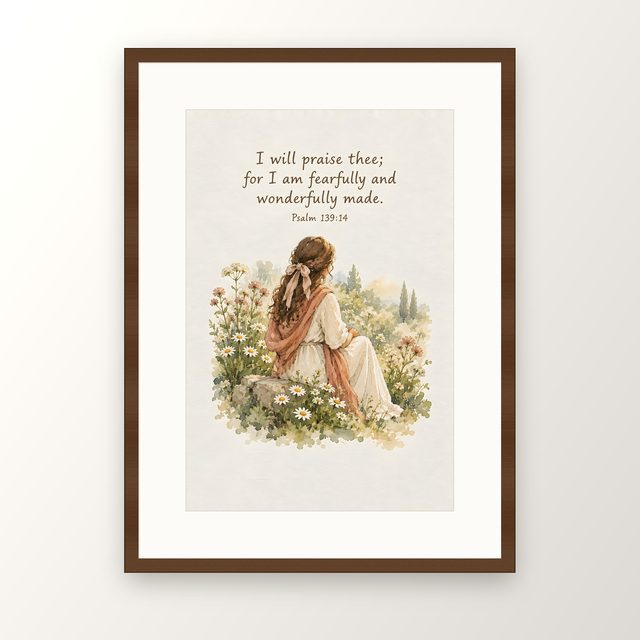
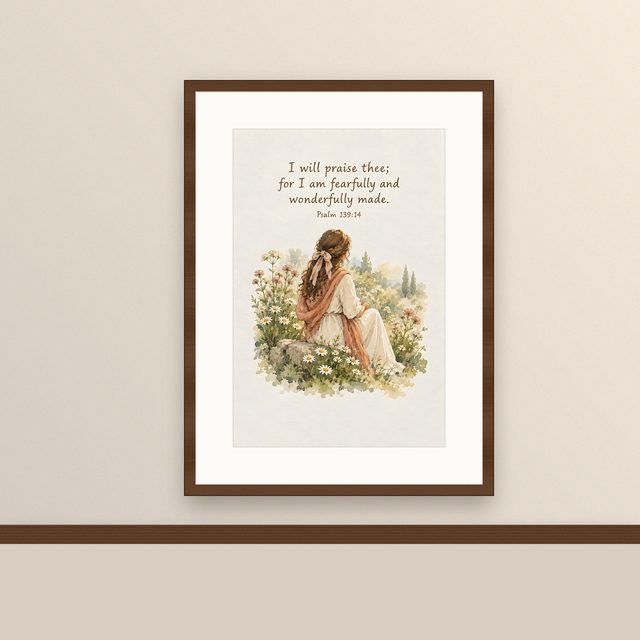
Psalm 139 · King James Version
14 I will praise thee; for I am fearfully and wonderfully made.
You have searched me
The heading reads “To the chief Musician, A Psalm of David.” The first six verses are about being known: every thought, every word before it is spoken. Verses 7 to 12 are about being unable to get away. “Whither shall I go from thy spirit? or whither shall I flee from thy presence?” (139:7). Heaven, the grave, the wings of the morning, the uttermost parts of the sea: God is there already, and the night shines as the day to him.
Being known completely could feel like being watched. The psalm hears it as being held.
What does Psalm 139:14 mean?
Then the poem goes back before birth. “For thou hast possessed my reins: thou hast covered me in my mother's womb” (139:13). The reins are the kidneys, in Hebrew thought the seat of the deepest feelings. Verse 15 speaks of being made in secret and “curiously wrought”, an image of embroidery or weaving.
The full verse 14 reads: “I will praise thee; for I am fearfully and wonderfully made: marvellous are thy works; and that my soul knoweth right well.” “Fearfully” here does not mean frightening. It means in a way that inspires awe, reverently. The verse is first of all praise addressed to God, and only then a statement about the one praying. Self-worth, in this psalm, comes from the Maker's care, not from the mirror.
A verse for new life and for hard days
Psalm 139:14 is one of the verses most often chosen for baby showers, nurseries and birth announcements. It is also given to teenagers and young women struggling with how they see themselves, and to anyone who has been told they are a mistake. Adoptive families often find the whole psalm precious, since it speaks of a God who knew the child before anyone else did.
How the psalm ends
Verses 19 to 22 turn suddenly against the wicked, and many readings in church leave them out. The psalm then closes with a prayer to be examined: “Search me, O God, and know my heart: try me, and know my thoughts” (139:23). It returns to its opening words, now as an invitation rather than a fact.