Bible verse wall art
Psalm 18: the Lord is my rock, and my fortress
David's song of thanks after years on the run. In a single verse he reaches for eight different pictures of safety, as if no one word were strong enough.
Psalm 18 prints
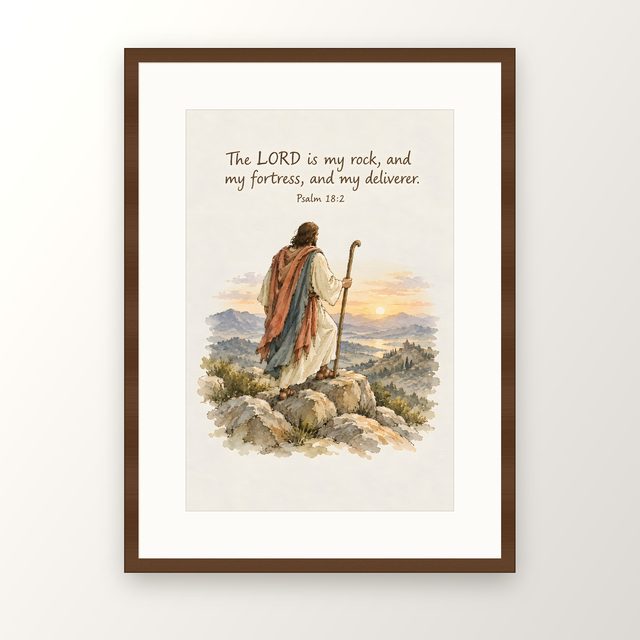
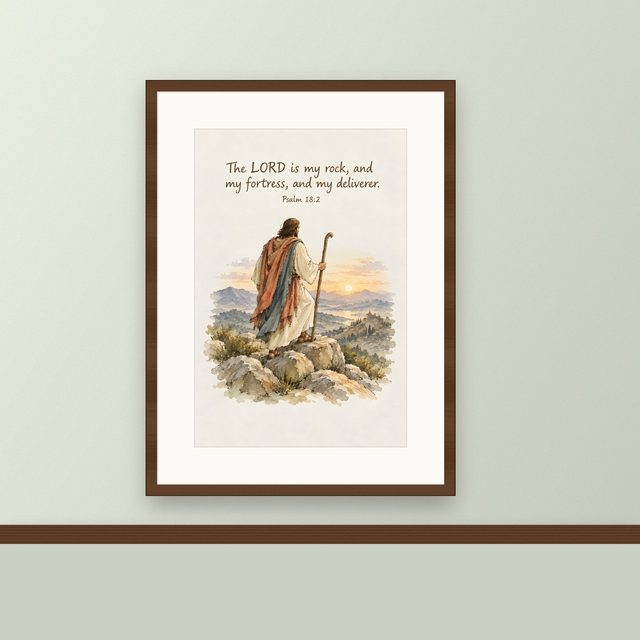
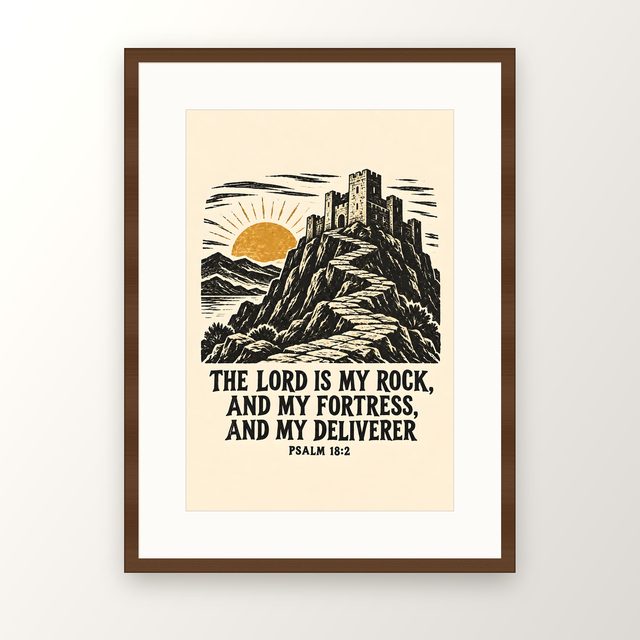
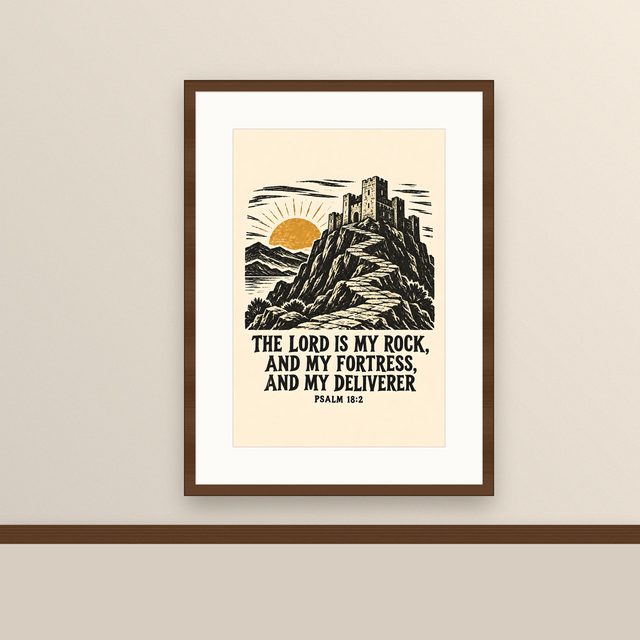
Psalm 18 · King James Version
2 The LORD is my rock, and my fortress, and my deliverer.
A song after the chase
The heading is unusually long. The psalm was spoken by David “in the day that the LORD delivered him from the hand of all his enemies, and from the hand of Saul”. The same song appears, with small differences, in 2 Samuel 22, near the end of David's story.
Before he was king, David spent years hiding from Saul in the wilderness of Judah: in the cave of Adullam, in strongholds, among the rocks of En-gedi where wild goats climb (1 Samuel 22 to 24). The images of Psalm 18 come from that landscape.
What does Psalm 18:2 mean?
The verse opens with a line of love, “I will love thee, O LORD, my strength” (18:1), and then the images tumble out: “The LORD is my rock, and my fortress, and my deliverer; my God, my strength, in whom I will trust; my buckler, and the horn of my salvation, and my high tower.”
A rock is a cliff face or crag where a hunted man can hide. A fortress is a stronghold on a height, hard to reach. A buckler is a small shield. The horn is an image of an animal's strength, used in the Bible for power and victory. The high tower is a place above the reach of attackers. Each word is a different angle on one conviction: when there was nowhere left to hide, God himself was the hiding place.
Light for dark places
The rest of the psalm tells the rescue as if it were a thunderstorm, with earth shaking and God riding on a cherub. Then it becomes personal again: “For thou wilt light my candle: the LORD my God will enlighten my darkness” (18:28), and “by my God have I leaped over a wall” (18:29). People facing illness, legal trouble, military service or long uncertainty have found strength in these lines.
The rock in the New Testament
Jesus ends the Sermon on the Mount with the wise man who built his house upon a rock (Matthew 7:24). Paul, recalling the water that flowed from the rock in the wilderness, writes that “that Rock was Christ” (1 Corinthians 10:4), and Romans 15:9 quotes the end of this very psalm. That is why our painting places Jesus himself on the rocky height.