Bible verse wall art
Psalm 34: taste and see that the Lord is good
A psalm written, according to its heading, after one of David's most embarrassing escapes. Out of it came three of the most quoted lines in the Psalms, and we have painted all three.
Psalm 34 prints
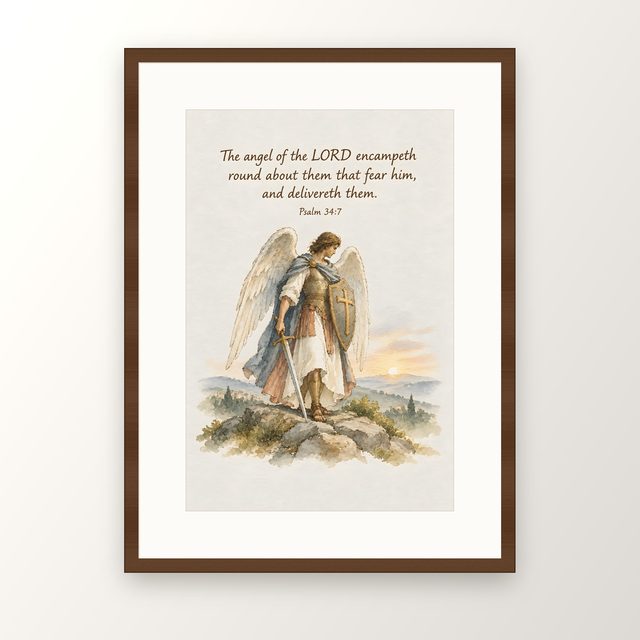
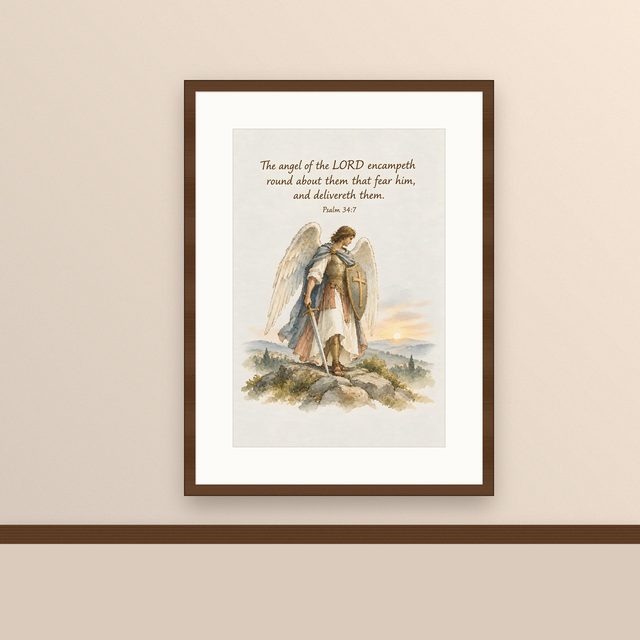
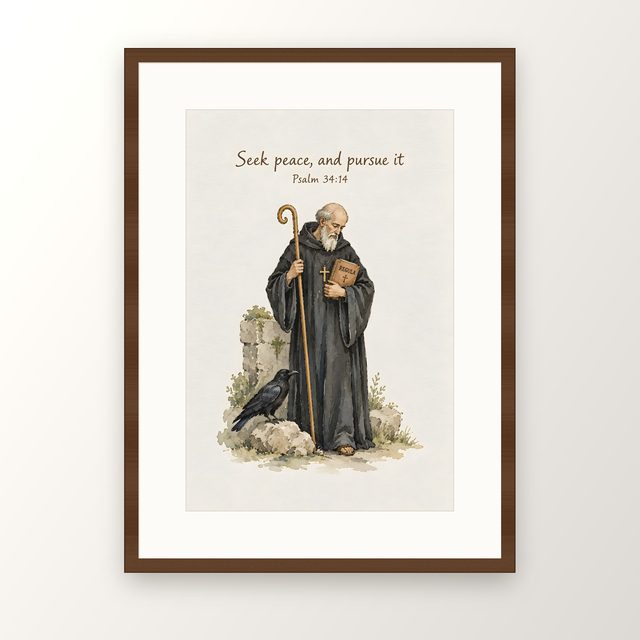
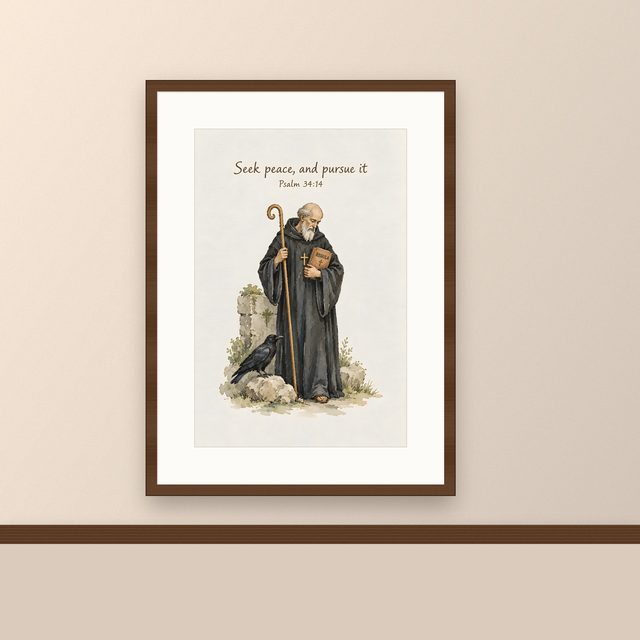
Psalm 34 · King James Version
7 The angel of the LORD encampeth round about them that fear him, and delivereth them.
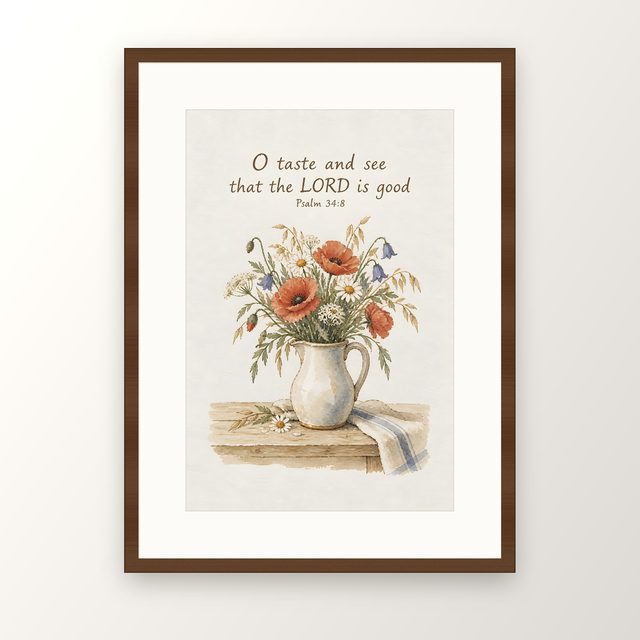
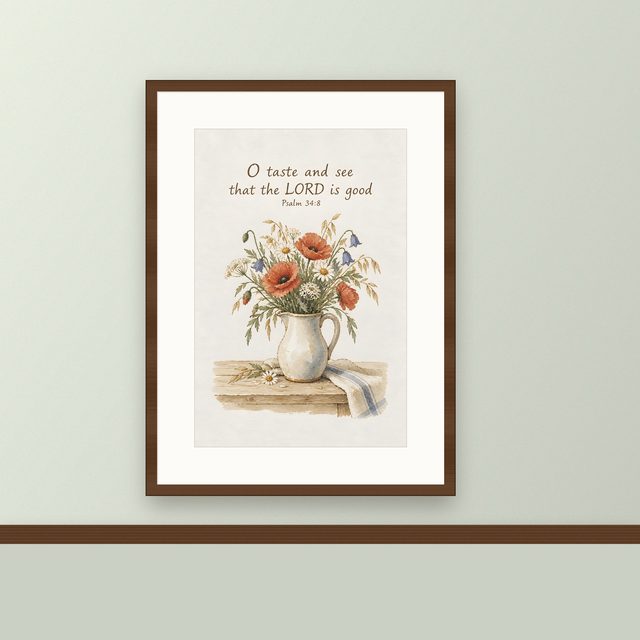
8 O taste and see that the LORD is good
14 Seek peace, and pursue it
David at Gath
The heading says David wrote it “when he changed his behaviour before Abimelech; who drove him away, and he departed.” The story is told in 1 Samuel 21: fleeing Saul, David took refuge with a Philistine king, was recognized, and saved his life by pretending to be mad. In Samuel the king is called Achish; Abimelech may have been a royal title among the Philistines.
In Hebrew the psalm is an alphabet poem, its verses running in the order of the letters from aleph onward, and it reads like a teacher's lesson drawn from that close call. “I sought the LORD, and he heard me, and delivered me from all my fears” (34:4).
The angel of the Lord encampeth
Verse 7 says: “The angel of the LORD encampeth round about them that fear him, and delivereth them.” The picture is a military camp pitched around the faithful. It recalls the servant of Elisha who, in 2 Kings 6, suddenly saw the mountain full of horses and chariots of fire. Christian tradition has long connected this protecting angel with Michael, the archangel who in Daniel and Revelation stands for God's people.
O taste and see
Verse 8 continues: “O taste and see that the LORD is good: blessed is the man that trusteth in him.” Faith is described with the senses. God's goodness is not only a doctrine to agree with but something to be experienced, the way food is known by eating it. For that reason these words are sung at Communion in many churches, and 1 Peter 2:3 alludes to them.
Seek peace, and pursue it
The full verse 14 reads: “Depart from evil, and do good; seek peace, and pursue it.” Peace here is not a passive mood. It has to be chased. Saint Benedict quotes this passage in the prologue to his Rule for monks, and 1 Peter 3:10 to 12 repeats verses 12 to 16, which is why our third print shows Benedict with his Rule and his raven. A little later comes the line so often read to the grieving: “The LORD is nigh unto them that are of a broken heart” (34:18).